Carrying balances across several credit cards can make debt more difficult to manage. Different interest rates, payment dates, minimum payments, and account terms can make it harder to see how much debt is actually costing each month.
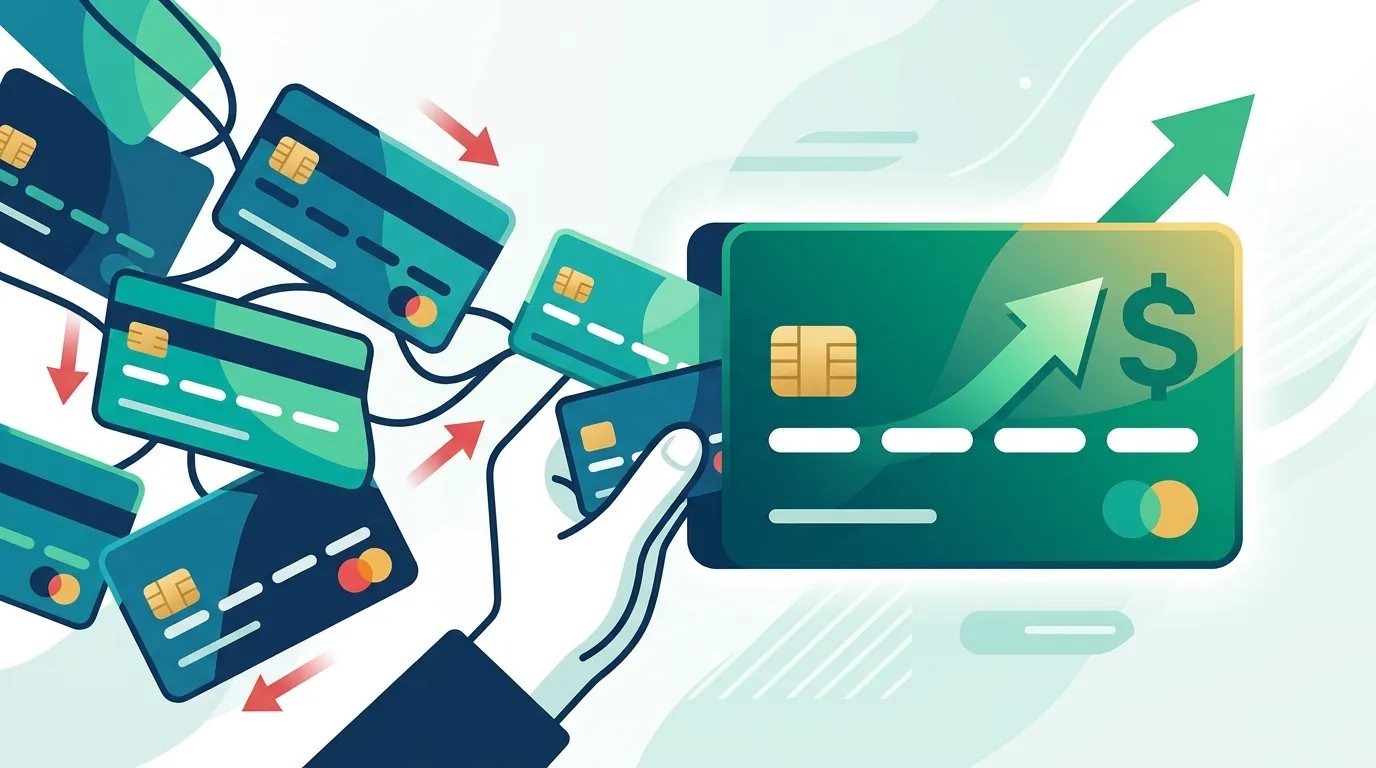
Credit card debt consolidation combines multiple balances into a more centralized repayment arrangement. Depending on the borrower's circumstances, that may involve a balance transfer, personal consolidation loan, debt management plan, or another approach.
Consolidation can simplify repayment, but it does not automatically reduce the amount owed. The Consumer Financial Protection Bureau (CFPB) notes that consolidation may involve additional fees, longer repayment periods, or promotional rates that later expire.
The right approach depends on the interest rates, balances, credit profile, income, and repayment capacity involved.
What Credit Card Debt Consolidation Means
Debt consolidation generally means combining multiple debts into one repayment structure.
For example, someone with balances on three credit cards might owe $4,000, $6,000, and $3,000. Instead of making three separate payments, that person could potentially move the balances to one credit card, replace them with a personal loan, or enroll in a debt management plan.
The objective is usually one or more of the following:
- Simplify multiple monthly payments
- Reduce the interest rate
- Establish a fixed repayment schedule
- Lower the monthly payment
- Create a clearer path toward paying off the balances
However, a lower monthly payment does not necessarily mean lower total borrowing costs. A consolidation loan can reduce the monthly payment simply by extending repayment over a longer period.
Start With the Existing Credit Card Debt
Before applying for a new financial product, calculate what the existing debt is costing.
List each credit card's:
- Current balance
- APR
- Minimum payment
- Due date
- Annual fee, if applicable
- Promotional rate and expiration date
- Any balance-transfer restrictions
Then calculate the total outstanding balance and the approximate interest being charged.
This information provides a baseline for comparing consolidation offers.
A loan advertised at a lower APR may look attractive, for example, but its origination fee and longer repayment period could reduce or eliminate the expected savings. Likewise, a 0% balance-transfer offer may only provide an advantage if the balance can be repaid before the promotional period ends.
Balance Transfers
A balance transfer moves debt from one credit card to another, often using a promotional low or 0% APR.
This can temporarily reduce interest costs and consolidate several balances into one account. However, balance-transfer offers usually have an expiration date, and a transfer fee commonly applies.
Suppose a consumer transfers $10,000 to a card with a 0% introductory rate for 18 months and a 4% transfer fee. The transfer fee alone would be $400.
If the entire balance were divided evenly across 18 months, the required repayment would be approximately $578 per month before considering any other charges.
The calculation helps reveal whether the promotional period is long enough to make the strategy practical.
There is another important consideration: using the balance-transfer card for new purchases can create additional interest complications. The CFPB warns that new purchases may not receive a grace period while a transferred balance remains outstanding.
For that reason, consumers using a balance transfer generally need a clear plan for both the transferred debt and ongoing spending.
Personal Debt Consolidation Loans
A personal loan can replace several revolving credit card balances with one installment loan.
Banks, credit unions, and other lenders may offer personal loans specifically for debt consolidation. The borrower receives funds and uses them to pay existing creditors, then makes one scheduled payment to the new lender.
A potential advantage is predictability. Unlike a credit card balance, an installment loan generally has a defined repayment period and scheduled payments.
However, the interest rate and fees matter.
The CFPB cautions that some advertised low rates may be temporary or available only to borrowers who meet particular qualifications. A lower monthly payment can also result from extending the repayment period, potentially increasing the total amount paid over time.
When comparing loans, look at the APR, origination fee, monthly payment, repayment term, and total repayment amount rather than focusing only on the advertised monthly payment.
Home Equity Loans and HELOCs
Homeowners may also consider using home equity to consolidate credit card debt.
A home equity loan provides a lump sum that can be used to pay existing debts. A home equity line of credit, or HELOC, provides access to a revolving credit line secured by the home.
The interest rate may be lower than an unsecured credit card rate, but the risk is substantially different.
With an unsecured credit card or personal loan, the lender does not generally have a direct security interest in the borrower's home. With home equity borrowing, the home serves as collateral.
The CFPB warns that failure to repay a home equity loan can put the borrower at risk of foreclosure. Closing costs can also add hundreds or thousands of dollars to the transaction.
Using home equity to pay credit card debt therefore requires careful consideration of both the interest savings and the additional risk attached to the home.
Debt Management Plans
A debt management plan is different from taking out a new loan.
Typically offered through credit counseling organizations, a debt management plan can consolidate the repayment process without combining the underlying debts into one new loan. The consumer generally makes one payment to the counseling organization, which then distributes payments to participating creditors.
A credit counselor may be able to negotiate lower interest rates or waived fees with creditors, although results depend on the creditor and individual circumstances.
Debt management plans are generally designed for unsecured debts such as credit cards rather than secured debts such as mortgages or auto loans.
They also require consistent payments over time. The Federal Trade Commission notes that some debt management plans can take 48 months or longer to complete.
Consumers considering this route should ask about setup fees, monthly fees, participating creditors, payment schedules, and whether accounts must be closed or restricted during the program.
Negotiating Directly With Credit Card Issuers
Consolidation does not always require a new loan or outside company.
If someone is struggling with payments, contacting the credit card issuer directly may be worthwhile. The CFPB says some creditors may be willing to lower minimum payments, waive certain fees, reduce interest rates, or change payment dates.
When calling, be prepared to explain:
- Why payments have become difficult
- How much can realistically be paid each month
- Whether the financial problem is temporary or ongoing
- What payment arrangement is being requested
Contacting the issuer before missing payments can provide more options than waiting until the account is seriously delinquent.
Debt Consolidation vs. Debt Settlement
Debt consolidation and debt settlement are not the same thing.
Consolidation generally means restructuring how debt is repaid while continuing to repay the underlying amount owed.
Debt settlement involves negotiating with creditors to accept less than the full amount owed.
Debt settlement can carry significant risks. The CFPB warns that settlement companies may encourage consumers to stop making payments, which can result in late fees, additional interest, collection activity, credit-report damage, and potentially lawsuits.
The FTC also warns consumers about companies that promise to eliminate debt, guarantee specific savings, or demand payment before providing debt-relief services.
A company advertising "debt consolidation" may therefore be offering a different service than the consumer expects. Read the contract carefully and determine whether the company is providing a loan, credit counseling, debt management, or debt settlement.
How to Compare Consolidation Options
The most useful comparison involves total cost rather than simply the monthly payment.
For each option, calculate:
Total interest + fees + other required costs = estimated repayment cost
Then compare that figure with the projected cost of continuing to repay the existing cards.
Also examine the repayment period.
A consolidation loan with a substantially lower monthly payment could still cost more overall if the loan stretches over many additional years.
For balance transfers, calculate whether the promotional period is long enough to eliminate the transferred balance.
For debt management plans, include counseling fees and determine how long the plan is expected to last.
For home equity borrowing, include closing costs and consider the consequences of securing the debt against the home.
Credit Score Considerations
Applying for new credit can affect a consumer's credit profile.
A new credit application may result in a hard inquiry, while opening a new account can affect the age and overall composition of credit accounts.
A balance transfer can also change credit utilization across individual accounts and the overall credit profile.
The longer-term effect depends on what happens after consolidation. Paying down balances and maintaining timely payments can improve the overall credit profile over time, while accumulating new balances on previously paid-off cards can undermine the purpose of consolidation.
Consolidation should therefore be accompanied by a spending plan.
Avoid Rebuilding the Same Debt
One of the biggest challenges with consolidation is treating the new loan or balance-transfer card as a solution while continuing the spending pattern that created the original debt.
The CFPB specifically cautions that if someone accumulates debt because spending consistently exceeds income, taking out another loan may not solve the underlying problem unless spending is reduced or income increases.
After consolidating, consider reducing or temporarily suspending discretionary credit-card spending.
A practical approach is to keep a written monthly budget, establish an emergency savings target, and automate the new required payment where appropriate.
The objective is not simply to move the balance. It is to prevent the same balance from returning.
Warning Signs of Debt Relief Scams
Consumers searching for consolidation help may encounter aggressive advertisements promising rapid debt elimination or dramatically lower payments.
Some warning signs include:
- Requests for large upfront fees
- Guarantees that all debt will disappear
- Pressure to make an immediate decision
- Instructions to stop paying creditors
- Requests for sensitive financial information through unsolicited calls or messages
- Claims of a special government program that will erase credit card debt
The FTC's 2026 consumer guidance specifically warns that companies demanding upfront payment before providing debt-relief services or guaranteeing debt forgiveness are red flags.
Consumers can often begin by contacting their creditors directly or speaking with a nonprofit credit counseling organization.
Creating a Consolidation Payoff Plan
Once an option has been selected, establish a specific repayment schedule.
If using a balance transfer, divide the balance by the number of months remaining in the promotional period and determine whether that payment is affordable.
If using a personal loan, make the scheduled payment every month and avoid extending the repayment period unnecessarily.
If using a debt management plan, understand the required monthly contribution and maintain the payments throughout the program.
It is also useful to monitor the accounts that were paid off. A zero balance can create additional available credit, but immediately using that credit can recreate the original problem.
When Consolidation May Not Be the Right Solution
Consolidation is not automatically appropriate for every borrower.
If the proposed interest rate is not meaningfully lower, fees consume the potential savings, or the repayment period becomes substantially longer, consolidation may offer little financial benefit.
Likewise, if monthly income cannot support the required payment even after restructuring, simply moving the debt may not address the underlying problem.
In severe financial difficulty, speaking with a nonprofit credit counselor can help identify whether a debt management plan or another approach is appropriate. The CFPB recommends considering counseling and contacting creditors directly rather than assuming a commercial consolidation advertisement is the only option.
Building a Sustainable Exit From Credit Card Debt
Credit card debt consolidation can simplify multiple accounts and, under the right circumstances, reduce borrowing costs. But the strategy only works when the new arrangement is evaluated against the full cost of the existing debt.
Balance transfers can provide temporary interest savings. Personal loans can create a fixed repayment schedule. Debt management plans can organize payments with assistance from a credit counselor. Direct negotiations with creditors can sometimes produce modified payment arrangements without opening a new account.
Each approach has different costs and risks.
The most useful starting point is to calculate the current balances, APRs, fees, and monthly payments before comparing alternatives. From there, evaluate the total repayment cost, promotional-period restrictions, collateral requirements, and effect on the household budget.
Consolidation can be a useful financial restructuring tool, but paying off the debt ultimately requires a repayment plan that remains affordable after the new account or arrangement is established.
References
- Consumer Financial Protection Bureau — What Do I Need to Know About Consolidating My Credit Card Debt?
- Consumer Financial Protection Bureau — What Should I Do If I Can't Pay My Credit Card Bills?
- Consumer Financial Protection Bureau — Credit Cards Key Terms
- Consumer Financial Protection Bureau — Credit Counseling, Debt Settlement, Debt Consolidation, and Credit Repair
- Federal Trade Commission — How To Get Out of Debt
- Federal Trade Commission — Looking for Debt Relief? Here's How to Avoid a Scam
- Federal Trade Commission — Say “No, Thanks” to Unexpected Offers to Lower Your Credit Card Interest Rate