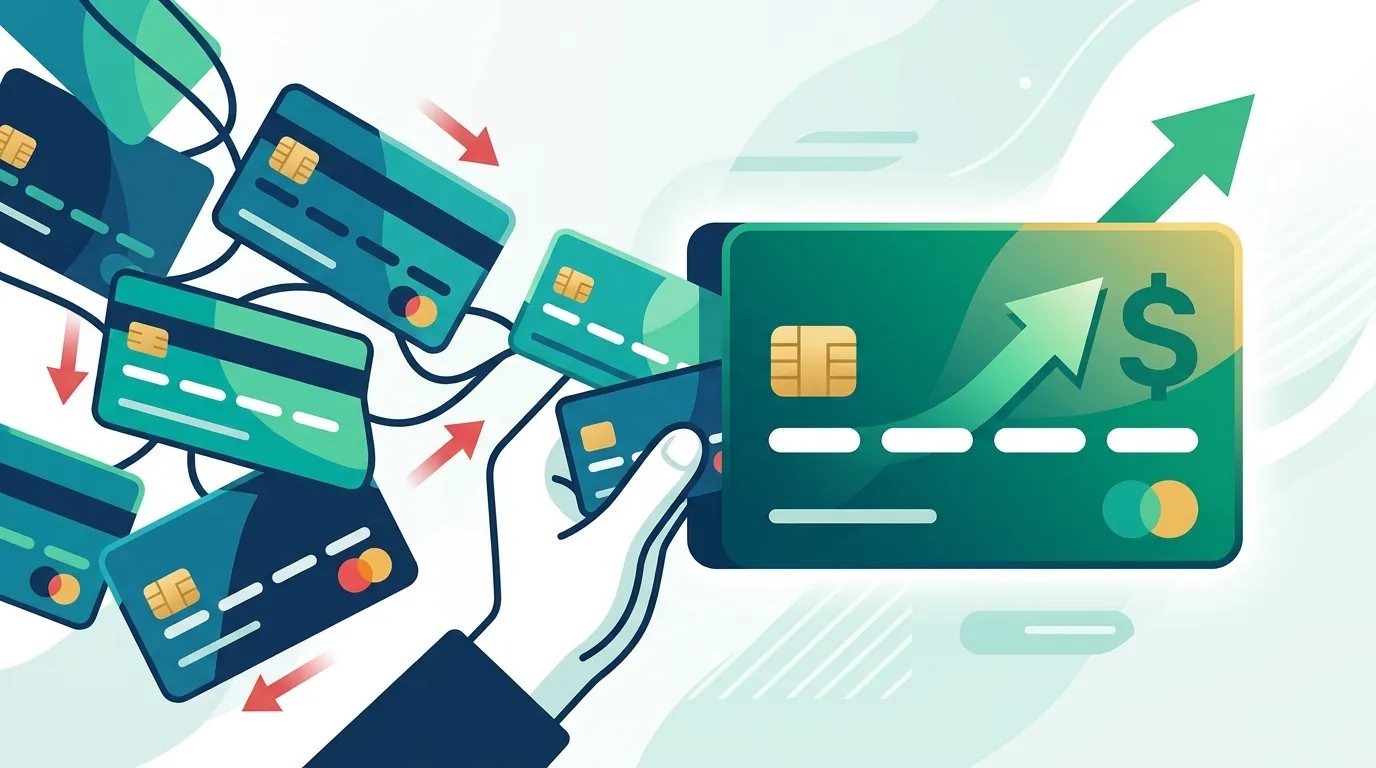
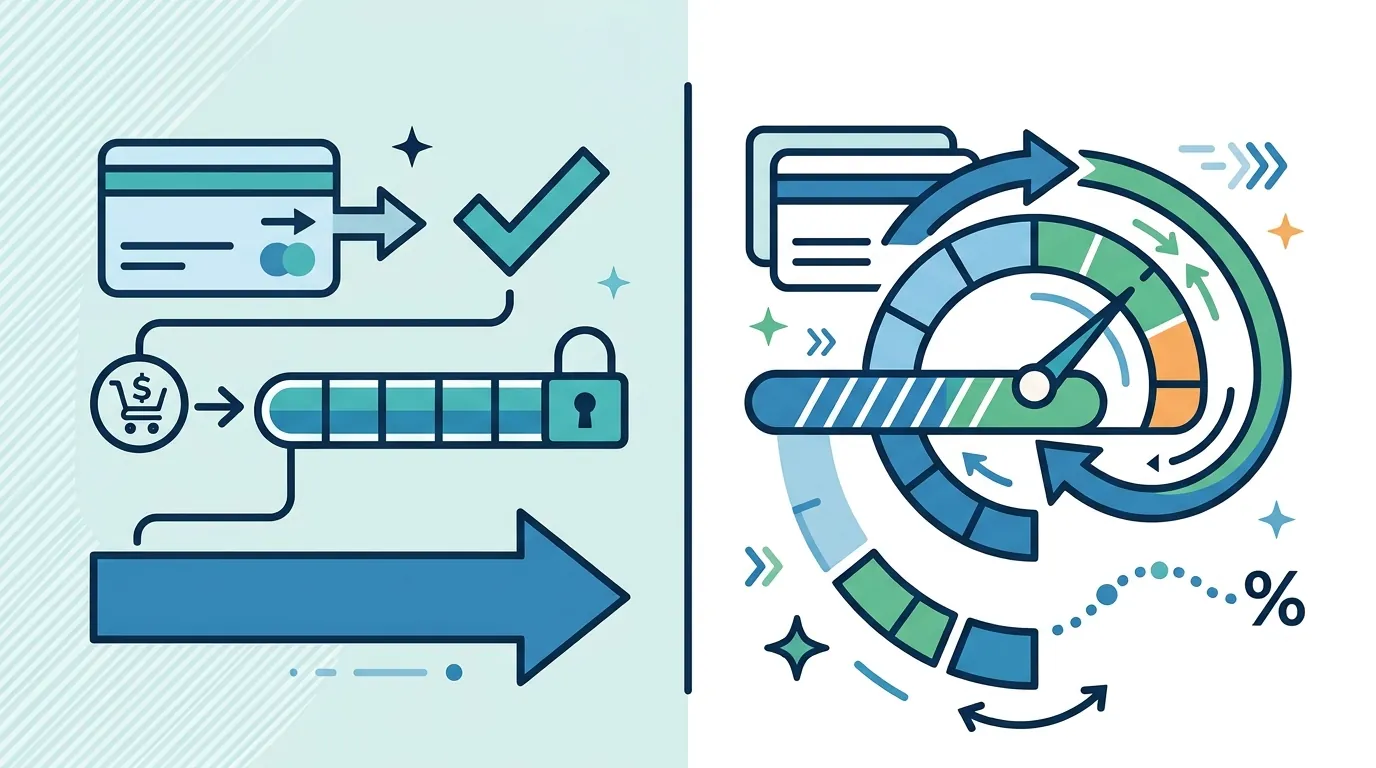
Charge cards and traditional credit cards can look almost identical in a wallet, but their underlying credit structures are different. The distinction affects how balances are repaid, how interest may apply, how available credit is determined, and how an account can interact with credit utilization calculations.
Traditional credit cards generally provide a revolving line of credit. A cardholder can make purchases, repay some or all of the balance, and continue borrowing within the available credit limit. Charge cards have historically required the balance to be paid in full each billing cycle, although some modern charge-card products may offer separate features that allow eligible balances to be paid over time.
The distinction is particularly relevant when considering credit scores. FICO explains that charge cards are generally treated as open credit accounts rather than revolving accounts for utilization calculations when reported that way, while traditional credit cards are included in revolving utilization.
The Basic Structural Difference
A revolving credit card provides a predetermined credit limit.
If a card has a $20,000 limit and the cardholder charges $5,000, approximately $15,000 remains available before considering payments, pending transactions, or other account-specific factors.
The borrower can generally choose to pay the full statement balance or make at least the required minimum payment and carry part of the balance forward. Interest may apply to the carried balance according to the card agreement.
A traditional charge card works differently. Historically, the entire balance has been due when the statement is received rather than being carried from one billing cycle to another.
The CFPB's Regulation Z defines charge cards as credit cards where no periodic rate is used to calculate the finance charge.
That structural distinction explains why charge cards and revolving credit can behave differently in credit reports.
Revolving Credit Has a Defined Credit Limit
The defining feature of revolving credit is the reusable credit line.
A lender establishes a credit limit, and the borrower can repeatedly draw against that limit as balances are repaid.
For example, assume a card has:
- $10,000 credit limit
- $2,000 reported balance
- $8,000 available credit
The utilization ratio would be:
$2,000 ÷ $10,000 = 20%
FICO identifies revolving utilization as an important component of its scoring models. Its guidance explains that the ratio is based on the balance reported relative to the available revolving credit limit.
The ratio can be calculated for individual revolving accounts as well as across multiple revolving accounts.
Why Credit Utilization Matters
Credit utilization is part of the FICO "Amounts Owed" category, which accounts for roughly 30% of a typical FICO Score.
This does not mean that a specific utilization percentage guarantees a particular score.
Credit scores evaluate multiple characteristics simultaneously, including payment history, amounts owed, length of credit history, new credit, and credit mix.
Nevertheless, a high revolving utilization ratio can indicate that a consumer is using a substantial portion of available revolving credit.
FICO's research indicates that higher revolving utilization is generally associated with greater repayment risk.
Charge Cards Are Generally Different
Charge cards can be confusing because they may function similarly to credit cards at the point of purchase.
The cardholder makes a transaction, receives a statement, and pays the issuer.
The major difference historically has been the repayment requirement: the balance generally must be paid in full rather than revolving indefinitely.
FICO explains that charge cards are generally reported as open credit accounts and are generally excluded from revolving utilization calculations when reported as such.
This means a $5,000 balance on a charge card should not automatically be treated the same way as a $5,000 balance on a traditional revolving credit card.
The exact reporting treatment matters.
A Charge Card Can Still Affect Credit
Exclusion from revolving utilization does not mean a charge card is irrelevant to a credit profile.
FICO states that consumers can build a good FICO Score using a charge card and that responsible use and payment history remain important.
A charge account can contribute information about the consumer's credit history, including account age and payment behavior.
Therefore, consumers should not interpret "not included in utilization" as "does not affect credit."
The two concepts are different.
Statement Balances and Reported Balances Are Not Always the Same
Another important distinction is between the balance visible in an online account and the balance that appears on a credit report.
FICO explains that the balance reported by the lender can differ from the balance currently displayed in the account, and that the latest monthly statement balance is generally what may appear on a credit report.
This explains why someone can pay a credit card in full every month and still see utilization reported to the credit bureaus.
For example, a consumer might spend $6,000 during a billing cycle, receive a $6,000 statement, and pay the entire amount by the due date.
The account can still have reported a $6,000 balance before the payment was made.
The consumer has not necessarily carried debt, but the credit report may temporarily reflect the balance.
Paying in Full Does Not Mean Utilization Is Zero
This is one of the most common misconceptions about credit cards.
Credit utilization and interest-bearing debt are not the same thing.
A consumer can have:
- High monthly spending
- Low average debt
- No interest charges
- A temporary reported utilization ratio
Suppose someone has a $20,000 revolving limit and charges $8,000 during the month. If the issuer reports an $8,000 statement balance, the credit report could show 40% utilization even if the consumer pays the entire $8,000 by the due date.
FICO specifically notes that consumers do not have to carry a balance to have utilization reported.
Early Payments Can Affect Reported Utilization
Consumers who regularly make large purchases may sometimes reduce reported utilization by paying part of the balance before the statement closes.
For example:
A cardholder has a $25,000 limit and expects a $15,000 statement balance.
That would represent:
$15,000 ÷ $25,000 = 60% utilization
If the cardholder makes a $10,000 payment before the statement is generated, the reported balance could instead be approximately $5,000, assuming the issuer reports that statement balance and there are no other transactions.
That would represent:
$5,000 ÷ $25,000 = 20% utilization
The exact reporting date varies by issuer, so consumers should not assume that every lender reports on the same day.
FICO recommends understanding when balances are reported, particularly for consumers who regularly use a large portion of their available credit.
Individual and Overall Utilization Both Matter
Credit utilization can be considered at more than one level.
Imagine someone has three revolving cards:
Card A: $2,000 balance / $10,000 limit
Card B: $1,000 balance / $5,000 limit
Card C: $500 balance / $15,000 limit
The combined utilization would be:
$3,500 ÷ $30,000 = 11.7%
But the individual utilization ratios are different:
- Card A: 20%
- Card B: 20%
- Card C: 3.3%
FICO states that its scoring models consider overall revolving utilization as well as the highest utilization on individual revolving accounts.
This is one reason that simply calculating the total across all cards does not tell the entire story.
There Is No Universal "Perfect" Utilization Number
Consumers frequently encounter rules suggesting that utilization must remain below a specific percentage.
FICO's own guidance emphasizes that lower revolving utilization generally represents lower risk, but it does not establish a single percentage that guarantees a particular score.
Credit scoring is profile-dependent.
The same utilization level can have different effects depending on the rest of the credit file.
FICO simulations show that changes in revolving balances can affect consumers differently depending on their starting credit profiles.
Consequently, utilization should be viewed as one component of the credit profile rather than a target number that guarantees approval.
Charge Cards Can Be Useful for High Monthly Spending
The structural difference can be relevant for consumers who regularly place large legitimate expenses on a card.
Consider a business owner who spends $15,000 each month on travel, software, advertising, and other operating expenses but pays the balance in full.
A traditional $20,000 revolving card could show a 75% utilization ratio if that balance is reported.
A charge card reported as an open account generally does not contribute to revolving utilization in the same way.
This does not mean the charge card is automatically preferable.
Annual fees, rewards, payment requirements, account eligibility, and other terms still matter.
But the difference in reporting structure can be relevant for someone with substantial monthly spending.
Charge Cards Still Require Strong Cash Flow
The absence of a conventional revolving balance does not eliminate repayment risk.
A charge-card structure can actually require stronger cash-flow discipline because the statement balance may need to be paid in full.
A consumer who routinely depends on carrying a balance from month to month may therefore find the traditional revolving structure more compatible with their cash-flow needs.
Conversely, someone with predictable income or business cash flow may prefer the discipline of paying the account in full.
The appropriate structure depends on the underlying financial situation rather than the appearance of the card.
Some Modern Products Blur the Boundary
The traditional distinction between charge cards and credit cards has become less straightforward as issuers introduce features that allow certain purchases or balances to be paid over time.
That means consumers should not rely solely on the product's marketing label.
Instead, review:
- Whether the account has a preset credit limit
- Whether balances can revolve
- Which balances must be paid in full
- Whether interest applies
- Whether a separate pay-over-time feature exists
- How the issuer reports the account
- Whether the account is treated as revolving or open credit for scoring purposes
The actual account agreement and credit-reporting treatment are more important than whether the card is described casually as a "charge card."
Opening New Accounts Can Affect Credit
Choosing between the two structures is not the only credit-score consideration.
Applying for new credit can produce a hard inquiry, and opening a new account can affect the age of the credit file.
FICO notes that new accounts can influence the length-of-credit-history and new-credit components of a score, while the additional credit limit on a revolving account can also affect utilization.
That means opening a new card solely to manipulate utilization should be considered carefully.
A new account may eventually increase available revolving credit, but the short-term effects can be different depending on the consumer's existing profile.
Closing Revolving Accounts Can Change Utilization
The same principle works in reverse.
Suppose a consumer has:
- $5,000 total revolving balances
- $50,000 total revolving limits
Overall utilization is 10%.
If a $20,000-limit card is closed while the $5,000 balance remains on other cards, available revolving credit falls to $30,000.
The resulting utilization becomes approximately 16.7%.
FICO notes that closing a revolving account can increase utilization because the closed account's credit limit is no longer available in the calculation.
This does not mean consumers should keep every account open indefinitely. Fees, inactivity policies, account terms, and financial needs also matter.
Charge Cards and Credit Strategy
The structural difference between charge cards and revolving credit can be summarized simply:
Revolving credit: borrow, repay, and potentially carry a balance within a defined credit limit.
Traditional charge-card structure: use the account and generally pay the balance in full rather than carrying it as revolving debt.
Credit utilization: primarily concerns revolving accounts and compares reported balances with available revolving limits.
Charge-card reporting: an account reported as open credit is generally not included in revolving utilization calculations.
Credit history: both types of accounts can provide information about payment behavior and credit management.
Cash-flow requirement: charge-card products can require more immediate repayment, while revolving cards can allow balances to be carried subject to interest and account terms.
The Practical Credit-Management Approach
Consumers do not need to carry a balance to demonstrate responsible credit use.
A more sustainable approach is to use credit for planned purchases, pay bills on time, avoid unnecessary interest, and understand how balances are reported.
For revolving cards, monitoring utilization can be useful, particularly when balances become large relative to available limits.
For charge cards, the primary consideration is whether the consumer can consistently meet the account's payment requirements.
The distinction between the two structures becomes especially important when a consumer has substantial monthly spending, multiple credit accounts, or plans to apply for additional financing.
Ultimately, a charge card is not simply a credit card without a limit, and a revolving card is not simply a payment tool. They represent different approaches to borrowing and repayment.
Understanding how each account is structured—and how the issuer reports it—can help consumers interpret their credit reports more accurately and avoid confusing credit utilization with actual debt.
References
- Consumer Financial Protection Bureau — Regulation Z, §1026.2 Definitions
- FICO — How Do Revolving Accounts Impact My FICO Score?
- FICO — Understanding Accounts That May Affect Your Credit Utilization Ratio
- FICO — How FICO Scores Look at Credit Limits
- FICO — Credit Card vs. Charge Card
- FICO — How New Credit Impacts Your Credit Score