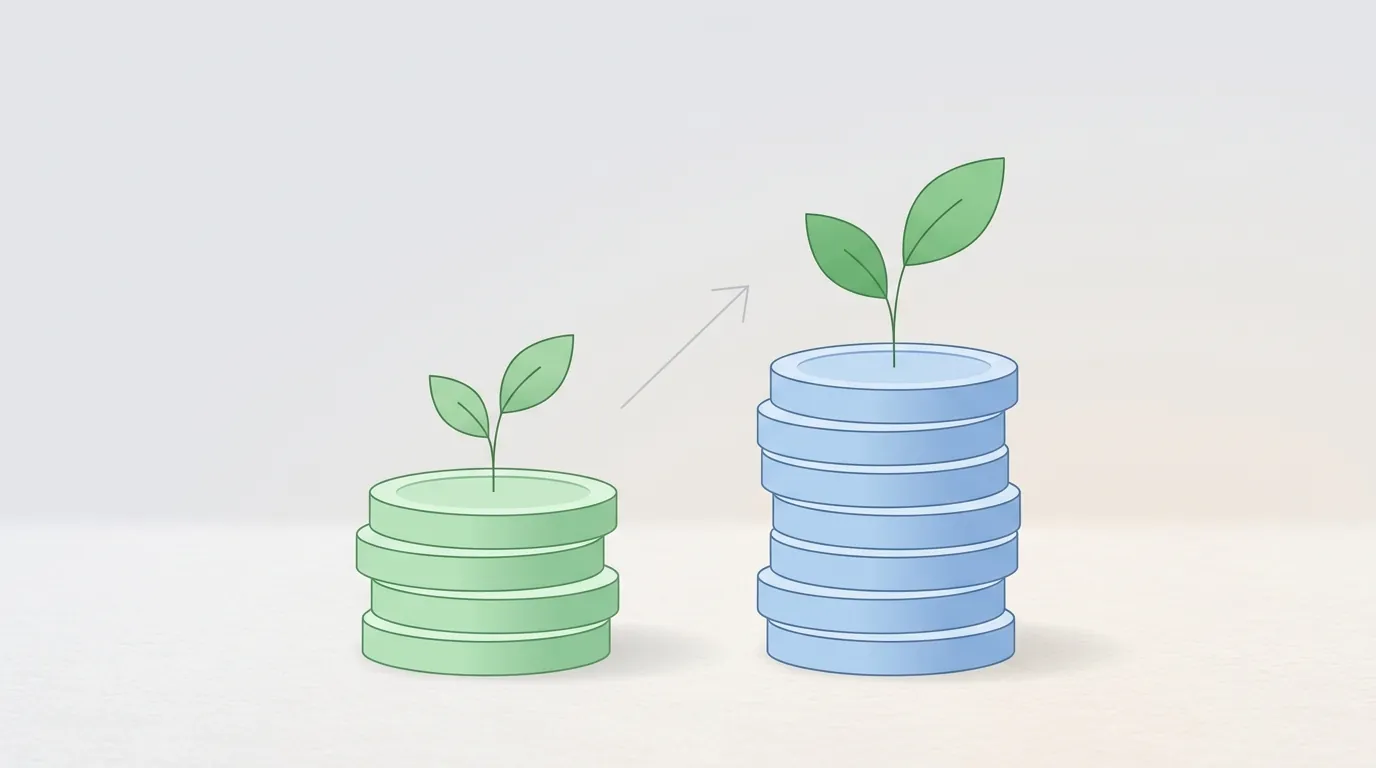

When building a long-term investment strategy, investors often focus on capital appreciation—the potential for an asset to increase in value over time. Dividend investing adds another potential source of return by focusing on companies that distribute cash to shareholders.
Dividends can provide portfolio income, support retirement cash flow, or be reinvested to purchase additional shares. However, dividends are not guaranteed, and a stock's dividend history alone does not determine whether it is an appropriate investment.
Understanding dividend yield, payout ratios, dividend growth, earnings, cash flow, ex-dividend dates, and dividend reinvestment plans (DRIPs) can help investors evaluate dividend-paying stocks more effectively.
What Is a Dividend?
A dividend is a distribution of a company's earnings or other available capital to its shareholders. Public companies may choose to return cash to shareholders instead of retaining all available capital for operations, acquisitions, debt reduction, or other corporate purposes.
The decision to pay a dividend is made by the company's board of directors, and the amount and frequency can change.
How Dividend Payments Work
Many dividend-paying companies distribute dividends quarterly, although payment schedules vary.
For example, if an investor owns 100 shares of a company that pays an annual dividend of $4 per share, the annual cash distribution would be $400 if the dividend remains unchanged and the investor remains eligible for all payments.
The actual amount received can change if the company raises, reduces, suspends, or eliminates its dividend.
Dividend payments are generally deposited into the investor's brokerage account or retirement account, depending on where the shares are held.
Understanding Dividend Yield
Dividend yield measures a stock's annualized dividend relative to its current share price.
For example, a company paying $4 in annual dividends while trading at $100 per share has a 4% indicated dividend yield.
The calculation is:
Annual Dividend ÷ Current Share Price = Dividend Yield
Dividend yield can change even when the company's dividend remains unchanged because the stock price moves.
This is important when comparing dividend stocks, dividend ETFs, income investments, and retirement portfolios. A rising yield can reflect a higher dividend, but it can also result from a falling share price.
Dividend Dates Investors Should Understand
Dividend-paying companies use several important dates to determine shareholder eligibility.
Declaration Date
The declaration date is when the company's board announces the dividend. The announcement generally includes the dividend amount, record date, and payment date.
Ex-Dividend Date
The ex-dividend date determines which investors are eligible for the upcoming dividend under current settlement rules.
For U.S. stocks, investors generally need to purchase shares before the ex-dividend date to receive the upcoming dividend. Buying on the ex-dividend date or afterward generally means the buyer does not receive that particular dividend.
Investors should verify the applicable dates because settlement and exchange rules can change.
Record Date
The record date is the date the company uses to determine which shareholders are entitled to receive the dividend.
Payment Date
The payment date is when the dividend is distributed to eligible shareholders.
Investors should not purchase a stock solely to capture an upcoming dividend. The stock price can adjust around the ex-dividend date, and taxes, transaction costs, and market movements can affect the overall result.
Dividend Reinvestment Plans
Investors who do not currently need dividend income can choose to reinvest their distributions through a Dividend Reinvestment Plan (DRIP).
Depending on the brokerage and security, dividends may be used to purchase additional whole or fractional shares.
For example, an investor receiving a $50 dividend could use that distribution to purchase additional shares. Those additional shares may subsequently generate dividends of their own if the company continues paying them.
Over long periods, reinvesting dividends can contribute meaningfully to compound investment growth.
However, reinvestment does not eliminate investment risk. If the underlying stock declines, the additional shares purchased through reinvestment can also lose value.
Dividend Growth vs. Dividend Yield
Dividend investors often examine both the current yield and the company's history of changing its dividend.
A company with a relatively modest current yield may increase its dividend over time, while a company with a very high current yield may have limited capacity to maintain its distribution.
Investors can therefore examine:
- Current dividend yield
- Dividend growth rate
- Earnings growth
- Free cash flow
- Payout ratio
- Debt levels
- Revenue trends
- Business stability
- Competitive position
- Dividend history
No single metric determines whether a dividend is sustainable.
Understanding the Payout Ratio
The payout ratio measures how much of a company's earnings are distributed to shareholders as dividends.
For example, if a company earns $10 per share and pays $4 per share in dividends, its earnings-based payout ratio is 40%.
A high payout ratio can indicate that a large portion of earnings is being distributed rather than retained by the company.
However, an appropriate payout ratio varies substantially by industry and business model. Utilities, real estate investment trusts, financial companies, mature consumer businesses, and rapidly growing technology companies can have very different capital-allocation structures.
For that reason, there is no universal payout-ratio threshold that guarantees dividend safety.
Investors should also examine free cash flow, because accounting earnings and available cash can differ.
Dividend Investing Risks
Dividend stocks are still stocks. Receiving regular distributions does not protect an investor from declining share prices.
Dividend Cuts
Companies can reduce or eliminate dividends when earnings decline, cash flow weakens, debt obligations increase, or management changes its capital-allocation priorities.
A dividend reduction can also coincide with a significant decline in the stock price.
High-Yield Dividend Stocks
A very high dividend yield can sometimes signal elevated risk rather than an attractive income opportunity.
For example, if a company's share price falls sharply while its dividend remains unchanged, its indicated dividend yield will rise. If the business is experiencing financial difficulties, management may subsequently reduce or eliminate the dividend.
This is why investors should evaluate the company's earnings, cash flow, balance sheet, debt obligations, and dividend coverage rather than screening solely for yield.
Sector Concentration
Dividend-focused portfolios can become concentrated in particular industries.
An investor who owns several high-yield stocks from the same sector may have more exposure to industry-specific risks than expected.
Dividend ETFs can provide broader diversification, but investors should still review their holdings, sector weights, expense ratios, and investment methodology.
Dividend Stocks in Taxable and Retirement Accounts
The tax treatment of dividends depends on the type of dividend, account, and investor circumstances.
In taxable brokerage accounts, qualified dividends may receive preferential federal tax treatment if applicable requirements are satisfied. Other dividends may be taxed as ordinary income.
Dividends inside tax-advantaged retirement accounts generally have different tax consequences because the account itself determines how investment income is treated.
Investors should therefore consider taxable brokerage accounts, traditional IRAs, Roth IRAs, 401(k) plans, dividend ETFs, and asset location when developing an income-oriented investment strategy.
How to Evaluate Dividend Investments
Before purchasing a dividend-paying stock or fund, consider several factors.
1. Review the Company's Financial Position
Examine revenue, earnings, free cash flow, debt, interest obligations, and business fundamentals.
2. Compare Dividend Yield
Compare the current yield with the company's historical range and with comparable companies or funds.
An unusually high yield deserves additional investigation.
3. Examine Dividend Growth
Look at the company's record of maintaining or increasing dividends, while recognizing that historical growth does not guarantee future payments.
4. Evaluate the Payout Ratio
Determine how much of earnings and cash flow are being distributed.
A payout ratio should be interpreted in the context of the company's industry and financial structure.
5. Consider Total Return
Dividend income is only one component of an investment's potential return.
Total return incorporates both changes in the market value of the investment and distributions received.
A high dividend yield does not automatically compensate for poor business performance or significant capital losses.
Building Dividend Investments Into a Portfolio
Dividend-paying stocks can play different roles depending on an investor's objectives.
During the accumulation phase, investors may choose to reinvest dividends to increase their number of shares.
During retirement, some investors may instead use dividend distributions as part of their portfolio cash flow.
A diversified portfolio can also combine dividend stocks, broad-market ETFs, bond funds, Treasury securities, certificates of deposit, and cash reserves, depending on the investor's time horizon and risk tolerance.
Dividend investing is therefore not simply a strategy for maximizing yield. It involves evaluating the quality and sustainability of the underlying businesses, the role of dividends within total return, portfolio diversification, taxes, and the investor's broader financial plan.
References
- U.S. Securities and Exchange Commission — Investor.gov: Dividends Investor.gov — Dividends
- Financial Industry Regulatory Authority — Dividends and Other Distributions FINRA — Dividends and Other Distributions
- U.S. Securities and Exchange Commission — Investor.gov: Stocks Investor.gov — Stocks