
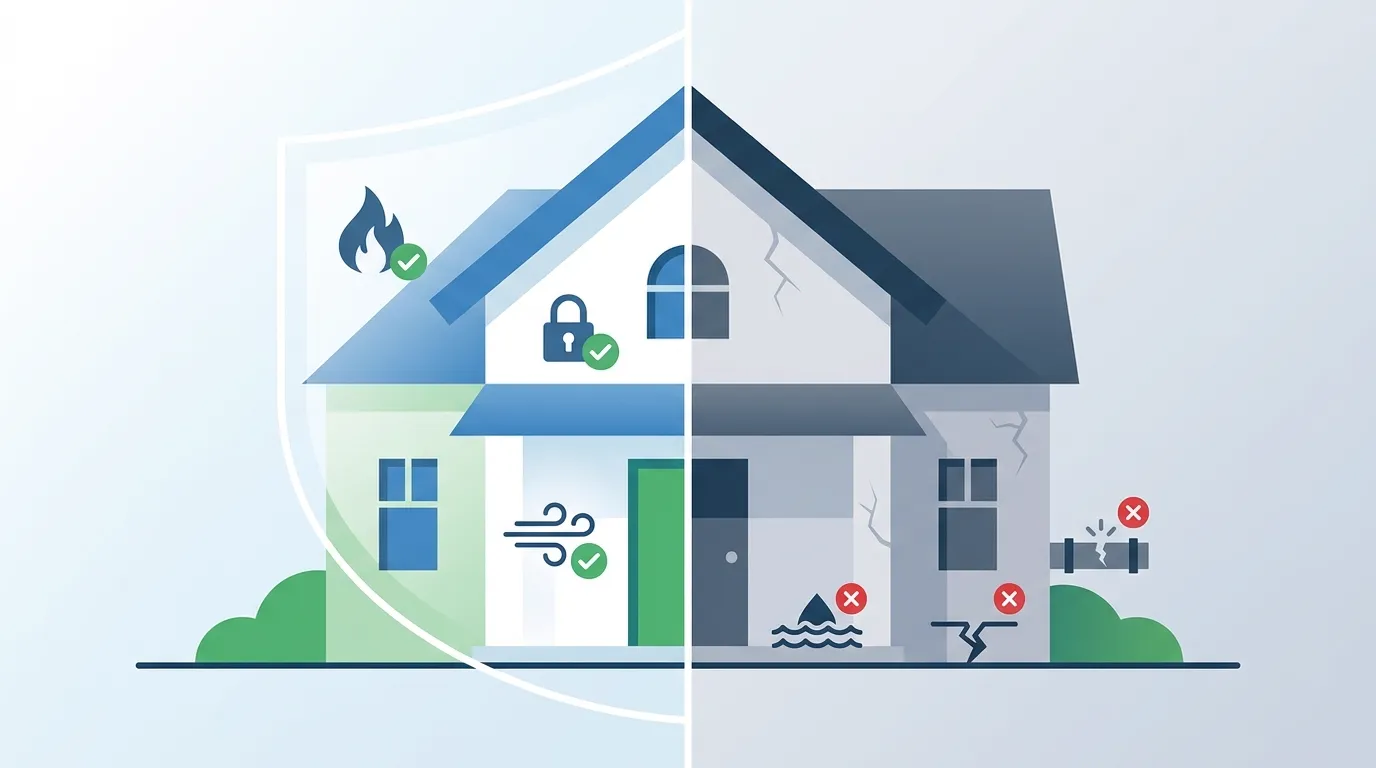
Home insurance is designed to help protect homeowners from financial losses associated with damage to their property, personal belongings, and certain liability claims. While policies can provide broad protection, they do not cover every type of loss.
Understanding the major components of homeowners insurance coverage can make it easier to evaluate policy limits, deductibles, exclusions, and optional protections. It can also help homeowners identify situations where additional insurance may be necessary.
The exact coverage provided depends on the policy, insurer, state regulations, and individual circumstances, so reviewing the policy contract is essential before relying on a particular protection.
What Does Homeowners Insurance Typically Cover?
A standard homeowners insurance policy generally combines several different types of protection. The most common components address the home itself, other structures, personal property, temporary living expenses, and liability.
Dwelling Coverage
Dwelling insurance is designed to cover the physical structure of the home against covered causes of loss.
Depending on the policy, this can include damage to:
- Walls and ceilings
- Roof
- Floors
- Built-in cabinets
- Attached garages
- Plumbing and electrical systems
- Permanently installed fixtures
The dwelling coverage limit should generally reflect the estimated cost of rebuilding the home rather than simply its current market value.
Rebuilding costs can differ substantially from a property's sale price because construction materials, labor, permits, demolition, and local building requirements can all affect the cost of reconstruction.
Other Structures Coverage
Homeowners insurance can also provide coverage for certain structures located on the property but separate from the main residence.
Examples can include:
- Detached garages
- Sheds
- Fences
- Certain standalone structures
The amount of coverage available is usually subject to a percentage or limit specified by the policy.
Personal Property Coverage
Personal property insurance can help cover belongings damaged, destroyed, or stolen as a result of a covered event.
Covered property may include:
- Furniture
- Clothing
- Electronics
- Appliances
- Household equipment
- Certain recreational items
The policy may establish specific limits for categories such as jewelry, cash, collectibles, firearms, or other high-value possessions.
Homeowners with expensive items should review these limits and determine whether scheduled personal property coverage or another endorsement is appropriate.
Replacement Cost vs. Actual Cash Value
One of the most important distinctions when comparing homeowners insurance policies is how damaged property will be valued.
Replacement Cost
Replacement cost coverage generally aims to pay the amount needed to repair or replace covered property without deducting depreciation, subject to the policy's terms and limits.
For example, if an older roof is damaged by a covered event, the claim settlement can depend on whether the policy uses replacement cost or another valuation method.
Actual Cash Value
Actual cash value (ACV) generally takes depreciation into account when determining the value of damaged property.
As a result, an ACV settlement can be lower than the amount required to purchase a new replacement.
Homeowners should check whether their dwelling and personal property coverage uses replacement cost, actual cash value, or different valuation methods for different categories of property.
Personal Liability Insurance
Homeowners insurance can also provide personal liability coverage.
This protection may apply when the policyholder is legally responsible for bodily injury or property damage involving another person, subject to the policy terms.
For example, liability coverage could become relevant if a visitor is injured on the property and the homeowner is found legally responsible.
Liability coverage can also include certain legal defense costs associated with a covered claim.
Because liability claims can potentially exceed the value of the physical property, homeowners should consider their overall financial exposure when reviewing liability limits.
Medical Payments to Others
Some homeowners insurance policies include medical payments coverage for certain injuries suffered by guests or other permitted visitors.
This coverage is generally intended for relatively minor medical expenses and can apply without the same liability determination required for a traditional liability claim, depending on the policy.
It is different from health insurance and should not be treated as a substitute for medical coverage.
Additional Living Expenses
If a covered loss makes a home temporarily uninhabitable, additional living expenses (ALE) coverage may help pay certain extra costs while repairs are completed.
Depending on the policy, eligible expenses can include:
- Temporary lodging
- Additional food costs
- Certain transportation expenses
- Other necessary increases in living expenses
The available amount and duration of ALE coverage depend on the policy.
Homeowners should check the applicable limits before assuming that every temporary housing expense will be reimbursed.
What Home Insurance May Exclude
Homeowners insurance provides important protection, but exclusions can be just as important as covered events.
Flood Damage
Standard homeowners insurance generally does not cover damage caused by flooding.
Flood insurance is typically purchased separately through an appropriate flood insurance program or insurer.
This distinction matters because homeowners may assume that water damage is automatically covered. The cause of the water intrusion can determine whether a claim falls under homeowners insurance, flood insurance, or another form of coverage.
Earthquake Damage
Earthquake damage is also commonly excluded from standard homeowners policies.
In areas with significant earthquake exposure, homeowners may need a separate earthquake policy or endorsement.
Normal Wear and Tear
Homeowners insurance is generally not intended to pay for ordinary deterioration or routine maintenance.
Examples can include:
- Aging roofs
- Normal plumbing deterioration
- Gradual foundation problems
- Routine appliance maintenance
- General property deterioration
Insurance is primarily designed for qualifying sudden or accidental losses covered by the policy rather than predictable maintenance expenses.
Pest and Infestation Damage
Damage caused by insects, rodents, termites, or other infestations may be excluded or limited under a homeowners policy.
Routine pest control and termite treatment are generally maintenance responsibilities rather than standard insurance claims.
Intentional Damage
Insurance policies generally exclude losses resulting from intentional acts by an insured person.
The specific exclusions and circumstances are defined in the policy contract.
How Home Insurance Deductibles Work
A home insurance deductible is the amount the homeowner generally pays toward a covered property claim before the insurer contributes to the remaining eligible loss.
For example, if a covered loss produces $15,000 in eligible damage and the policy has a $1,000 deductible, the homeowner would generally be responsible for the first $1,000, with the insurer paying the remaining $14,000, subject to the policy's terms and limits.
Some policies can have different deductibles for specific risks, including certain wind or hurricane claims.
When comparing homeowners insurance quotes, look beyond the premium and examine the deductible that applies to each major coverage.
How to Review Homeowners Insurance Coverage
A policy review should focus on several financial components.
1. Check the Dwelling Coverage Limit
Make sure the dwelling limit is based on an appropriate reconstruction estimate rather than simply the home's purchase price or market value.
2. Review Personal Property Limits
Check whether your belongings are covered at replacement cost or actual cash value and whether special limits apply to valuable possessions.
3. Compare Liability Limits
Review the amount of personal liability coverage available and consider whether it is appropriate for your financial circumstances.
4. Examine Deductibles
Compare the standard deductible as well as any separate deductibles that could apply to specific types of property damage.
5. Identify Major Exclusions
Look specifically for exclusions involving flood, earthquakes, maintenance, mold, pests, water damage, and other risks relevant to the property.
6. Consider Additional Coverage
Depending on the property and location, homeowners may consider additional protection such as:
- Flood insurance
- Earthquake insurance
- Umbrella liability insurance
- Scheduled personal property coverage
- Water backup coverage
- Equipment breakdown coverage
- Increased replacement cost coverage
Availability and suitability vary by insurer and location.
Home Insurance Comparison Checklist
Before purchasing or renewing a homeowners insurance policy, review:
- Dwelling coverage limit
- Other structures coverage
- Personal property coverage
- Replacement cost or actual cash value
- Personal liability limit
- Medical payments coverage
- Additional living expenses
- Standard deductible
- Special deductibles
- Major exclusions
- Optional endorsements
- Flood and earthquake protection
- Valuable-item coverage
A lower home insurance premium does not necessarily mean lower overall costs. A policy with a lower premium may have higher deductibles, lower coverage limits, or more restrictive terms.
The goal is to understand the relationship between home insurance rates, coverage limits, deductibles, exclusions, and out-of-pocket exposure. Reviewing these factors together can help homeowners identify potential coverage gaps and select protection that aligns with the risks associated with their property.