Long-term financial planning often focuses on increasing income, building investment portfolios, paying down debt, and accumulating assets. Those objectives are important, but a strong balance sheet can still become vulnerable when income suddenly stops.
An extended illness, serious injury, disability, or unexpected interruption in employment can change household cash flow within days. Rent or mortgage payments, insurance premiums, utilities, debt obligations, and other recurring expenses generally continue even when income falls.
This makes income disruption planning an important part of personal financial management.
A household does not necessarily need to eliminate every financial risk. Instead, it can build sufficient liquidity, insurance coverage, and contingency plans to reduce the likelihood that a temporary setback forces the sale of long-term investments or the accumulation of expensive debt.
The Core Risk: Liquidity and Cash Flow
A household's net worth and its available cash are not the same thing.
Someone may have substantial retirement savings, home equity, or brokerage investments while having relatively little cash available for immediate expenses.
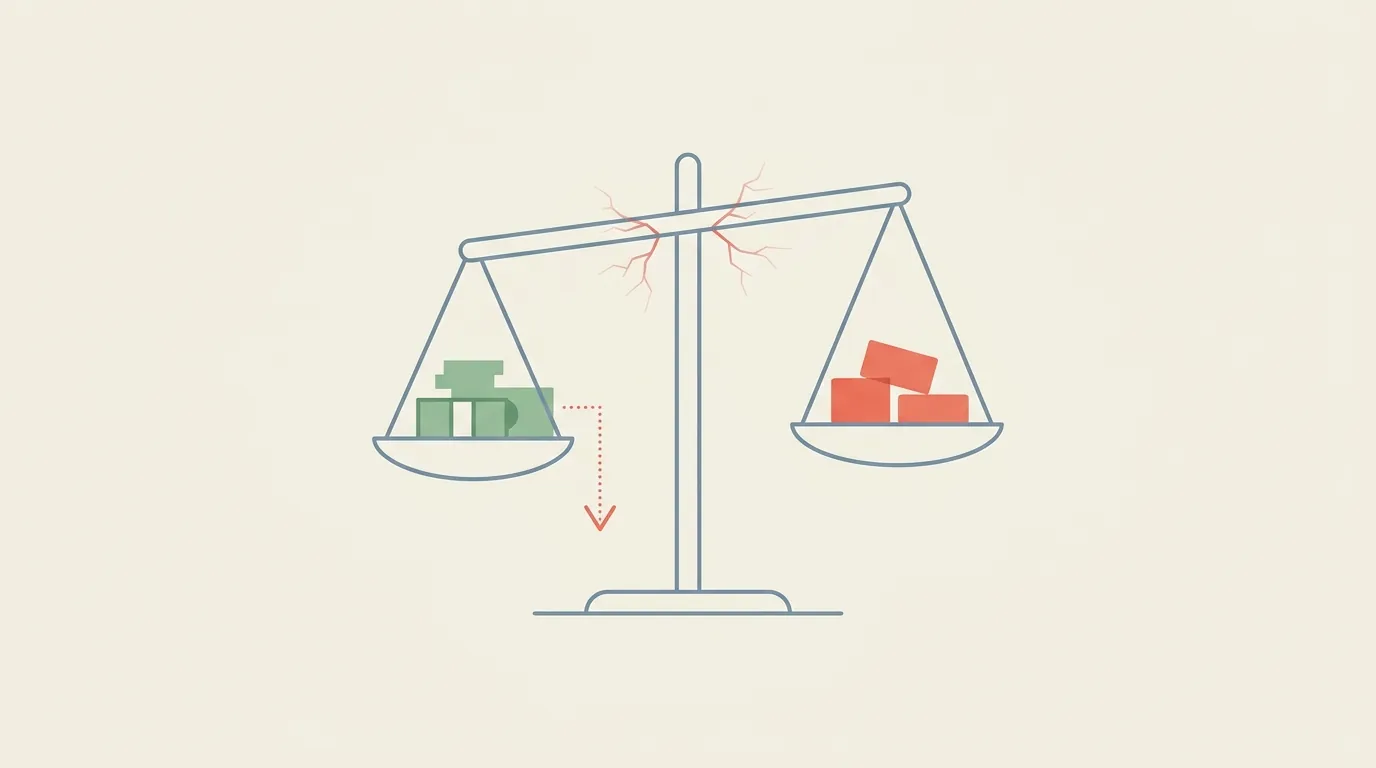
This creates a liquidity mismatch.
Fixed Expenses Continue During Income Loss
Many household expenses remain relatively stable when income falls.
These can include:
- Mortgage or rent
- Health insurance premiums
- Auto loans
- Student loans
- Property taxes
- Utilities
- Insurance
- Minimum debt payments
- Basic food and household expenses
Discretionary spending can often be reduced quickly. Fixed obligations are more difficult to change.
Forced Asset Sales Can Create Additional Costs
If cash reserves are inadequate, a household may need to sell investments to cover expenses.
Selling investments during a market decline can lock in losses and reduce future portfolio growth.
Other assets can create different problems. Early retirement-account withdrawals may result in income taxes and, when applicable, additional penalties. Selling a property quickly can also create transaction costs and potentially unfavorable pricing.
The objective of an emergency reserve is therefore not simply to hold cash. It is to provide financial flexibility during periods when selling long-term assets would be undesirable.
Building a Layered Financial Safety Net
A resilient household can use several layers of protection rather than relying on a single account or insurance policy.
Emergency Savings
An emergency fund provides accessible cash for unexpected expenses and temporary income disruptions.
The appropriate amount depends on factors such as:
- Household income stability
- Number of income earners
- Employment type
- Health insurance coverage
- Debt obligations
- Family responsibilities
- Access to other liquid assets
Someone with variable freelance income and substantial fixed expenses may need a larger liquid reserve than someone with highly predictable income and substantial employer benefits.
A high-yield savings account can be useful for emergency savings when it provides competitive interest while keeping funds readily accessible.
A money market account may also provide a combination of liquidity and interest, depending on the institution and account terms.
Short-Term Reserves
Households with larger cash requirements may divide savings into separate purposes.
For example:
- Immediate emergency cash
- Insurance deductibles
- Temporary income replacement
- Annual tax obligations
- Major home or vehicle repairs
Short-term Treasury securities can also play a role in some cash-management strategies, although their maturity dates and liquidity characteristics differ from ordinary savings accounts.
The key is to match the financial instrument to the timing of the expected need.
Health Insurance and Medical Costs
An income-disruption plan should distinguish between medical-cost protection and income protection.
Health insurance is designed primarily to help cover eligible medical expenses according to the policy's terms. It does not replace wages when a person cannot work.
Important health insurance costs can include:
- Premiums
- Deductibles
- Copayments
- Coinsurance
- Prescription expenses
- Out-of-pocket maximums
Households should know how much cash they would need to cover their health plan's applicable deductible and other potential out-of-pocket expenses.
For people with high-deductible health plans, an eligible Health Savings Account (HSA) can provide another source of tax-advantaged funds for qualified medical expenses.
Disability Insurance and Income Protection
For a prolonged illness or injury, disability insurance can be one of the most important forms of income protection.
Disability coverage generally replaces a portion of income when a qualifying medical condition prevents the insured person from working according to the policy's definition of disability.
Short-Term Disability
Short-term disability insurance typically covers a shorter period of disability, subject to the policy's elimination period and benefit duration.
Employer-sponsored coverage may provide short-term disability benefits, while some individuals purchase coverage separately.
Long-Term Disability
Long-term disability insurance is designed to provide benefits for a substantially longer period when a qualifying disability continues.
Policy features can differ significantly.
Review:
- Monthly benefit amount
- Elimination period
- Benefit duration
- Definition of disability
- Own-occupation versus other-occupation provisions
- Benefit offsets
- Cost-of-living adjustments
- Residual or partial disability benefits
- Premium structure
- Exclusions and limitations
Someone who relies heavily on earned income should understand exactly how much income would be replaced and when benefits would begin.
Self-Employed and Freelance Workers
Independent contractors and business owners can face additional income-disruption risks because they may not have access to employer-sponsored disability insurance or paid leave.
A freelancer should consider:
- Emergency savings
- Private disability insurance
- Health insurance
- Business operating reserves
- Client concentration
- Recurring business expenses
- Tax obligations
- Personal debt payments
Personal and business finances should also be separated where appropriate.
A freelancer who depends on one major client may have a different income-risk profile from someone with dozens of smaller clients.
Stress-Testing Your Personal Balance Sheet
A financial stress test does not need to predict the future perfectly. Its purpose is to identify vulnerabilities before an emergency occurs.
1. Calculate Your Essential Monthly Expenses
Separate spending into essential and discretionary categories.
Essential expenses might include:
- Housing
- Basic food
- Utilities
- Insurance
- Transportation
- Debt minimums
- Medical costs
- Required taxes
Discretionary expenses such as entertainment, travel, dining out, and optional subscriptions can then be evaluated separately.
This produces a more realistic survival cash-flow requirement.
2. Calculate Your Liquid Runway
Divide accessible emergency savings and other appropriate liquid reserves by essential monthly expenses.
For example, $30,000 of available emergency reserves divided by $5,000 of essential monthly expenses represents approximately six months of essential-expense coverage.
The resulting number is a planning metric, not a universal target.
Households with variable income, dependents, specialized careers, or limited access to other resources may reasonably maintain more liquidity.
3. Model Several Income Scenarios
Instead of testing only a complete loss of income, consider several scenarios:
Scenario A: Income falls by 25%.
Scenario B: Income falls by 50%.
Scenario C: Income stops for several months.
Scenario D: Income stops while medical expenses increase.
For each scenario, calculate how long existing cash reserves would last.
4. Review Insurance Income Replacement
Determine what happens to household income if you cannot work.
Review:
- Employer short-term disability
- Employer long-term disability
- Private disability insurance
- Paid leave
- Government disability benefits where applicable
- Spousal income
- Business income
Calculate the monthly gap between essential expenses and potential replacement income.
5. Stress-Test Debt Obligations
Debt payments can become particularly problematic when income declines.
Review:
- Mortgage payments
- Auto loans
- Credit-card balances
- Personal loans
- Student loans
- Business debt
Pay particular attention to variable-rate debt and high-interest credit-card balances.
A household that relies on credit cards to finance several months of expenses can quickly increase its interest costs and reduce future financial flexibility.
Strengthening the Safety Margin
Once the gaps are identified, prioritize the areas that could create the largest financial consequences.
Possible steps include:
- Increasing emergency savings
- Moving emergency cash to an appropriate high-yield savings account
- Reviewing health insurance coverage
- Obtaining or increasing disability insurance
- Reducing high-interest debt
- Maintaining adequate insurance deductibles in relation to available savings
- Diversifying household income where practical
- Creating a written emergency spending plan
Insurance deductibles should also be considered alongside liquid savings. A higher deductible can reduce premiums in some policies, but it creates a larger immediate cash requirement when a covered claim occurs.
The Bottom Line
Sickness and income disruption planning is fundamentally a cash-flow and risk-management exercise.
A household can have substantial investments and still face financial stress if income disappears while fixed expenses continue. Emergency savings provide liquidity, health insurance helps address covered medical costs, and disability insurance can provide income replacement when a qualifying illness or injury prevents someone from working.
The appropriate reserve depends on the household's income stability, expenses, insurance coverage, debt, dependents, and access to other resources. Rather than relying on a single universal emergency-fund target, stress-test several income and expense scenarios to determine where the actual vulnerabilities lie.
The goal is to create enough financial flexibility that an unexpected health or income event does not automatically force high-interest borrowing, distressed asset sales, or major changes to long-term financial plans.
References
- Consumer Financial Protection Bureau (CFPB) — Consumer resources concerning emergency savings, household cash flow, and financial resilience.
- Federal Deposit Insurance Corporation (FDIC) — Information concerning deposit insurance and consumer banking.
- Financial Industry Regulatory Authority (FINRA) — Investor education resources concerning risk management and financial planning.
- Social Security Administration (SSA) — Information about Social Security Disability Insurance and disability benefits.