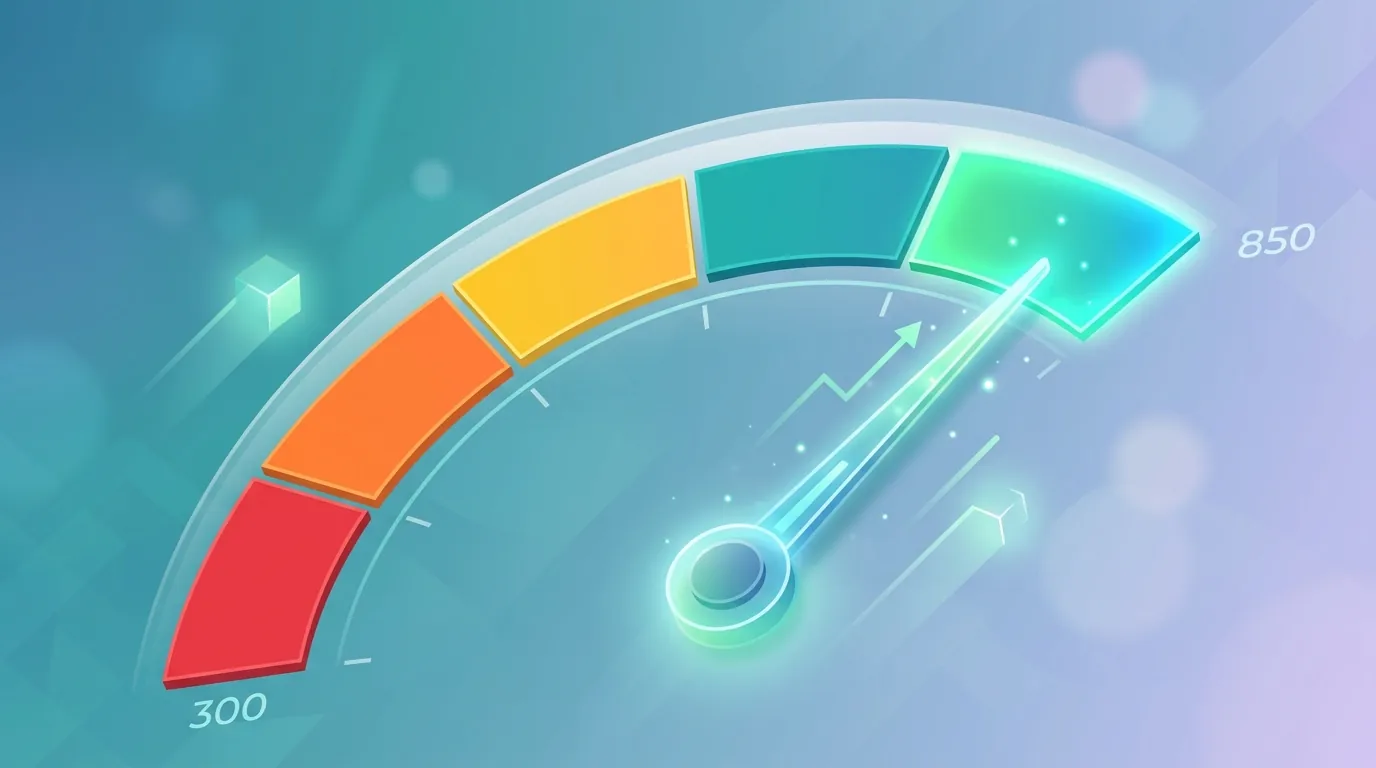
A credit score can influence the interest rates, credit limits, and borrowing terms available to a consumer. It can also affect applications for mortgages, auto loans, credit cards, and other financial products.
Improving a credit score is generally less about finding a single shortcut and more about consistently managing the information that appears on a credit report. Payment history, balances, credit history length, new credit, and credit mix all contribute to FICO® Scores, although their importance can vary depending on the individual's credit profile. (myFICO)
For someone trying to rebuild credit after missed payments or high balances, progress may take time. For someone with an established history, relatively small changes in balances or new applications can affect the score differently.
Understand What Is Actually Affecting Your Score
Before changing your credit habits, review the factors that are currently influencing your credit profile.
For FICO Scores, the five primary categories are:
- Payment history
- Amounts owed
- Length of credit history
- New credit
- Credit mix
FICO's published framework assigns general weights of 35% to payment history, 30% to amounts owed, 15% to length of credit history, 10% to new credit, and 10% to credit mix. These percentages are guidelines for the general population, not a formula that produces the exact same result for every consumer. (myFICO)
This distinction matters. Someone with several recent late payments has a different credit-improvement challenge from someone whose only issue is high credit-card utilization.
Make Every Payment on Time
Payment history is the largest category in the FICO scoring model.
A history of paying credit obligations on time gives scoring models evidence that accounts are being managed as agreed. Conversely, recent and severe late payments can have a significant effect on scores. (myFICO)
One practical way to prevent missed payments is to establish automatic payments for at least the minimum amount due. Electronic reminders can provide another layer of protection.
Automatic payments do not have to replace manual payments. A consumer can automate the minimum payment and then make an additional payment manually when cash flow permits.
If a payment has already been missed, bringing the account current is an important first step. Continuing to make payments on time can gradually establish more recent positive payment information, although accurate negative information does not disappear immediately simply because an account becomes current. (myFICO)
Reduce Credit Card Balances
Credit utilization is an important part of the amounts-owed category.
Utilization compares revolving balances with available credit. For example, a $2,000 balance on a card with a $10,000 limit represents 20% utilization on that account.
FICO considers utilization across revolving accounts as well as other aspects of amounts owed, including how many accounts have balances. High utilization can indicate that a borrower is using a large portion of available revolving credit. (myFICO)
The CFPB notes that experts commonly recommend keeping credit usage below 30% of total available credit, although lower utilization can also be beneficial depending on the scoring model and overall profile. Importantly, consumers do not need to carry a credit-card balance to build credit. (Consumer Financial Protection Bureau)
Paying a card in full each month can therefore be compatible with building strong credit.
Pay Attention to When Balances Are Reported
Paying a credit card in full does not necessarily mean a $0 balance will appear on every credit report.
FICO explains that the balance appearing on a credit report is generally the balance reported by the lender, often based on the latest monthly statement. As a result, someone can pay the entire statement balance by the due date while a balance was still reported to a credit bureau before that payment was made. (myFICO)
This can matter when a card has a relatively low credit limit.
A consumer who wants to reduce reported utilization may choose to make payments before the statement closes, provided doing so fits their budget. The exact reporting date varies by creditor, so the card issuer should be contacted to understand its reporting practices.
Avoid Applying for Too Much New Credit
Opening new credit accounts can temporarily affect a credit score.
When someone applies for credit, a lender may make a hard inquiry. FICO says inquiries remain on credit reports for two years, although FICO Scores generally consider relevant inquiries from the previous 12 months. New accounts can also reduce the average age of accounts. (myFICO)
This does not mean consumers should avoid all new credit.
A new credit card can increase available credit and potentially lower overall utilization if the additional credit is not accompanied by substantial new spending. But applying for numerous accounts in a short period can create several inquiries and new accounts at once. (myFICO)
If a new account is genuinely needed, compare the available products first and avoid submitting unnecessary applications.
Keep Older Accounts Open When Appropriate
Length of credit history is another component of FICO Scores.
The scoring model considers the age of established accounts, the age of the newest account, and the average age of accounts. A longer credit history can provide more information about how someone has managed credit over time. (myFICO)
This is one reason closing an older credit card should not be treated as an automatic credit-improvement strategy.
Closing an account can reduce available revolving credit, potentially increasing utilization if balances remain elsewhere. It can also affect the overall structure of the credit profile.
That does not mean every old account should remain open indefinitely. Annual fees, inactivity policies, security concerns, and personal financial circumstances may justify closing an account. The potential credit consequences should simply be considered before doing so.
Review Your Credit Reports for Errors
Credit scores are based on information contained in credit reports, so inaccurate information can affect scoring.
Consumers should review reports from the major credit reporting companies and look for issues such as:
- Accounts that do not belong to them
- Incorrect payment statuses
- Incorrect balances
- Outdated personal information
- Duplicate accounts
- Incorrect credit limits
- Accounts incorrectly reported as delinquent
The CFPB identifies Equifax, Experian, and TransUnion as the three largest nationwide credit reporting companies. (Consumer Financial Protection Bureau)
If information is inaccurate, consumers can dispute the error with the credit reporting company and, when appropriate, the company that supplied the information.
Correcting an error can be different from attempting to remove legitimate negative information. Accurate information generally cannot simply be deleted because it lowers a score.
Be Careful With Balance Transfers
A balance-transfer credit card can sometimes help reduce interest costs, but it should not automatically be viewed as a credit-score improvement strategy.
Opening the new card can generate a hard inquiry and reduce the average age of accounts. At the same time, transferring balances can change utilization across individual accounts and the overall credit profile.
The CFPB specifically warns that consolidating balances onto one card can hurt a score if the move causes a high percentage of the available limit on that card to be used. (Consumer Financial Protection Bureau)
If a balance transfer is being considered, compare the transfer fee, promotional APR period, regular APR after the promotion, and available credit before applying.
The primary goal should be managing the debt cost rather than generating a short-term score increase.
Don't Close Cards Simply to Eliminate Debt
Paying off a credit card is generally a positive financial step, but closing the account is a separate decision.
Suppose someone has three cards with combined limits of $20,000 and no balances. Closing one card with a $10,000 limit could leave only $10,000 in available revolving credit. If the consumer subsequently carries $4,000 across the remaining cards, overall utilization would be 40% rather than 20% had the larger credit line remained available.
The effect varies by individual credit profile, but the example illustrates why account closure and debt repayment should be considered separately.
A card with no annual fee may sometimes be kept open if the account is manageable and secure. A card with an expensive annual fee may require a different calculation.
Don't Borrow Just to Improve Credit Mix
Credit mix accounts for a smaller portion of FICO Scores than payment history and amounts owed.
FICO considers different types of accounts, including revolving credit cards, retail accounts, installment loans, and mortgages. However, consumers do not need to maintain one of every possible account type. (myFICO)
Taking out an unnecessary auto loan or personal loan simply to diversify a credit profile can create interest costs and additional financial obligations.
Credit mix is more appropriately viewed as something that develops naturally as consumers use different types of credit for legitimate financial needs.
Give Positive Habits Time to Work
Credit improvement is not always immediate.
Credit scores change as lenders report updated information to the credit bureaus. A lower credit-card balance may be reflected after the issuer reports the new balance, while a payment history improvement requires a longer period of consistent payments.
The CFPB notes that rebuilding credit takes time and that there are no shortcuts or secrets that can instantly repair a damaged credit history. (Consumer Financial Protection Bureau)
Someone recovering from significant delinquencies may therefore need to focus on maintaining current accounts rather than expecting a rapid increase after one payment.
Focus on the Factors You Can Control
Credit scoring models consider historical information that consumers cannot immediately change.
The age of an account, for example, cannot be accelerated. A legitimate late payment cannot simply be erased because someone wants a higher score.
Other factors are more directly manageable.
Consumers can:
- Pay bills on time
- Reduce revolving balances
- Avoid unnecessary applications
- Review credit reports
- Correct inaccurate information
- Maintain manageable credit accounts
- Keep older accounts when appropriate
- Monitor credit limits and reported balances
These habits address several of the major components used in FICO scoring. (myFICO)
Credit Improvement and Debt Payoff Are Related but Different
A higher credit score and lower debt are not identical goals.
Paying down credit-card balances can potentially improve utilization while also reducing interest costs. But a consumer should not take on new debt solely to manipulate a credit score.
Likewise, a person with a high score can still have substantial debt. Credit scoring measures information in a credit report; it does not provide a complete picture of household financial health.
A sustainable approach therefore combines credit management with a realistic budget and debt-repayment plan.
What to Avoid When Rebuilding Credit
Some strategies can create more problems than they solve.
Avoid companies that promise to erase accurate negative information or guarantee a specific credit-score increase. Be cautious about paying for services that claim to create a new credit identity or remove legitimate information from a credit report.
Consumers should also be skeptical of opening several accounts simply because a company claims that more credit cards will automatically improve a score.
FICO's own guidance indicates that opening multiple accounts rapidly can increase perceived credit risk, particularly for people with shorter credit histories. (myFICO)
Credit improvement generally comes from managing existing obligations responsibly rather than searching for a workaround.
Building Better Credit Over the Long Term
Improving a credit score is primarily a process of maintaining reliable financial behavior over time.
Start by reviewing the credit reports and identifying the issues that are actually affecting the profile. If late payments are the main problem, prioritize payment consistency. If revolving utilization is high, focus on reducing balances. If the file is relatively new, allow accounts to age while avoiding unnecessary applications.
There is no universal credit-improvement timeline because scoring depends on the information contained in each person's credit profile. Even the relative importance of individual factors can vary between consumers. (myFICO)
The most durable approach is therefore straightforward: pay obligations on time, keep revolving balances manageable, apply for new credit selectively, review reports for errors, and allow positive credit history to accumulate.
References
- Consumer Financial Protection Bureau — How Do I Get and Keep a Good Credit Score?
- Consumer Financial Protection Bureau — How to Rebuild Your Credit
- Consumer Financial Protection Bureau — Understand Your Credit Score
- FICO — How Are FICO Scores Calculated?
- FICO — How Payment History Impacts Your FICO Score
- FICO — How Owing Money Can Impact Your Credit Score
- FICO — How New Credit Impacts Your Credit Score
- FICO — How Credit History Length Affects Your FICO Score
- FICO — Types of Credit and How They Affect Your FICO Score