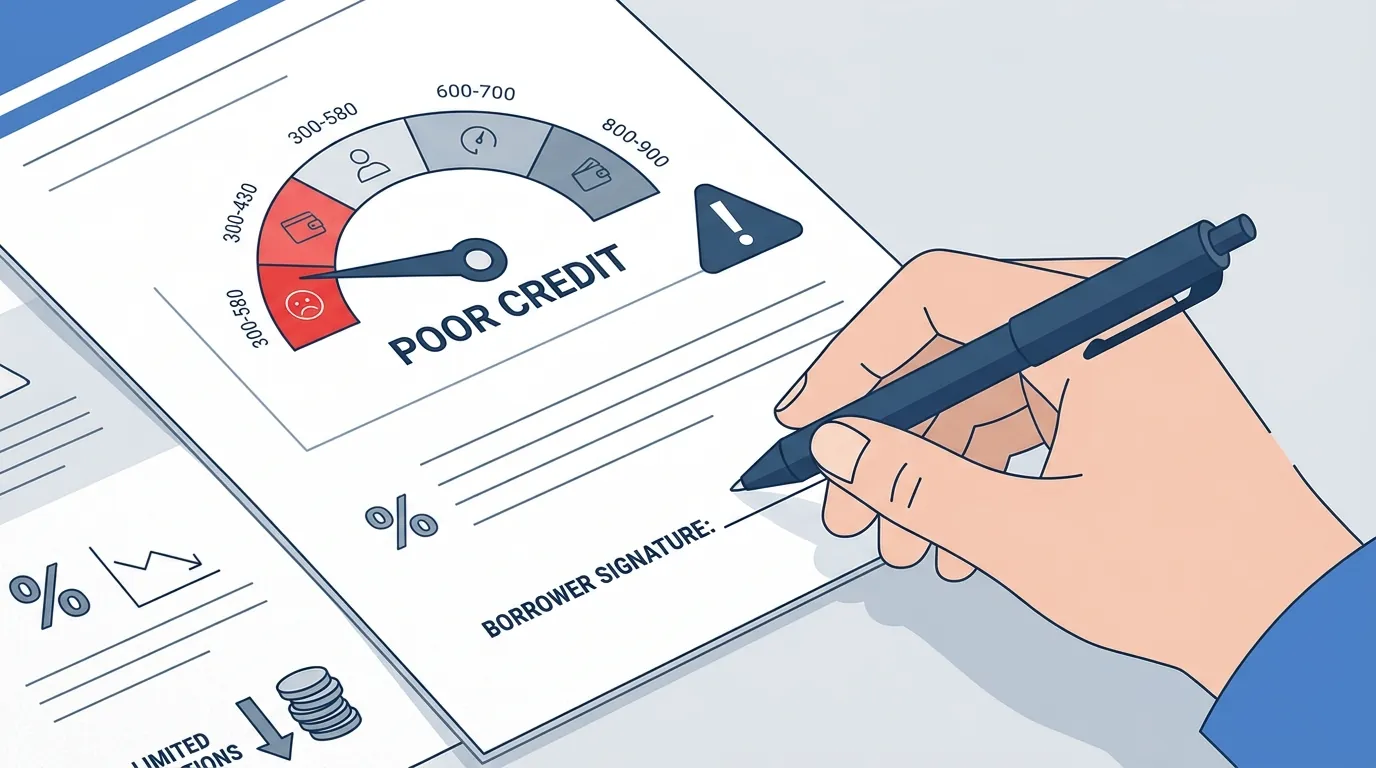

Real estate investors do not always fit the traditional profile used for residential mortgage underwriting. A self-employed investor may have substantial property income but relatively modest W-2 wages. Another investor may own several rental properties, operate through an LLC, or have tax returns that show significant deductions even though the properties generate substantial cash flow.
Debt service coverage ratio (DSCR) loans are designed around a different question: can the income generated by the investment property reasonably support the debt?
Instead of relying primarily on the borrower's personal employment income, many investor-focused DSCR programs place greater emphasis on the property's rental income and ability to cover its mortgage obligations. The exact underwriting methodology varies by lender, and DSCR loans are not a single standardized federal mortgage program.
The concept itself is widely used in commercial and multifamily lending. Fannie Mae, for example, defines underwritten DSCR as the property's underwritten net cash flow divided by annual debt service.
For investors considering rental-property financing, understanding how that calculation works—and what it does not tell you—is essential.
What Is a DSCR Loan?
A DSCR loan is generally an investment-property mortgage evaluated substantially around the property's cash flow rather than the borrower's traditional employment income.
The basic calculation is:
DSCR = Property Net Operating Income ÷ Annual Debt Service
For example, suppose a rental property generates $60,000 in annual net operating income and the annual debt service is $48,000.
The DSCR would be:
$60,000 ÷ $48,000 = 1.25
The property generates $1.25 of qualifying income for every $1 of annual debt service.
A DSCR above 1.0 indicates that the property's qualifying income exceeds its debt service under the calculation being used. A ratio below 1.0 indicates that the property's qualifying income does not fully cover the debt service.
The actual minimum ratio required by a lender depends on its program. There is no universal DSCR threshold that applies to every investor loan.
Why Investors Consider DSCR Financing
Traditional residential mortgage underwriting generally considers the borrower's personal income, debts, assets, credit history, and the property's characteristics. Freddie Mac's current underwriting framework, for example, requires evaluation of borrower creditworthiness, capacity, and collateral.
For an investor with multiple properties, however, personal-income documentation can become more complicated.
A borrower might have:
- Rental properties with substantial gross income
- Multiple mortgages
- Self-employment income
- Business entities
- Depreciation deductions
- Variable annual income
- Several investment properties
A DSCR-focused loan can shift more of the analysis toward the subject property's economics.
This can make the structure particularly relevant to investors who want to acquire additional rental property without relying entirely on conventional employment-income qualification.
Does a DSCR Loan Really Require No W-2 Income?
The phrase "no W-2 income verification" can be misleading.
A DSCR lender may not require traditional W-2 income qualification in the same way a conventional mortgage does, but that does not mean the borrower has no financial underwriting.
The lender can still review:
- Credit history
- Credit score
- Assets
- Reserves
- Existing real estate
- Down payment
- Property value
- Rental income
- Property expenses
- Loan-to-value ratio
- Investment experience
- Ownership structure
Requirements differ by lender.
The more accurate description is that DSCR financing may allow an investor to qualify primarily through the income-producing characteristics of the property, rather than depending on a conventional calculation of personal employment income.
How Rental Income Is Evaluated
Rental income is one of the most important parts of DSCR underwriting.
But lenders generally do not simply take the advertised monthly rent and divide it by the mortgage payment.
The calculation may account for:
- Gross rental income
- Vacancy assumptions
- Property taxes
- Insurance
- HOA dues
- Property management
- Maintenance
- Other operating expenses
- Proposed principal and interest
- Reserves
The exact formula varies between lenders.
For comparison, conventional investment-property underwriting also has specific rules for rental income. Fannie Mae's current guidance, for example, provides specific calculations for rental income from investment properties and may account for property expenses when determining qualifying income.
This distinction matters because gross rent is not the same as net operating income.
A Simple DSCR Example
Consider a hypothetical rental property:
- Monthly rent: $3,500
- Annual gross rent: $42,000
- Annual operating expenses: $10,000
- Annual net operating income: $32,000
- Annual debt service: $25,000
The DSCR would be:
$32,000 ÷ $25,000 = 1.28
The property generates $1.28 of qualifying cash flow for every $1 of annual debt service.
Now suppose the mortgage payment increases and annual debt service rises to $29,000.
The DSCR becomes:
$32,000 ÷ $29,000 = 1.10
The property still covers the debt under this simplified calculation, but the financial cushion is smaller.
This illustrates why interest rate, loan amount, taxes, insurance, rent, and operating expenses all matter.
DSCR and Loan-to-Value
DSCR is only one part of the financing equation.
Lenders also consider loan-to-value (LTV).
The calculation is:
LTV = Loan Amount ÷ Property Value
Suppose an investor purchases a property for $400,000 and borrows $300,000.
The LTV is:
$300,000 ÷ $400,000 = 75%
A lower LTV means the borrower is contributing more equity.
For investment-property mortgages, Freddie Mac's current program materials identify LTV limits, reserves, rental-income requirements, and other special underwriting considerations.
Investor-focused DSCR lenders can establish their own LTV requirements, which may vary according to property type, credit profile, occupancy, loan size, and DSCR.
Down Payments and Equity
DSCR financing generally requires the investor to contribute meaningful equity to the transaction.
The required amount can vary considerably.
A lender may offer different LTV limits depending on whether the property is:
- A single-family rental
- A condominium
- A townhouse
- A 2–4 unit property
- A short-term rental
- A larger multifamily property
The borrower's credit profile and DSCR can also influence the available leverage.
A stronger DSCR does not necessarily guarantee a higher LTV, however. The lender may impose separate limits based on property type and transaction characteristics.
Investors should therefore determine the required cash contribution before assuming a property can be acquired with a particular amount of financing.
Interest Rates on DSCR Loans
DSCR loans can have different pricing from conventional owner-occupied mortgages because they are investment-property loans with different risk characteristics.
The rate can depend on:
- DSCR
- LTV
- Credit score
- Property type
- Loan amount
- Loan term
- Occupancy
- Geographic location
- Borrower's investment experience
- Fixed versus adjustable structure
A lower DSCR can mean less cash-flow cushion, which may affect the lender's pricing or maximum LTV.
Investors should compare APR, interest rate, points, lender fees, and other closing costs, rather than evaluating the loan based only on its advertised rate.
Fixed-Rate vs. Adjustable DSCR Financing
Investors may encounter both fixed-rate and adjustable-rate structures.
A fixed-rate loan provides a stable interest rate during the applicable fixed period.
An adjustable-rate mortgage can have an initial rate that changes according to the loan's index, margin, adjustment schedule, and caps.
For an investor, the difference matters because rental income may not increase at the same pace as borrowing costs.
A property that comfortably supports a loan at the initial rate could have a lower DSCR if the interest rate rises.
Before selecting an adjustable structure, investors should understand:
- Initial rate
- Adjustment frequency
- Index
- Margin
- Rate caps
- Payment changes
- Maximum possible rate
- Expected holding period
DSCR Loans for LLC-Owned Properties
Real estate investors often hold rental properties through limited liability companies or other business entities.
Some DSCR lenders permit entity ownership, although the exact requirements vary.
The lender may request:
- Articles of organization
- Operating agreement
- EIN documentation
- Entity banking information
- Ownership records
- Personal guarantees
- Evidence of authority to borrow
An LLC structure does not automatically eliminate personal liability for the mortgage.
A lender may require a personal guarantee even when the property is legally owned by an LLC.
Investors should therefore distinguish between property ownership structure and loan liability.
Property Types That May Qualify
DSCR programs can vary substantially in eligible property types.
Potentially eligible properties can include:
- Single-family rental homes
- Condominiums
- Townhomes
- Duplexes
- Triplexes
- Fourplexes
- Multifamily properties
- Certain short-term rental properties
The exact eligibility depends on the lender.
Traditional conforming investment-property programs also distinguish between property types. Freddie Mac, for example, currently supports certain 1–4 unit investment-property mortgages and has separate requirements for 2–4 unit properties.
Investors should confirm whether the intended use is permitted before ordering an appraisal or paying substantial application-related costs.
Long-Term Rentals vs. Short-Term Rentals
Rental strategy can influence underwriting.
A long-term rental typically produces income through a lease agreement with a tenant.
A short-term rental may generate substantially different revenue depending on seasonality, occupancy, local regulations, and platform demand.
A DSCR lender may have specific rules for short-term rental income.
Possible documentation can include:
- Existing lease
- Rent schedule
- Appraisal rent analysis
- Rental history
- Property-management records
- Short-term rental statements
- Tax returns
- Market-rent analysis
Investors should not assume that projected short-term rental revenue will automatically be accepted at face value.
DSCR and Property Cash Flow
The central advantage of DSCR analysis is that it connects financing to the property's income-producing capacity.
But investors should avoid confusing a lender's qualifying calculation with actual investment returns.
Suppose a lender calculates a DSCR of 1.25.
That does not necessarily mean the investor will receive a 25% return.
DSCR is a coverage ratio, not a return-on-equity measurement.
Investment returns can also depend on:
- Property appreciation
- Equity buildup
- Vacancy
- Maintenance
- Capital expenditures
- Property management
- Taxes
- Insurance
- Closing costs
- Financing costs
- Selling expenses
A property can satisfy a lender's DSCR requirement while still producing disappointing investment returns.
Reserves Matter
Rental properties can experience expenses that do not appear evenly every month.
A roof may need replacement. An HVAC system can fail. A tenant may leave unexpectedly. Insurance premiums can rise. Property taxes can change.
For this reason, investors should maintain sufficient reserves even when the property passes a lender's DSCR test.
Conventional investment-property programs can explicitly require reserves. Freddie Mac's investment-property guidance, for example, identifies additional reserve requirements for investment-property mortgages.
A lender's reserve requirement should not automatically be treated as the investor's ideal reserve level.
The investor's actual risk tolerance and property condition may justify maintaining more cash.
DSCR Loans vs. Conventional Investment Mortgages
The two structures can approach qualification differently.
| Feature | DSCR Loan | Conventional Investment Mortgage |
|---|---|---|
| Primary qualification focus | Property cash flow | Borrower finances plus property |
| W-2 income | May not be central | Often part of underwriting |
| Rental income | Central to qualification | Used according to program rules |
| Credit review | Usually required | Required |
| Down payment | Varies by lender | Program-specific |
| Reserves | Often required | Program-specific |
| Property appraisal | Generally required | Generally required |
| LLC ownership | Often available through investor programs | Program-specific |
| Loan structure | Varies by lender | Standardized program guidelines |
| Federal standardized program | No single federal DSCR program | Conventional agency programs exist |
Freddie Mac's investment-property framework, for example, has specific requirements around borrower reserves, rental-income calculations, and underwriting.
DSCR loans are instead largely a category of private investor-oriented financing, so terms can differ considerably from one lender to another.
DSCR Loans and Cash-Out Refinancing
Investors may also use DSCR financing to refinance an existing rental property.
A cash-out refinance can potentially release equity for:
- Another property purchase
- Renovations
- Repairs
- Debt repayment
- Business purposes
- Other permitted uses
But taking cash out increases the mortgage balance.
That can reduce the property's DSCR and increase the monthly debt obligation.
For example, if a property generates $40,000 of qualifying annual cash flow and annual debt service increases from $25,000 to $30,000 after refinancing:
Before refinance:
$40,000 ÷ $25,000 = 1.60 DSCR
After refinance:
$40,000 ÷ $30,000 = 1.33 DSCR
The investor has extracted equity, but the property's coverage cushion has declined.
Refinancing Risk
Investors should also consider what happens when the loan reaches maturity or when an adjustable rate resets.
A property may qualify for financing today but have a different financial profile several years later.
Potential changes include:
- Higher interest rates
- Lower rents
- Higher property taxes
- Higher insurance premiums
- Increased vacancy
- Lower property value
- Higher required reserves
An investor relying on future refinancing should therefore avoid assuming that a new loan will automatically be available on comparable terms.
The exit strategy should be tested against less favorable scenarios.
Common DSCR Loan Costs
Potential costs can include:
- Origination fees
- Discount points
- Appraisal
- Credit report
- Title insurance
- Escrow
- Recording fees
- Processing fees
- Underwriting fees
- Prepayment penalties
- Property inspection
- Legal or entity-documentation costs
Some investor loans may also include prepayment provisions that make selling or refinancing during the first several years more expensive.
Investors should request a complete fee schedule before comparing offers.
A Practical DSCR Calculation
Consider a rental property with:
- Monthly rent: $4,000
- Annual gross rent: $48,000
- Annual operating expenses: $12,000
- Net operating income: $36,000
- Annual debt service: $28,800
The DSCR is:
$36,000 ÷ $28,800 = 1.25
Now assume annual insurance and taxes increase by $2,400 while rent remains unchanged.
Net operating income falls to $33,600.
The new DSCR becomes:
$33,600 ÷ $28,800 = 1.17
The property still covers the debt under this simplified calculation, but the margin has narrowed.
This is why investors should stress-test rental properties rather than evaluating them solely using today's rent and financing terms.
Questions to Ask a DSCR Lender
Before accepting a DSCR loan, investors should ask:
- What DSCR calculation does the lender use?
- What income and expenses are included?
- What minimum DSCR is required?
- What LTV limits apply?
- What credit score is required?
- How much cash reserve is required?
- Are LLCs eligible?
- Is a personal guarantee required?
- Are short-term rentals permitted?
- How is projected rent verified?
- Is an appraisal rent schedule required?
- Is the interest rate fixed or adjustable?
- What are the points and lender fees?
- Is there a prepayment penalty?
- Can the loan be refinanced or paid off early?
- Are cash-out refinances permitted?
- What property types are eligible?
- What happens if rental income falls after closing?
These questions can reveal major differences between investor-loan programs.
Building a Rental Financing Strategy
DSCR financing can provide an alternative path for real estate investors whose personal income does not fit neatly into conventional mortgage underwriting.
Its central concept is straightforward: the property needs to generate enough qualifying cash flow to support its debt service.
But the calculation should not be viewed in isolation.
Investors still need to evaluate purchase price, LTV, interest rate, closing costs, reserves, property condition, vacancy assumptions, taxes, insurance, management costs, and the expected investment return.
A DSCR ratio is a financing metric—not a guarantee that a rental property will be profitable.
The strongest analysis combines the lender's qualification formula with the investor's own cash-flow model. That means testing the property under realistic rent, vacancy, expense, interest-rate, and refinancing assumptions before committing capital.
For investors using multiple properties, DSCR financing can also provide a way to evaluate each acquisition according to its own income-producing characteristics rather than relying exclusively on traditional employment income.
The key is understanding exactly how the lender calculates coverage and whether the resulting debt structure remains sustainable when the property's financial conditions change.
References
- Freddie Mac — Investment Property Mortgages Freddie Mac: Investment Property Mortgages
- Freddie Mac — Mortgage Underwriting Freddie Mac: Underwriting a Mortgage
- Freddie Mac — Mortgages for 2–4 Unit Properties Freddie Mac: 2–4 Unit Property Mortgages
- Fannie Mae — Underwritten Debt Service Coverage Ratio Fannie Mae: Underwritten DSCR
- Fannie Mae — Rental Income Guidelines Fannie Mae: General Rental Income Information