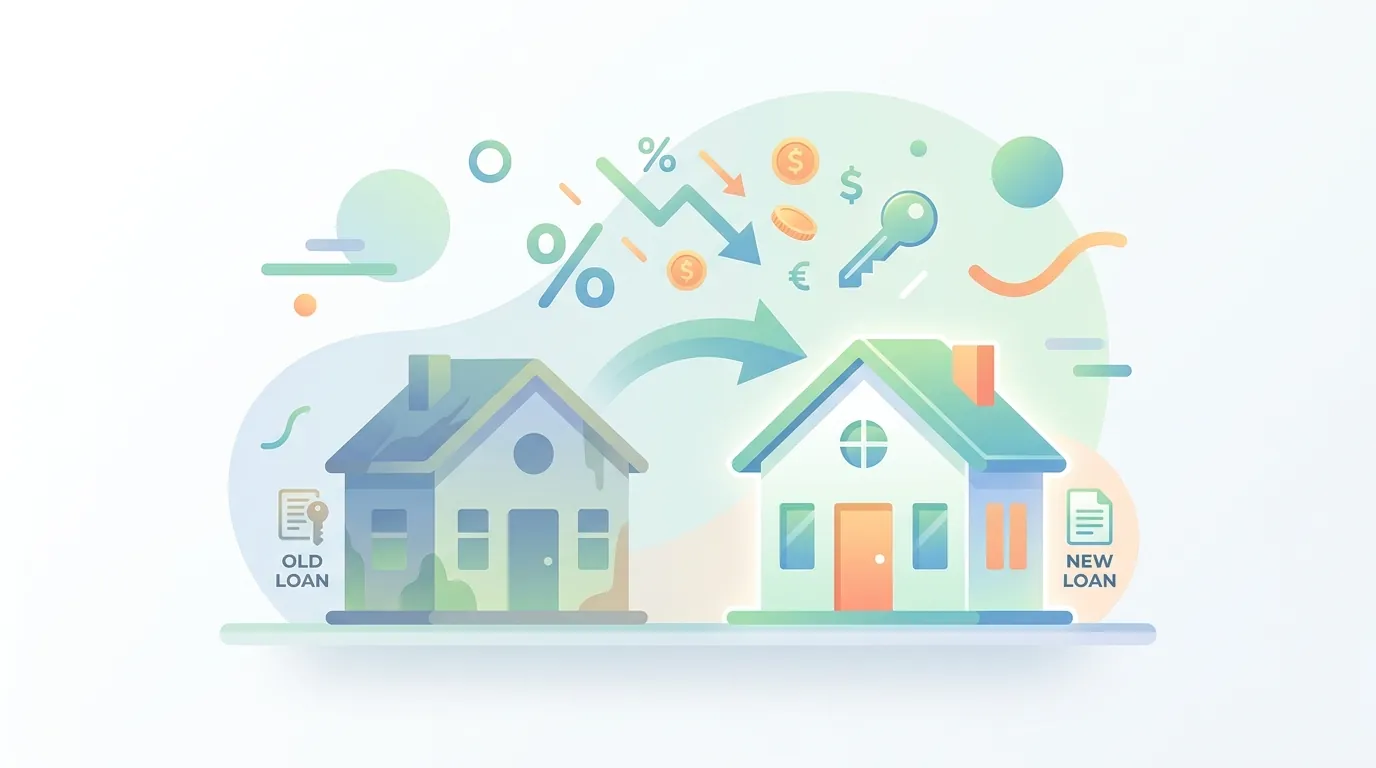
A mortgage does not necessarily have to remain unchanged until the home is sold. Homeowners can replace an existing mortgage with a new loan through a process known as refinancing.
The new mortgage pays off the old one and establishes a new interest rate, repayment term, monthly payment, and loan balance. Depending on the borrower's objectives, refinancing can be used to reduce borrowing costs, change the loan structure, move from an adjustable-rate mortgage to a fixed-rate mortgage, or access some of the home's equity.
But refinancing is not automatically beneficial simply because a new loan has a lower interest rate. Closing costs, the remaining term of the original mortgage, the new repayment period, taxes, insurance, and the length of time the homeowner expects to keep the property all affect the financial outcome.
What Happens When a Mortgage Is Refinanced?
Refinancing effectively replaces one mortgage with another.
Suppose a homeowner currently owes $300,000 on a mortgage. Instead of continuing with the existing loan, the homeowner applies for a new mortgage for an amount sufficient to pay off the old balance, plus any eligible costs that are financed into the new loan.
Once the refinance closes, the original mortgage is paid off and the borrower begins making payments on the new mortgage.
The new loan can have a different:
- Interest rate
- Loan term
- Monthly principal-and-interest payment
- Loan balance
- Mortgage insurance arrangement
- Loan type
The homeowner remains responsible for the same property, but the financing attached to it has changed.
Why Homeowners Refinance
People refinance for different reasons, and the objective matters when comparing loan offers.
One common reason is to obtain a lower interest rate. If market rates or the borrower's financial circumstances have changed sufficiently, a new mortgage may reduce the interest rate and potentially lower the total interest cost.
Another reason is changing the repayment structure.
A homeowner with an adjustable-rate mortgage may refinance into a fixed-rate mortgage to obtain greater payment predictability. Conversely, some borrowers may consider a different loan structure because their expected ownership period or financial circumstances have changed.
Refinancing can also be used to shorten the repayment term.
A homeowner with substantial equity and sufficient income might replace a 30-year mortgage with a 15-year loan. The new payment can be higher, but the borrower may pay interest for fewer years.
A fourth possibility is cash-out refinancing, where the new mortgage is larger than the existing mortgage balance and the difference is received by the borrower, subject to lender requirements and available equity.
Lower Monthly Payments Can Be Misleading
A lower monthly mortgage payment can look attractive, but it does not necessarily mean the homeowner will spend less overall.
One reason is a longer repayment period.
Imagine a homeowner has 20 years remaining on an existing mortgage and refinances into a new 30-year loan. Even if the new interest rate is lower, the homeowner has restarted a much longer repayment schedule.
The monthly principal-and-interest payment could decline while the total interest paid over the new loan's entire term increases.
The CFPB specifically cautions borrowers to understand whether a lower monthly payment results from a lower interest rate or from extending the loan term.
For this reason, comparing monthly payments alone is insufficient.
The Break-Even Period Matters
Refinancing usually involves upfront expenses.
A useful way to evaluate those costs is to estimate how long it takes for the monthly savings to recover the amount spent on refinancing.
For example, assume refinancing costs $6,000 and reduces the mortgage payment by $300 per month.
A simple break-even calculation would be:
$6,000 ÷ $300 = 20 months
This does not capture every financial consideration, such as tax effects, changes in the loan term, opportunity costs, or differences in principal repayment. But it provides a starting point for evaluating how long the homeowner needs to remain in the property before the initial costs are recovered through monthly savings.
Freddie Mac notes that refinancing costs can amount to several thousand dollars and recommends considering how long the homeowner expects to remain in the property when evaluating a refinance.
Refinancing Costs Can Be Significant
A refinance involves many of the same categories of costs associated with obtaining a mortgage to purchase a home.
Depending on the transaction, expenses can include:
- Loan origination charges
- Appraisal fees
- Credit-report fees
- Title services
- Recording fees
- Underwriting charges
- Legal or attorney fees
- Survey costs
- Other lender and government charges
Freddie Mac estimates that refinancing costs can commonly fall in the range of 3% to 6% of the loan principal, although actual costs vary based on the lender, borrower, location, and transaction.
The actual Loan Estimate and Closing Disclosure are therefore more useful than relying on a generic percentage.
What a “No-Cost” Refinance Actually Means
Some lenders advertise refinancing with little or no upfront closing costs.
That does not necessarily mean the expenses disappear.
The CFPB explains that a lender may cover closing costs by charging a higher interest rate or by adding the costs to the loan balance.
For example, if $7,000 of closing costs are added to the mortgage balance, the homeowner is borrowing that additional money and will generally pay interest on it.
A higher-rate structure can also increase borrowing costs over time.
A no-upfront-cost option can have legitimate uses, particularly for homeowners who prioritize preserving cash, but the full loan economics need to be compared with a traditional refinance involving upfront costs.
Rate-and-Term Refinancing
A rate-and-term refinance generally replaces the existing mortgage without taking substantial cash out of the home's equity.
The primary objectives may include:
- Reducing the interest rate
- Changing the loan term
- Moving from an adjustable rate to a fixed rate
- Changing the monthly payment structure
- Replacing one mortgage product with another
This type of refinance can be easier to analyze because the primary comparison is between the old mortgage and the new mortgage.
The homeowner can compare the remaining balance, current rate, remaining term, new rate, new term, closing costs, and expected ownership period.
Cash-Out Refinancing
Cash-out refinancing works differently.
The homeowner replaces the existing mortgage with a larger mortgage and receives the difference in cash, subject to the lender's underwriting requirements and the home's available equity.
For example, a homeowner with a $250,000 mortgage balance might refinance into a $300,000 mortgage and receive approximately $50,000 before applicable closing costs and adjustments.
The cash could potentially be used for purposes such as major home improvements or other financial needs.
However, cash-out refinancing converts additional borrowing into debt secured by the home.
That means the homeowner should carefully consider the purpose of the funds, the new monthly payment, the interest cost, and the consequences of increasing the mortgage balance.
Using home equity to pay other debts can also change the risk profile of the household's finances.
Credit and Income Still Matter
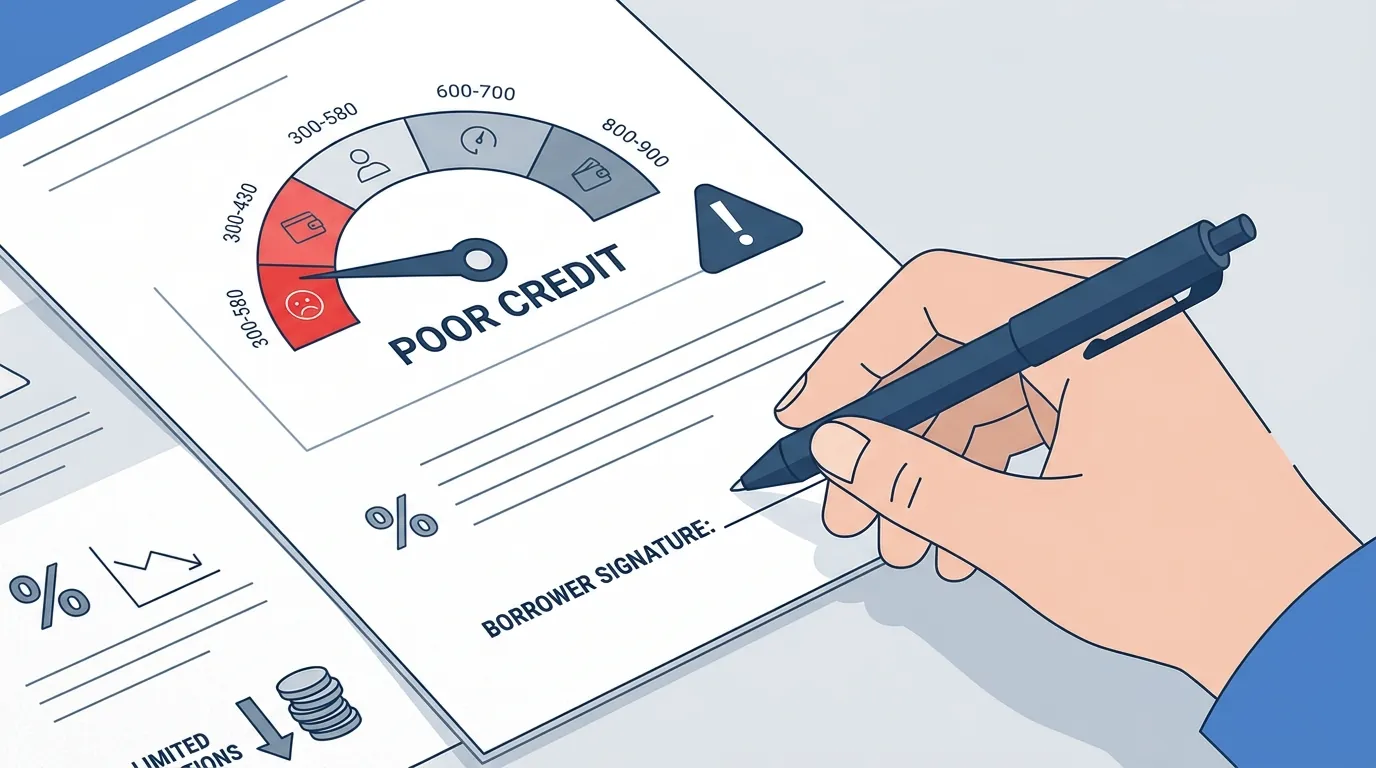
Refinancing is a new mortgage transaction, so the borrower generally needs to qualify for the new loan.
The lender may review:
- Credit history
- Income
- Employment
- Existing debts
- Assets
- Property value
- Loan-to-value ratio
- Payment history
- Documentation supporting the application
A homeowner who qualified for the original mortgage may not automatically qualify for a new mortgage under today's underwriting standards.
Changes in income, credit, property value, or debt levels can affect the available terms.
Home Equity Can Influence the Refinance
Equity represents the difference between the home's value and the mortgage debt secured by the property.
For example, if a home is worth $500,000 and the mortgage balance is $300,000, the homeowner has approximately $200,000 in equity before considering other liens or transaction-related factors.
Equity can affect refinancing options because lenders consider the relationship between the loan amount and property value.
Cash-out refinancing requires additional equity because the new loan is larger than the existing mortgage balance.
An appraisal may therefore become an important part of the refinance process.
Points Can Lower the Rate—At an Upfront Cost
A homeowner may have the option to pay discount points in exchange for a lower mortgage interest rate.
Points are generally a form of prepaid interest. The IRS explains that points paid to refinance a mortgage generally must be deducted over the life of the loan rather than being fully deducted in the year paid, subject to specific exceptions.
From a financing perspective, the more immediate issue is whether the lower rate justifies the upfront expense.
A homeowner expecting to keep the refinanced mortgage for a long period may evaluate points differently from someone who expects to move or refinance again relatively soon.
The lender should provide the pricing difference so the borrower can compare the upfront cost with the resulting payment reduction.
Existing Mortgage Points Can Also Matter
Refinancing can affect the tax treatment of points paid on the original mortgage.
Under IRS rules, homeowners who have been deducting points over the life of an existing mortgage may be able to deduct a remaining eligible balance when the mortgage ends early through refinancing, although different rules can apply when refinancing with the same lender.
Tax treatment depends on the specific circumstances and whether the expenses qualify under applicable mortgage-interest rules.
Homeowners should therefore keep records of prior mortgage points and consult current IRS guidance or a qualified tax professional when evaluating the tax consequences of refinancing.
The Refinancing Process
The process generally resembles obtaining the original mortgage.
A homeowner typically:
- Reviews the existing mortgage and refinancing objectives.
- Checks current loan options and potential rates.
- Requests Loan Estimates from multiple lenders.
- Applies for the selected refinance.
- Provides income, asset, debt, and property documentation.
- Undergoes underwriting.
- Completes an appraisal or other property valuation if required.
- Reviews the final Closing Disclosure.
- Signs the new loan documents.
- Uses the new loan to pay off the existing mortgage.
Freddie Mac notes that the refinance process generally involves an application, documentation, appraisal, and closing, although the exact steps and timing can vary.
At closing, borrowers receive a Closing Disclosure showing the final loan terms and closing costs. Freddie Mac notes that this disclosure is generally provided three days before closing and should be reviewed carefully.
Compare Multiple Lenders
Homeowners are not generally required to refinance with their current mortgage lender.
A new lender may offer a different interest rate, fee structure, loan term, or underwriting approach.
Freddie Mac recommends comparing lenders rather than automatically returning to the existing lender.
When comparing offers, look beyond the advertised rate.
Review:
- Interest rate
- APR
- Loan term
- Points
- Origination fees
- Estimated closing costs
- Cash required at closing
- Monthly principal and interest
- Mortgage insurance
- Prepayment provisions, if applicable
- Whether closing costs are being financed
- Rate-lock terms
A lower rate accompanied by substantially higher upfront costs may have a different break-even period from a higher-rate loan with fewer upfront expenses.
When Refinancing May Not Make Sense
There are situations where refinancing can be less attractive.
For example, the new rate may not be sufficiently lower to compensate for closing costs. A homeowner who expects to move soon may not remain in the property long enough to recover the refinance expenses.
A borrower may also be tempted by a lower monthly payment created primarily by extending the mortgage term.
Someone with a very low existing rate could also find that refinancing would increase the borrowing cost rather than reduce it.
Cash-out refinancing requires additional scrutiny because it increases the amount of debt secured by the property.
The goal should not simply be to reduce the monthly payment. It should be to understand how the new mortgage changes the household's overall financial position.
A Practical Refinance Comparison
Before moving forward, homeowners can compare the existing and proposed loans side by side:
| Factor | Existing Mortgage | New Mortgage |
|---|---|---|
| Remaining balance | Current payoff amount | New principal |
| Interest rate | Current rate | Proposed rate |
| Remaining term | Years remaining | New loan term |
| Monthly payment | Current payment | New payment |
| Closing costs | — | Estimated refinance costs |
| Points | Existing structure | New points, if any |
| Mortgage insurance | Current requirement | New requirement |
| Cash received | — | If cash-out |
| Estimated break-even | — | Months to recover costs |
This comparison helps separate genuine savings from changes that merely move costs around.
Refinancing Is a New Loan, Not a Reset Button
Mortgage refinancing can change the financial structure of a home loan, but it does not erase the economics of the original borrowing decision.
A lower interest rate can reduce borrowing costs. A shorter term can accelerate principal repayment. A cash-out refinance can unlock home equity. A fixed-rate refinance can replace exposure to future adjustments.
At the same time, refinancing creates a new set of closing costs and can restart the repayment schedule.
The most useful evaluation therefore looks beyond the headline rate.
Homeowners should calculate the new payment, examine the total borrowing costs, determine how long they expect to keep the property and mortgage, review the cash required at closing, and compare multiple lenders.
A refinance can be financially meaningful when the new loan genuinely improves the borrower's position. But the improvement needs to be measured against the costs and the new loan's complete structure—not just the monthly payment.
References
- Consumer Financial Protection Bureau — Mortgage Refinance
- Consumer Financial Protection Bureau — No-Cost or No-Closing-Cost Refinancing
- Freddie Mac — Understanding the Costs of Refinancing
- Freddie Mac — Planning to Refinance
- Freddie Mac — Refinancing Options
- IRS — Publication 936: Home Mortgage Interest Deduction
- IRS — Topic No. 504: Home Mortgage Points