Bankruptcy is a federal legal process designed to address situations in which individuals or businesses cannot meet their financial obligations. Depending on the type of case, bankruptcy can involve liquidation of assets, a court-supervised repayment plan, or reorganization of financial affairs.
For individuals, bankruptcy is generally associated with Chapter 7 and Chapter 13, although Chapter 11 can also apply in certain circumstances. Chapter 12 is specifically designed for qualifying family farmers and family fishermen with regular annual income.
Bankruptcy can provide significant relief from certain debts, but filing also creates legal, financial, and credit consequences. Not every debt can be discharged, some property may be at risk depending on the chapter and applicable exemptions, and the process involves formal court requirements.
Because bankruptcy law is complex and individual circumstances matter, this overview is intended as general information rather than legal advice.
What Bankruptcy Does
A bankruptcy case can provide several forms of legal protection.
One of the most immediate is the automatic stay. When a bankruptcy petition is filed, the automatic stay generally stops many collection activities against the debtor or the debtor's property. Depending on the circumstances, this can halt lawsuits, wage garnishments, collection calls, and other efforts to collect covered debts. Certain exceptions apply.
Bankruptcy can also lead to a discharge of qualifying debts.
A discharge releases the debtor from personal liability for debts covered by the discharge and generally prevents creditors from continuing collection efforts on those debts. However, liens and certain nondischargeable obligations can survive bankruptcy.
The exact protection depends on the chapter filed and the type of debt involved.
Chapter 7 Bankruptcy
Chapter 7 is commonly referred to as liquidation bankruptcy.
Instead of creating a long-term repayment plan, a Chapter 7 trustee reviews the debtor's assets and liabilities. Nonexempt property may be sold and the proceeds distributed to creditors according to the Bankruptcy Code. Property protected by applicable exemptions can generally be retained.
This makes exemptions particularly important.
Federal bankruptcy law provides certain exemptions, while state law can determine which exemptions are available in a particular case. The rules vary by jurisdiction, so someone considering Chapter 7 should understand the exemption rules applicable to their situation before filing.
Chapter 7 can result in the discharge of many qualifying unsecured debts, but it does not eliminate every type of obligation.
The Chapter 7 Means Test
Some individual Chapter 7 cases are subject to a means test.
The purpose is to determine whether a consumer debtor's financial circumstances create a presumption of abuse under the Bankruptcy Code. The calculation considers income, allowable expenses, and certain debt payments.
The U.S. Courts explain that if an individual's current monthly income is above the applicable state median, the means test may determine whether Chapter 7 relief is presumed abusive. Special circumstances can affect the analysis.
The means test can be complicated because eligibility depends on specific statutory calculations rather than simply looking at a person's annual salary.
A bankruptcy attorney or qualified legal professional can help determine how the rules apply to an individual case.
Chapter 13 Bankruptcy
Chapter 13 is structured around repayment rather than liquidation.
It is generally available to individuals with regular income who meet the applicable eligibility requirements. Instead of immediately liquidating nonexempt assets as in a Chapter 7 case, the debtor proposes a repayment plan under which payments are made to a trustee for distribution to creditors.
Chapter 13 plans generally run for several years, commonly three or five years depending on the debtor's circumstances and applicable requirements.
This structure can allow an eligible debtor to retain property while addressing past-due obligations through a court-approved plan.
The debtor generally does not receive a discharge at the beginning of a Chapter 13 case. The discharge normally comes after the required plan payments have been completed, subject to the Bankruptcy Code's rules and exceptions.
Chapter 11 Bankruptcy
Chapter 11 is primarily associated with business reorganization, although individuals can also use Chapter 11 when they meet the applicable requirements.
A Chapter 11 debtor generally continues operating while developing a court-supervised plan for reorganizing debts and obligations. The U.S. Courts describe Chapter 11 as a reorganization process that allows commercial enterprises to continue operating while addressing creditor claims through a court-approved plan.
Chapter 11 can also be relevant to individuals whose debts exceed the limits applicable to Chapter 13.
The process is generally more complex than a typical consumer bankruptcy case and can involve extensive financial disclosures, negotiations with creditors, and court proceedings.
Chapter 12 for Family Farmers and Fishermen
Chapter 12 is a specialized bankruptcy chapter for qualifying family farmers and family fishermen with regular annual income.
It provides a framework for restructuring debts while allowing the eligible debtor to continue operating the farming or fishing business. Repayment plans generally extend over three to five years, subject to the statutory requirements and court approval.
Because Chapter 12 is designed for a specific category of debtors, it is not a general consumer bankruptcy option.
Bankruptcy Does Not Eliminate Every Debt
One of the most important misconceptions about bankruptcy is that filing automatically wipes out every debt.
Certain obligations are excluded from discharge.
The U.S. Courts identify categories that can include certain tax debts, domestic support obligations such as alimony and child support, certain government-funded or guaranteed educational obligations, criminal fines and penalties, and some debts involving fraud or willful and malicious conduct.
The exact rules depend on the chapter and the nature of the debt.
Some debts may require additional litigation or a court determination before they are classified as nondischargeable. Others are excluded from discharge automatically under the Bankruptcy Code.
A borrower should therefore create a complete list of debts before assuming bankruptcy will eliminate a particular obligation.
Secured Debts and Liens Require Special Attention
Bankruptcy can eliminate personal liability for certain debts without necessarily eliminating a creditor's lien on property.
For example, a discharge may eliminate personal liability associated with a qualifying secured debt, but the lien can remain attached to the property unless it is separately avoided under applicable bankruptcy law.
This distinction matters for homes, vehicles, and other assets used as collateral.
Someone who wants to keep a secured asset may need to continue complying with the applicable loan and lien requirements.
The question is therefore not simply whether a debt is dischargeable. The borrower must also understand what happens to collateral securing that debt.
Credit Counseling Before Filing
Individual bankruptcy filers generally must receive credit counseling from an approved credit counseling agency within the 180-day period before filing.
The U.S. Courts note that exceptions can apply in certain emergency circumstances or when approved counseling services are unavailable.
The purpose of this requirement is partly to ensure that consumers receive information about alternatives before entering bankruptcy.
If a debt repayment plan is developed during the counseling process, applicable documentation may need to be filed with the bankruptcy court.
After filing, debtors generally must also complete an approved financial-management course before receiving a discharge, subject to limited exceptions.
The Bankruptcy Filing Process
Although procedures vary by chapter and court, an individual bankruptcy case generally involves several stages.
The debtor files a petition and required financial schedules with the bankruptcy court.
Those documents disclose assets, debts, income, expenses, and other financial information. Accuracy is important because the court and trustee rely on these disclosures to administer the case.
The automatic stay generally begins when the petition is filed, subject to statutory exceptions.
A trustee is then assigned to administer the case.
In Chapter 7, the trustee examines the debtor's assets and determines whether there are nonexempt assets available for liquidation.
In Chapter 13, the trustee generally evaluates the proposed repayment plan and distributes payments to creditors under the court-approved arrangement.
The case may also involve a meeting of creditors, where the debtor answers questions under oath concerning the bankruptcy filing and financial circumstances.
The Automatic Stay Has Limits
The automatic stay can provide immediate relief from many collection actions, but it is not unlimited.
The Bankruptcy Code contains exceptions to the stay, meaning certain proceedings or collection activities can continue despite the filing. The U.S. Courts specifically note that some actions listed under Section 362(b) are not stayed.
The stay can also be modified or terminated under certain circumstances.
Consumers should therefore avoid assuming that filing bankruptcy automatically stops every legal or financial proceeding involving them.
Bankruptcy and Your Credit Report
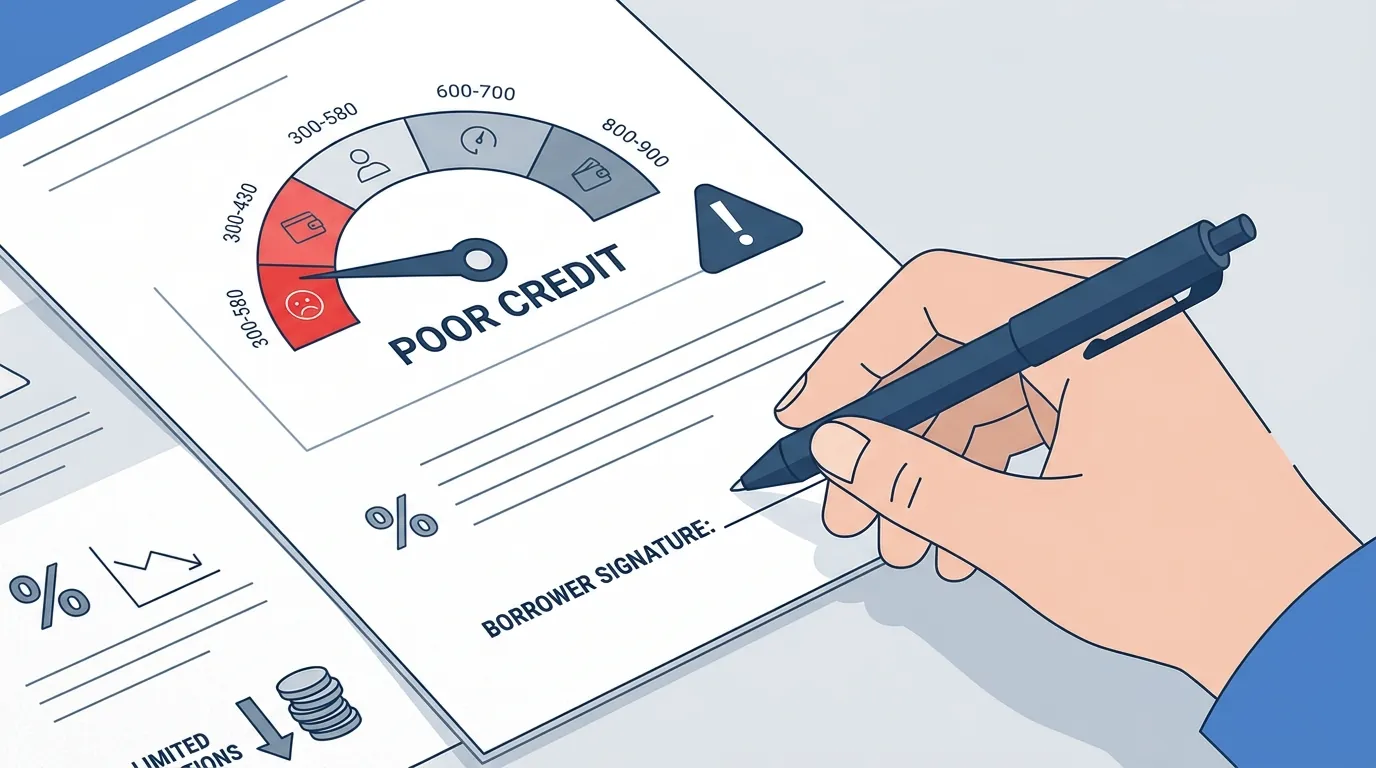
A bankruptcy filing can have a substantial effect on a consumer's credit history.
The filing becomes part of the consumer's public financial record and can affect how future lenders evaluate applications for credit.
The practical consequences depend on factors such as the individual's existing credit history, the type of bankruptcy, whether debts are discharged, and what happens after the case.
Bankruptcy does not permanently prevent someone from obtaining credit. However, lenders may consider the bankruptcy when evaluating future applications.
Rebuilding credit after bankruptcy generally involves establishing a consistent record of managing new or remaining obligations responsibly.
Bankruptcy and Future Borrowing
After bankruptcy, access to credit can change.
Some lenders may impose additional requirements, higher interest rates, lower limits, or waiting periods depending on the product and the borrower's circumstances.
A consumer may eventually qualify for secured credit products or other forms of borrowing, but the terms can differ substantially from those available before the bankruptcy.
The important distinction is between access to credit and cost of credit.
Being approved for a loan after bankruptcy does not necessarily mean the financing is inexpensive.
Borrowers should compare APR, fees, repayment periods, collateral requirements, and total cost before accepting new debt.
Bankruptcy Can Affect Property
The effect on property depends heavily on the bankruptcy chapter and applicable exemption rules.
In Chapter 7, nonexempt property can potentially be liquidated by the trustee. Exemptions determine which property is protected under applicable law.
Chapter 13 generally follows a different structure because the debtor remains in possession of property while making payments under the court-approved plan.
For homeowners, vehicles, investment accounts, business assets, and other valuable property, the specific exemption rules can be especially important.
Because exemption law can vary by state, consumers should obtain legal advice based on the jurisdiction where the bankruptcy will be filed.
Bankruptcy Costs Money
Bankruptcy is not a cost-free solution to debt.
Filing involves court fees, and many consumers also hire an attorney. There can be additional costs depending on the complexity of the case.
The total expense varies according to the bankruptcy chapter, geographic location, attorney, and individual circumstances.
A consumer should therefore compare the cost of filing with the financial consequences of continuing to service existing debts.
That does not mean cost alone should determine the decision. Bankruptcy is a legal process, and the potential consequences of delaying action can also be significant when debts are already unmanageable.
Alternatives to Bankruptcy
Bankruptcy is one debt-relief mechanism among several.
Depending on the circumstances, alternatives can include:
- Direct negotiations with creditors
- Credit counseling
- Debt management plans
- Debt consolidation
- Balance transfers
- Hardship programs
- Debt settlement
A debt management plan, for example, can allow qualifying consumers to make one payment through a credit counseling organization while the organization distributes funds to participating creditors. Debt settlement takes a different approach by attempting to negotiate reduced balances.
These alternatives also have risks and costs.
A borrower should compare the actual repayment burden, fees, credit consequences, and likelihood of successfully completing the arrangement rather than selecting an option based solely on advertising.
Bankruptcy and Debt Collection
If creditors or debt collectors are pursuing a borrower aggressively, bankruptcy may change the collection environment because the automatic stay generally stops many collection activities once a case is filed.
However, the stay does not eliminate the underlying debt by itself.
A discharge is the legal mechanism that releases personal liability for qualifying debts. Until the relevant discharge applies, the debt and the creditor's rights must be evaluated under the applicable bankruptcy rules.
Consumers who are already facing lawsuits, garnishments, foreclosure proceedings, repossession, or other collection activity should obtain legal advice promptly because timing can affect their available options.
Common Bankruptcy Mistakes
Several mistakes can complicate a bankruptcy case.
One is failing to disclose an asset or debt accurately. Bankruptcy documents require detailed financial information, and intentionally concealing assets or providing false information can create serious legal consequences. The U.S. Courts identify fraudulent transfers, concealment of property, failure to maintain adequate records, and other misconduct as potential grounds for denial of a Chapter 7 discharge.
Another mistake is assuming every debt will disappear.
Consumers should identify nondischargeable debts before filing so they understand what financial obligations may remain afterward.
Taking on new debt shortly before filing can also require careful legal review. Transactions involving assets, transfers, or new obligations can have consequences under bankruptcy law.
Questions to Consider Before Filing
Someone considering bankruptcy should be able to answer several basic questions.
How much do I owe, and to whom?
Create a complete list of creditors, balances, interest rates, and account statuses.
Which debts are secured?
Identify mortgages, auto loans, and other obligations tied to collateral.
Which debts may not be dischargeable?
Taxes, support obligations, certain education-related debts, and other categories require particular attention.
What property do I own?
Include real estate, vehicles, investments, business interests, valuable personal property, and financial accounts.
What exemptions may apply?
Exemptions can determine what property is protected in a Chapter 7 case.
Can I realistically repay my debts?
If repayment is possible with restructuring, counseling, or a Chapter 13 plan, those alternatives may warrant consideration.
What would happen if I do nothing?
Consider collection actions, lawsuits, garnishments, foreclosure, repossession, and accumulating interest.
The Long-Term Financial Impact
Bankruptcy can provide relief from qualifying debts, but its financial impact extends beyond the filing itself.
A consumer may need to rebuild credit, establish a new budget, manage remaining nondischargeable debts, and carefully evaluate future borrowing.
The experience can also change how lenders evaluate applications.
At the same time, bankruptcy is designed in part to provide a fresh start to individuals who qualify for relief. The U.S. Courts describe discharge as releasing a debtor from personal liability for specified debts and prohibiting creditors from continuing collection actions on discharged obligations.
The long-term outcome therefore depends not only on the bankruptcy itself but also on the financial decisions made afterward.
Final Considerations
Bankruptcy is a formal legal process with several different chapters, each designed for different financial circumstances.
Chapter 7 generally focuses on liquidation and discharge of qualifying debts, with exemptions protecting certain property. Chapter 13 uses a court-approved repayment plan for eligible individuals with regular income. Chapter 11 provides a reorganization framework used primarily by businesses and, in certain circumstances, individuals. Chapter 12 serves qualifying family farmers and family fishermen.
The financial impact can involve debt discharge, asset considerations, changes in credit access, court costs, and obligations that remain after bankruptcy.
Not every debt can be discharged, and a bankruptcy discharge does not necessarily eliminate liens against property.
Consumers considering bankruptcy should therefore look beyond the immediate relief from collection activity and examine the entire financial picture. Credit counseling and other debt-relief alternatives may be appropriate in some situations, while legal advice may be essential when debts, assets, or collection actions are complicated.
Bankruptcy can be a significant financial reset, but it is also a legal proceeding with lasting consequences. Understanding the chapter, eligibility requirements, property rules, discharge limitations, and post-bankruptcy obligations is an important step before making a filing decision.
References
- U.S. Courts — Bankruptcy Basics U.S. Courts Bankruptcy Basics
- U.S. Courts — Chapter 7 Bankruptcy Basics Chapter 7 Bankruptcy Basics
- U.S. Courts — Chapter 13 Bankruptcy Basics Chapter 13 Bankruptcy Basics
- U.S. Courts — Chapter 11 Bankruptcy Basics Chapter 11 Bankruptcy Basics
- U.S. Courts — Chapter 12 Bankruptcy Basics Chapter 12 Bankruptcy Basics
- U.S. Courts — Discharge in Bankruptcy: Bankruptcy Basics Discharge in Bankruptcy
- U.S. Courts — Process: Bankruptcy Basics Bankruptcy Process