
Unexpected expenses rarely arrive at a convenient time. A vehicle may need an urgent repair, a major appliance can stop working, a medical bill may arrive before the next paycheck, or an interruption in income can leave a household short on cash.
When savings are not enough, borrowing may seem like the fastest solution. Emergency loans can provide access to funds when an expense cannot reasonably be postponed, but speed should not replace careful evaluation. The amount borrowed, annual percentage rate (APR), repayment period, fees, and consequences of missing payments can significantly affect the actual cost.
Before accepting emergency financing, it helps to distinguish between needing money quickly and needing a particular type of loan. Depending on the situation, alternatives such as negotiating a bill, using available savings, arranging a payment plan, or seeking assistance through an employer or community organization may reduce the amount that needs to be borrowed.
What Is an Emergency Loan?
“Emergency loan” is generally a descriptive term rather than a single standardized loan product. It can refer to several types of financing used to cover an unexpected expense.
A personal installment loan is one possibility. With this structure, a lender provides a lump sum and the borrower repays it through scheduled installments over a defined period. The CFPB notes that personal installment loans can be used for unexpected expenses and may range from several hundred dollars to several thousand dollars or more.
Other potential sources of emergency funds include:
- Personal loans
- Credit union loans
- Personal lines of credit
- Credit cards
- Employer-provided emergency advances
- Payment plans offered directly by a service provider
- Certain secured loans
- Short-term payday loans
These products have very different pricing and repayment structures. Calling all of them “emergency loans” can therefore obscure important differences.
Start With the Expense, Not the Loan
Before applying for financing, determine exactly how much money is required.
If a car repair costs $1,800, borrowing $3,000 simply because that amount is available can create unnecessary debt. Similarly, if a medical provider offers a payment arrangement, borrowing the entire balance immediately may not be necessary.
The first question should be:
How much do I actually need to resolve the emergency?
Then consider whether the expense can be reduced, delayed, negotiated, or divided into payments.
The CFPB recommends maintaining emergency savings specifically for unexpected expenses such as car repairs, medical bills, home repairs, and income disruptions. It notes that using savings for an emergency can help prevent a one-time expense from becoming longer-term debt through interest and fees.
Check Available Alternatives Before Borrowing
An emergency does not automatically mean a loan is the only option.
Depending on the expense, alternatives may include:
Existing emergency savings. Using money already set aside for emergencies avoids creating a new monthly obligation.
Payment arrangements. A medical provider, utility company, landlord, or service provider may have payment options depending on the circumstances.
Employer assistance. Some employers offer paycheck advances or emergency assistance programs.
Community or nonprofit assistance. Certain organizations may provide emergency support for qualifying households.
Credit union financing. A bank or credit union may offer a personal loan or line of credit with terms that differ from short-term lenders.
Negotiating the bill. If the expense involves an existing debt or service bill, asking about a reduced payment or extended schedule may be worthwhile before borrowing.
The CFPB specifically identifies employer, nonprofit, community, family, and financial-institution alternatives as possibilities worth considering before taking out a payday loan.
Understand the Total Cost
The most important number is not necessarily the monthly payment.
A loan with a low monthly payment can still be expensive if the repayment period is long or the lender charges substantial fees.
Consider the complete cost, including:
- Amount borrowed
- Interest rate
- APR
- Origination fees
- Documentation fees
- Late fees
- Optional insurance
- Prepayment charges, if applicable
- Total amount of scheduled payments
The CFPB explains that personal installment loans can include origination, documentation, insurance, and late fees. Borrowers should review the loan disclosure and agreement before accepting financing.
APR is particularly useful when comparing borrowing options because it incorporates the interest rate and certain additional fees associated with the loan. The CFPB advises consumers to compare APRs rather than comparing an interest rate from one product with an APR from another.
The Loan Term Can Change the Economics
The repayment period can make a substantial difference.
Suppose a borrower takes out a $5,000 fixed-rate personal loan. A shorter repayment period may require higher monthly payments but can reduce the amount of interest accumulated over the life of the loan.
A longer term can lower the required monthly payment while keeping the principal outstanding for a longer period.
This creates an important distinction between monthly affordability and total affordability.
A payment that fits comfortably into the current budget is useful only if it remains manageable after accounting for rent or mortgage payments, utilities, food, transportation, insurance, existing debt, and other recurring expenses.
Fixed-Rate Loans Offer Predictability
Many personal installment loans use fixed interest rates, although some loans can have adjustable rates.
With a fixed-rate loan, the interest rate remains unchanged according to the loan agreement. This makes the scheduled principal-and-interest payment easier to anticipate.
The CFPB notes that personal installment loan rates may be fixed or adjustable, so borrowers should confirm which structure applies before signing.
For an emergency expense, predictability can matter because the borrower is already dealing with an unexpected financial disruption.
If the loan has a variable rate, understand how and when the rate can change and whether payment amounts can increase.
Credit History Can Affect Emergency Financing
Lenders generally consider several factors when evaluating a personal installment loan application.
The CFPB identifies credit reports and scores, income, existing debts, the requested amount, loan duration, applicable state-law limits, and other financial information as factors that may influence loan terms.
This means two borrowers requesting the same amount may receive different offers.
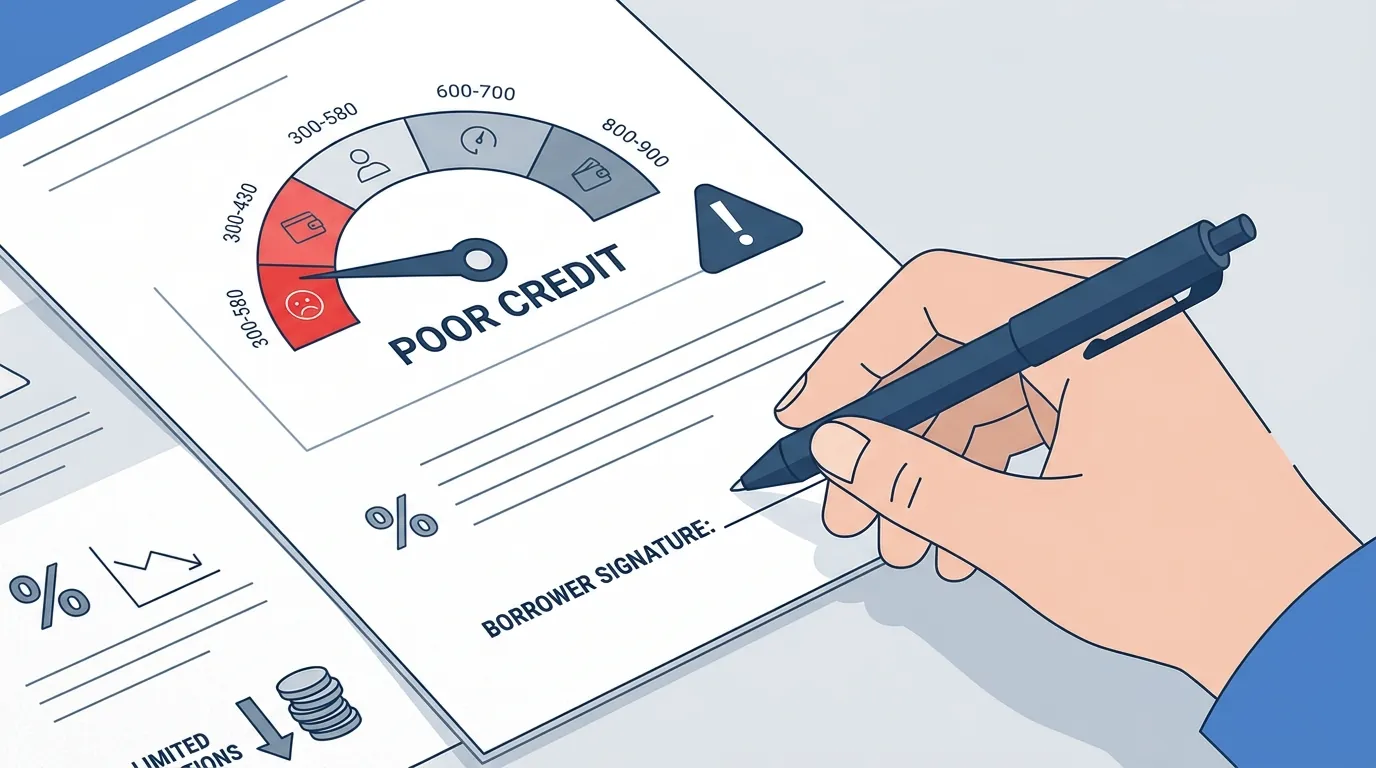
A borrower with limited credit history may also encounter fewer conventional options and may be presented with more expensive products.
That makes it especially important to compare the actual APR, fees, repayment schedule, and total cost rather than focusing only on whether an application is approved.
Be Careful With Payday Loans
Payday loans are sometimes marketed specifically to consumers who need money immediately.
They are generally small, short-term loans that are often due in a single payment around the borrower's next payday. The CFPB describes payday loans as typically high-cost products and notes that many states impose restrictions on their fees or loan amounts.
The cost can become significant very quickly.
The CFPB gives an example in which a $15 fee per $100 borrowed on a two-week payday loan corresponds to an APR of almost 400%. On a $300 loan, the borrower would repay $345 under that example.
A short repayment period can also create a cash-flow problem. If the borrower does not have enough income available when the loan comes due, renewing or extending the debt may result in additional fees.
For that reason, the question is not simply whether a payday lender can provide money quickly. It is whether the repayment structure is realistically compatible with the borrower's next several weeks of expenses.
Online Emergency Loans Require Additional Caution
Online applications can make borrowing convenient, but consumers should understand where their personal information is going.
The CFPB warns that some websites advertising payday loans are actually lead generators rather than lenders. These businesses may collect information such as Social Security and checking-account numbers and transmit applications to networks of lenders or service providers.
Before submitting sensitive information, verify:
- The legal identity of the lender
- Contact information
- Applicable licensing or registration
- APR and fees
- Repayment schedule
- Privacy practices
- Whether the website is an actual lender or a lead-generation service
The speed of an online application should not prevent a borrower from reading the agreement.
Watch for Loan Scams
Financial emergencies can make people particularly vulnerable to fraudulent loan offers.
One common scheme is the advance-fee loan scam. The FTC warns about companies or individuals who promise a loan regardless of credit history but demand an upfront payment for processing, insurance, paperwork, or another supposed requirement.
A legitimate lender may charge certain fees under its loan agreement, but consumers should be skeptical when someone guarantees approval and requires payment first.
Unexpected loan messages can also be fraudulent. In a January 2026 consumer alert, the FTC warned about fake loan texts claiming that recipients were preapproved or had nearly completed an application when they had never applied. The messages can be designed to obtain personal or financial information.
If a loan offer arrives unexpectedly, do not click an unfamiliar link or provide financial information simply because the message claims that an application is already underway.
Consider How Repayment Will Fit Into the Budget
Before accepting emergency financing, identify the source of every future payment.
For example, if a $4,000 emergency loan requires $180 per month, determine whether that $180 is available after normal living expenses.
Do not assume that a future tax refund, bonus, overtime payment, or uncertain income increase will necessarily arrive as expected.
A useful calculation is:
Monthly take-home income − essential expenses − existing debt payments − new loan payment = remaining cash flow
If the resulting amount is already very small, the loan may create additional financial pressure even if the lender approves the application.
A loan that solves today's problem but causes missed payments next month can turn a temporary emergency into a longer financial problem.
Understand What Happens if You Miss Payments
Before borrowing, find out what happens if you cannot make a payment on time.
Depending on the product and agreement, consequences may include late fees, additional interest, collection activity, or negative credit reporting.
The CFPB states that personal installment lenders may report payments to one or more major consumer reporting companies and that missed payments can negatively affect credit reports and scores.
If circumstances change after taking out the loan, contacting the lender early can be useful. Depending on the lender and loan, options may include a payment plan, deferment, forbearance, or another adjustment.
Waiting until an account is seriously delinquent can make the situation more difficult.
Ask These Questions Before Accepting an Emergency Loan
A short checklist can help slow down the decision even when the expense itself is urgent.
Ask:
How much do I actually need to borrow?
Borrowing more than necessary increases the amount that must eventually be repaid.
What is the APR?
Use APR when comparing financing costs across offers.
What fees will I pay?
Look beyond the advertised interest rate.
How much will I repay in total?
Calculate the full scheduled repayment rather than focusing only on the monthly payment.
How long will repayment take?
A longer term may reduce the monthly payment while increasing total interest.
What happens if I miss a payment?
Understand late fees, reporting, collection procedures, and available hardship options.
Is the lender legitimate?
Verify the company before providing sensitive financial information or paying any fee.
Build a Plan for the Next Emergency
An emergency loan can address an immediate cash shortage, but it does not eliminate the underlying vulnerability that made borrowing necessary.
After the emergency is resolved, rebuilding a cash reserve can reduce dependence on credit during the next unexpected event.
The CFPB recommends setting aside money specifically for unplanned expenses and notes that even small amounts can help create a buffer.
The goal does not have to be a large balance immediately. A practical starting point can be identifying recurring unexpected expenses, calculating their typical cost, and gradually building a dedicated reserve.
Final Considerations
An emergency expense creates pressure to act quickly, but borrowing decisions still deserve careful review.
Personal installment loans can provide a structured way to cover unexpected costs, particularly when the amount, APR, repayment period, and monthly payment are manageable. Other options may also exist, including payment arrangements, emergency savings, employer assistance, community resources, and financing from a bank or credit union.
Short-term products such as payday loans can carry substantially higher costs and shorter repayment periods, making it especially important to understand the total financial obligation before accepting them.
The central question is not simply whether money can be obtained quickly.
It is whether the financing solves the immediate problem without creating a larger one through excessive interest, fees, or an unaffordable repayment schedule.
References
- Consumer Financial Protection Bureau — What Is a Personal Installment Loan? Consumer Financial Protection Bureau
- Consumer Financial Protection Bureau — Do Personal Installment Loans Have Fees? Consumer Financial Protection Bureau
- Consumer Financial Protection Bureau — What Is the Difference Between a Loan Interest Rate and the APR? Consumer Financial Protection Bureau
- Consumer Financial Protection Bureau — An Essential Guide to Building an Emergency Fund Consumer Financial Protection Bureau
- Consumer Financial Protection Bureau — Should I Get a Payday Loan if I Need Money Now? Consumer Financial Protection Bureau
- Consumer Financial Protection Bureau — What Should I Consider if I'm Thinking About Getting a Payday Loan Online? Consumer Financial Protection Bureau
- Consumer Financial Protection Bureau — What Are the Costs and Fees for a Payday Loan? Consumer Financial Protection Bureau
- Federal Trade Commission — What To Know About Advance-Fee Loans Federal Trade Commission
- Federal Trade Commission — Can You Spot a Fake Loan Text Scam? Federal Trade Commission