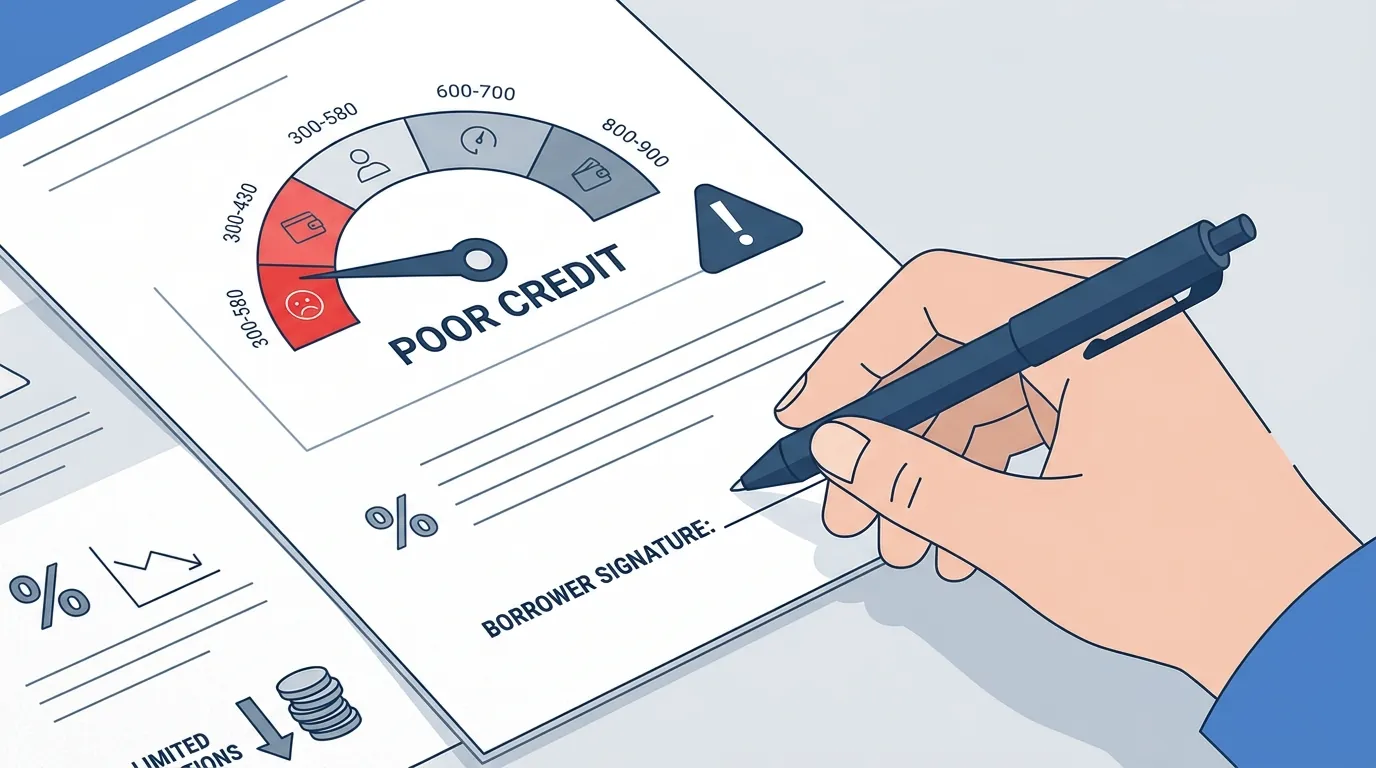
Having a lower credit score can make borrowing more difficult, but it does not necessarily eliminate every financing option. Lenders use credit information as one part of their assessment, and applicants with weaker credit profiles may still qualify for certain personal loans, credit union products, secured financing, or other forms of credit.
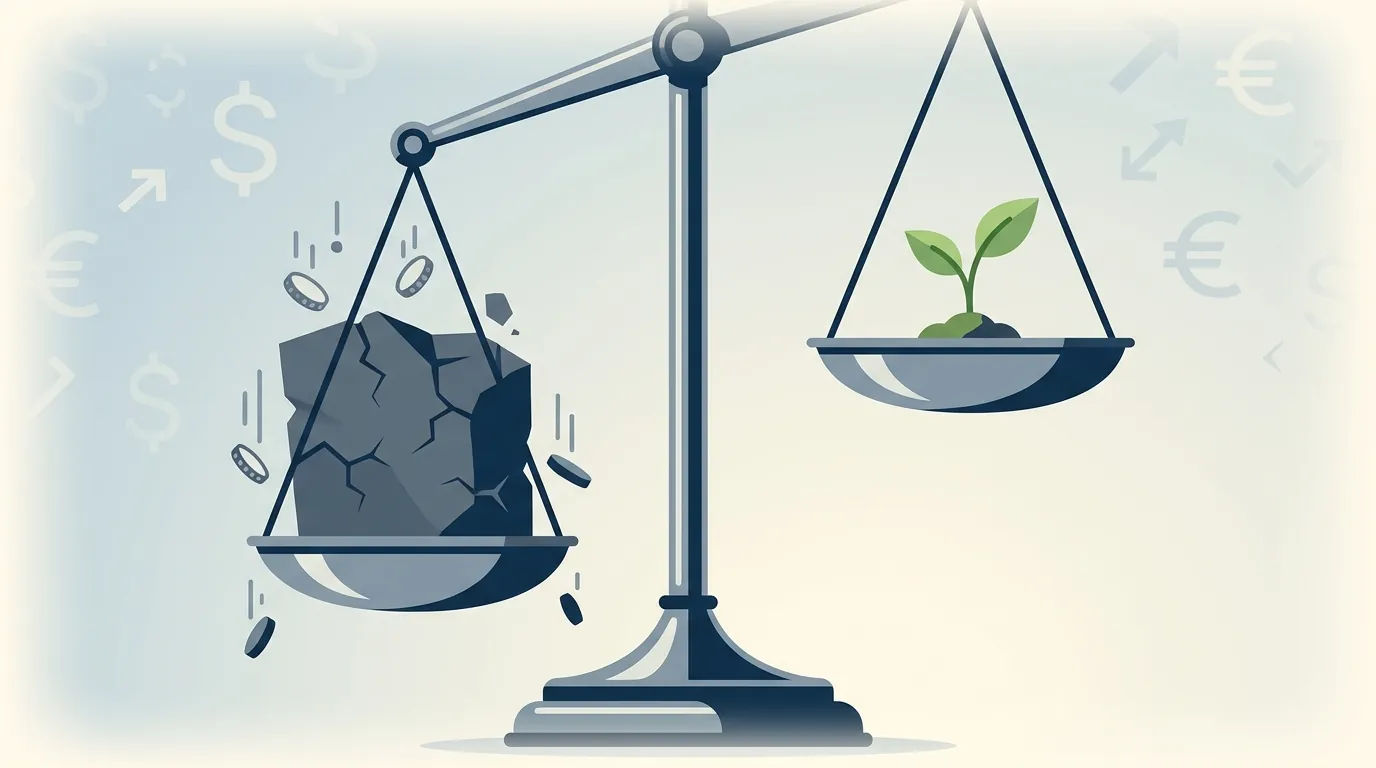
The trade-off is that borrowers with less favorable credit may receive higher interest rates, lower borrowing limits, shorter repayment periods, or additional fees. The cost of borrowing can therefore be significantly different from the rates advertised to applicants with stronger credit.
Before applying for a bad-credit loan, it is important to understand what lenders may evaluate, how the loan can affect your finances, what alternatives may exist, and how to identify potentially fraudulent offers.
What Does “Bad Credit” Mean?
There is no single universal definition of bad credit.
Credit scores are calculated using different scoring models, and lenders can use different models for different types of loans. The CFPB notes that consumers can have multiple credit scores because scoring models, credit-reporting sources, and the timing of the calculation can differ.
Credit scores generally reflect information such as payment history, outstanding debt, length of credit history, types of credit accounts, credit utilization, recent applications, and certain negative events.
A lower score can make it harder to qualify for credit or result in less favorable terms. The CFPB explains that higher credit scores generally make it easier to qualify for loans and may result in lower interest rates or better terms.
For this reason, borrowers should not assume that one particular score automatically determines whether they qualify.
Why Bad Credit Can Increase Borrowing Costs
Lenders use credit information to estimate the likelihood that a borrower will repay according to the agreement.
When a lender views an applicant as presenting greater repayment risk, it may offer a higher interest rate or other terms designed to compensate for that risk.
The interest rate is only one part of the cost.
The annual percentage rate (APR) incorporates the interest rate and certain additional fees associated with the loan. The CFPB recommends comparing APRs when evaluating borrowing costs rather than comparing an interest rate from one loan with an APR from another.
For example, a loan with a slightly lower advertised interest rate could still have a higher overall cost if it carries substantial origination or other fees.
Review Your Credit Before Applying
Before submitting an application, review your credit information if possible.
Look for:
- Accounts you do not recognize
- Incorrect balances
- Payments incorrectly reported as late
- Duplicate accounts
- Outdated negative information
- Incorrect personal information
An error can affect how lenders evaluate an application.
The CFPB also explains that consumers have multiple credit scores and that the score available to them may not be exactly the same score a lender uses.
Understanding your credit profile before applying can help you set realistic expectations and identify problems that may need to be addressed.
Know What Lenders May Consider
Credit score is important, but it is not necessarily the only factor in a lending decision.
Depending on the lender and loan product, an application may involve information about:
- Income
- Employment
- Existing debt
- Credit history
- Requested loan amount
- Repayment period
- Bank-account activity
- Collateral
- Other financial obligations
A lender may therefore approve one applicant with a relatively low score while declining another applicant with a similar score because their income, debt burden, or other circumstances differ.
This is one reason there is no single credit-score cutoff that applies to every bad-credit loan.
Consider How Much You Actually Need
Borrowing less can reduce the overall financial burden.
Before applying, calculate the actual expense and avoid automatically selecting the maximum amount offered by a lender.
For example, if an unexpected repair costs $2,500, borrowing $5,000 creates a larger principal balance and potentially more interest. The additional funds may be useful in some circumstances, but they also create another repayment obligation.
A useful starting point is to determine:
Required expense − available cash = potential financing need
If some of the expense can be covered through savings, a payment arrangement, or another low-cost source, the amount borrowed may be reduced.
Compare the APR and Fees
Bad-credit borrowers may encounter lenders advertising loans with different combinations of interest rates and fees.
Personal installment loans can include origination fees, documentation fees, optional insurance charges, and late fees. The CFPB advises consumers to review the loan disclosure and documents carefully before agreeing to the financing.
A loan should therefore be evaluated using more than its monthly payment.
Compare:
- APR
- Interest rate
- Origination fee
- Other upfront charges
- Monthly payment
- Number of payments
- Total repayment amount
- Late-payment fees
- Prepayment provisions
The total repayment figure can reveal how much the financing will cost over the entire term.
A Lower Monthly Payment Is Not Necessarily Cheaper
Borrowers with limited cash flow may be drawn to loans with smaller monthly payments.
However, a lower payment can result from extending the repayment period.
Consider two hypothetical loans for the same amount. One requires larger payments over three years, while the other requires smaller payments over five years.
The five-year option may be easier to fit into the monthly budget, but interest can accumulate for an additional two years.
The important question is therefore not simply whether the payment is affordable today.
It is whether the combination of monthly payment, loan term, and total repayment cost makes sense over the entire period.
Consider Secured Financing
Some borrowers with weaker credit may consider a secured loan.
A secured loan is backed by collateral, such as a vehicle or another eligible asset. Because the lender has an interest in the collateral, the structure differs from an unsecured personal loan.
However, collateral creates an additional risk for the borrower.
If the borrower fails to meet the loan agreement, the lender may have rights against the collateral according to the contract and applicable law.
Before using an asset to secure borrowing, consider whether the potential reduction in borrowing cost is worth putting that asset at risk.
Credit Unions May Offer Another Option
A bank is not the only institution that may offer personal financing.
Credit unions can provide consumer loans and other financial products to eligible members. Depending on the institution and applicant, the available terms may differ from those offered by online lenders or traditional banks.
Borrowers should compare the actual offer rather than assuming that a particular type of institution will automatically provide lower-cost financing.
Look at the APR, fees, loan amount, repayment period, membership requirements, and any collateral requirements.
Be Careful With Payday Loans
Borrowers with poor credit may encounter payday loans when searching for fast financing.
The FTC describes payday loans as potentially expensive and warns consumers to consider alternatives before taking one. Its consumer guidance notes that payday and car-title loans can carry significant costs and may create a cycle of debt.
The short repayment period can also make these loans difficult to manage.
A borrower should calculate the actual dollar cost and determine exactly when repayment is due before accepting short-term financing.
A loan that appears manageable because the initial amount is small can become difficult to repay if the borrower's next paycheck is already committed to rent, utilities, food, transportation, and other obligations.
Watch for “Guaranteed Approval” Claims
Bad-credit borrowers are frequently targeted by advertisements promising loans regardless of credit history.
The FTC warns that advance-fee loan scams often use precisely this type of promise. Scammers may claim they can guarantee a loan and then demand an upfront payment for processing, insurance, paperwork, or another supposed service.
A lender may legitimately charge certain fees under a loan agreement, but consumers should be highly cautious when someone says payment is required before a promised loan can be delivered.
The FTC recommends researching the company, checking whether the lender is registered where required, and avoiding anyone who asks for payment in exchange for a guaranteed loan.
Be Careful With Online Loan Marketplaces
Online lending can make it easier to compare financing, but borrowers should understand who is actually receiving their information.
Some websites may operate as marketplaces or lead generators rather than direct lenders. An application may be shared with multiple providers.
Before entering sensitive financial information, identify the company operating the website and review its privacy policy.
Check:
- Who will receive the application
- Whether the company is the actual lender
- What information will be shared
- Whether the website clearly identifies fees
- How the lender can be contacted
- Whether the loan agreement is available before acceptance
Speed should not replace due diligence.
Understand the Effect of Applying
Loan applications can involve credit inquiries.
The CFPB explains that lenders generally obtain a credit report when someone applies for new credit, and this is usually considered a hard inquiry. Hard inquiries can affect a credit score.
Because of this, borrowers should avoid submitting applications indiscriminately to numerous lenders without first understanding their likely requirements.
Some lenders allow consumers to check potential rates or eligibility without a hard inquiry, but the exact process varies. Read the lender's explanation carefully to determine whether a rate check involves a soft inquiry or a formal application.
What If Your Application Is Denied?
A denial does not necessarily mean that obtaining credit is impossible.
The first step is to understand why the application was rejected.
The CFPB explains that when a lender denies a credit application, the lender generally must provide an adverse action notice identifying the main reasons for the decision or explaining how to obtain those reasons. If the decision was based on a credit report, additional information may be provided, including the credit score used and key factors affecting it.
The reason for the denial can help determine what to address before submitting another application.
For example, the issue might involve high existing debt, insufficient income, limited credit history, or inaccurate information on a credit report.
Alternatives to a Bad-Credit Loan
A loan is not always the only way to address a financial shortfall.
Depending on the situation, alternatives could include:
- Negotiating a payment arrangement
- Using an existing emergency fund
- Asking a creditor about hardship options
- Seeking assistance from a nonprofit organization
- Exploring credit-union products
- Delaying a discretionary purchase
- Reducing the amount of the expense
- Using an existing line of credit with a lower cost
If the underlying problem is recurring cash-flow pressure, taking on another loan may not solve the larger issue.
For borrowers already struggling with debt, nonprofit credit counseling may provide another avenue for reviewing the budget and existing obligations. The FTC notes that reputable credit counseling organizations can provide information about their services before charging for assistance.
Can a Bad-Credit Loan Help Rebuild Credit?
Some installment loans can contribute to building or rebuilding credit when the lender reports payments to the major credit reporting companies.
The CFPB explains that certain loans and credit cards can help consumers establish or rebuild credit when payments are reported and made on time.
However, taking out an expensive loan solely to improve a credit score may not make financial sense.
The loan should serve a legitimate financial purpose, and the borrower should be able to make the payments reliably.
Missing payments can create additional credit problems rather than solving the original issue.
Read the Loan Agreement Before Signing
The final step before accepting financing is reading the actual agreement.
Pay particular attention to:
- APR
- Interest rate
- Amount financed
- Monthly payment
- Number of payments
- Total repayment amount
- Origination fees
- Late fees
- Prepayment terms
- Collateral requirements
- Automatic-payment provisions
- Default provisions
Do not rely exclusively on an advertisement or a representative's verbal explanation.
If a term is unclear, ask for an explanation before signing.
Questions to Ask Before Applying
A borrower can make the process more manageable by answering several questions in advance.
How much do I actually need?
Avoid borrowing more than the expense requires unless there is a specific reason to do so.
What can I afford each month?
Calculate the payment alongside rent, utilities, food, insurance, existing debt, and other recurring costs.
What is the total cost?
Look beyond the monthly payment and calculate the full repayment obligation.
What caused my credit problems?
Understanding the reason for a lower score can help identify whether there are errors, excessive balances, missed payments, or other issues to address.
Are there lower-cost alternatives?
Check payment plans, credit unions, existing credit, savings, and assistance programs before accepting expensive financing.
Is the lender legitimate?
Verify the company's identity and be skeptical of guaranteed approval or requests for upfront payment.
Final Considerations
Bad-credit loans can provide access to financing when conventional borrowing options are limited, but approval should not be the only consideration.
Borrowers should examine the APR, fees, repayment term, monthly payment, total cost, and consequences of missed payments before accepting an offer. Credit history is important, but lenders may also consider income, existing debt, loan amount, and other financial information.
Comparing multiple offers can help reveal meaningful differences in borrowing costs. Checking credit reports for errors before applying can also prevent inaccurate information from affecting the process.
Most importantly, a lender willing to approve an application does not necessarily mean the resulting payment fits the borrower's financial situation.
The goal should be to understand the complete cost of the financing and whether the debt can be repaid reliably. For someone already dealing with financial pressure, avoiding an unaffordable loan can be just as important as finding access to credit.
References
- Consumer Financial Protection Bureau — What Is a Credit Score? Consumer Financial Protection Bureau
- Consumer Financial Protection Bureau — Understand Your Credit Score Consumer Financial Protection Bureau
- Consumer Financial Protection Bureau — What Is the Difference Between a Loan Interest Rate and the APR? Consumer Financial Protection Bureau
- Consumer Financial Protection Bureau — Do Personal Installment Loans Have Fees? Consumer Financial Protection Bureau
- Consumer Financial Protection Bureau — When Will My Lender Run or Obtain a Copy of My Credit Report? Consumer Financial Protection Bureau
- Consumer Financial Protection Bureau — What Can I Do if My Credit Application Was Denied Because of My Credit Report? Consumer Financial Protection Bureau
- Consumer Financial Protection Bureau — What Are Some Ways to Start or Rebuild a Good Credit History? Consumer Financial Protection Bureau
- Federal Trade Commission — What To Know About Advance-Fee Loans Federal Trade Commission
- Federal Trade Commission — Looking for Debt Relief? Here's How to Avoid a Scam Federal Trade Commission