
For many homebuyers, the biggest obstacle is not finding a property. It is finding a mortgage structure that fits their credit profile, available savings, income, and expected monthly budget.
Government-backed mortgages can provide alternatives to conventional financing. FHA loans are insured by the Federal Housing Administration, VA loans are guaranteed by the Department of Veterans Affairs for eligible borrowers, and state and local housing agencies may offer programs designed to help first-time or lower- and moderate-income buyers with down payments and closing costs. (HUD ; VA ; CFPB )
These programs are not interchangeable. They have different eligibility rules, insurance costs, fees, property requirements, and borrower protections.
FHA Loans: Lower Down Payments With Mortgage Insurance
FHA loans are issued by private lenders and insured by the Federal Housing Administration, which is part of the U.S. Department of Housing and Urban Development.
One of the most recognizable features is the relatively low minimum down payment. HUD states that FHA financing can allow a down payment as low as 3.5% of the purchase price for qualifying borrowers. FHA loans can be used for eligible one- to four-unit properties. (HUD )
That lower upfront requirement can make FHA financing relevant for buyers who have limited savings.
But the down payment is only one part of the calculation.
FHA loans involve mortgage insurance requirements, and the borrower should evaluate the insurance costs alongside the interest rate, loan amount, closing costs, and expected period of ownership.
A mortgage with a smaller initial cash requirement can still have a higher overall borrowing cost than another financing option.
FHA Financing and Credit Considerations
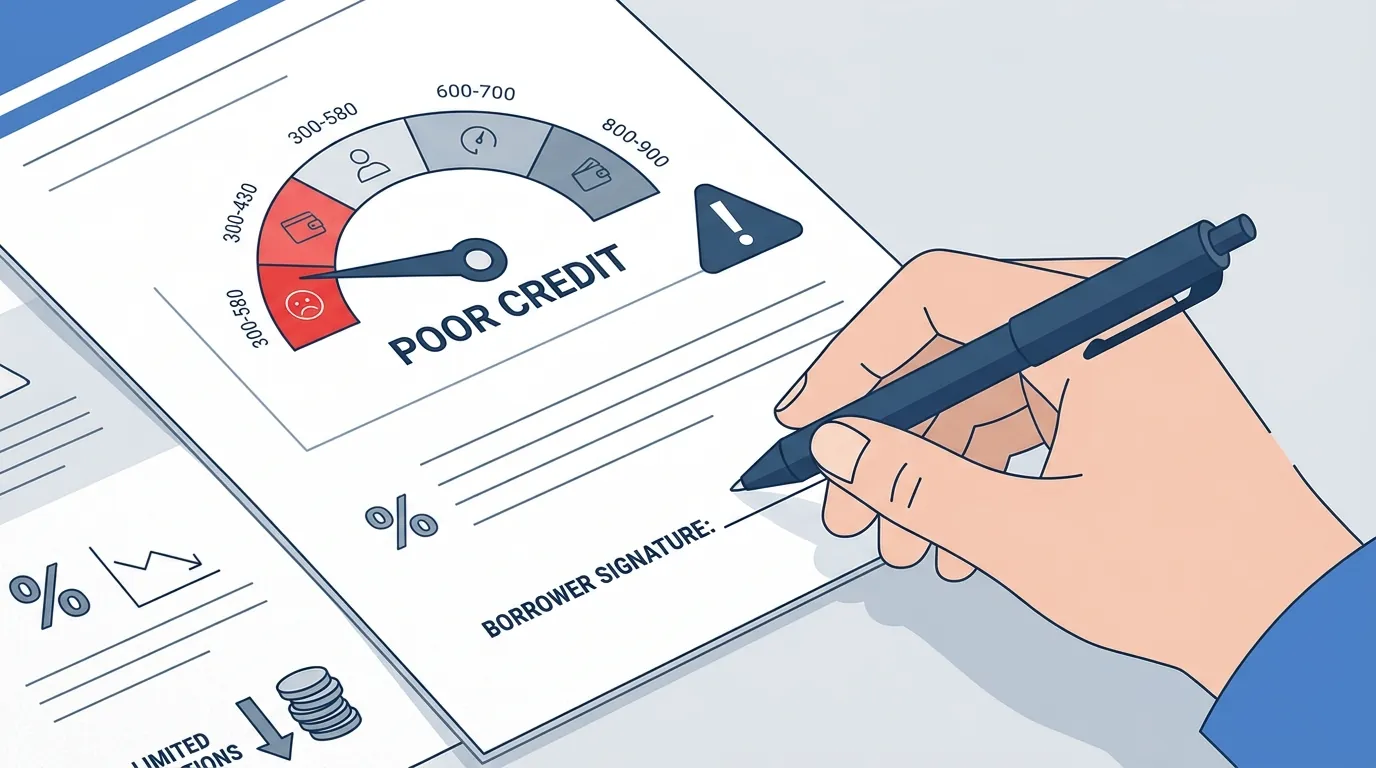
FHA loans are also designed to accommodate borrowers who may have difficulty qualifying for some conventional mortgages.
The CFPB describes FHA loans as government-backed financing with low down-payment requirements and availability to borrowers with lower credit scores. (CFPB )
That does not mean FHA approval is automatic for someone with a particular credit score.
Lenders still evaluate income, debt, credit history, assets, property characteristics, and other underwriting factors. Individual lenders can also impose their own requirements within applicable program rules.
For a buyer comparing FHA with conventional financing, the relevant question is therefore not simply whether the buyer can qualify. It is how the complete loan structure compares.
VA Loans Serve a Different Borrower Group
VA-backed purchase loans are available to eligible veterans, active-duty service members, and certain surviving spouses who meet the applicable requirements.
Unlike FHA financing, VA eligibility is based primarily on qualifying military service and other program requirements rather than being a general low-down-payment program for the broader homebuying population.
VA-backed loans are obtained through private lenders, with the VA guaranteeing a portion of the loan. Borrowers still need to meet VA and lender standards for credit, income, and other requirements. (VA )
One major feature is the potential to purchase a home without a down payment when the applicable requirements are satisfied. VA states that a down payment is generally not required when the sales price does not exceed the home's appraised value, although lenders can have additional requirements in some circumstances. (VA )
VA Loans and Mortgage Insurance
VA-backed purchase loans do not require private mortgage insurance or FHA-style monthly mortgage insurance premiums.
That can materially change the monthly cost compared with a conventional mortgage where PMI applies or an FHA loan carrying mortgage insurance.
However, VA financing can involve a VA funding fee.
The funding fee is generally a one-time charge that helps support the VA loan program. Certain borrowers may qualify for an exemption, including some veterans receiving or eligible to receive VA compensation for a service-connected disability. (VA ; VA )
A borrower should therefore compare the funding fee, interest rate, closing costs, and monthly payment rather than assuming that eliminating monthly mortgage insurance makes every VA loan less expensive in every situation.
VA Financing Does Not Require First-Time Buyer Status
Another important distinction is that VA-backed financing is not limited to first-time homebuyers.
The VA states that eligible borrowers can use the benefit to purchase a first home and can use the benefit again after a previous VA-backed home loan, subject to applicable entitlement and eligibility rules. (VA )
That makes the VA program different from many programs specifically designed around first-time ownership.
The benefit can be reusable, although entitlement, lender requirements, and the details of the transaction matter.
First-Time Homebuyer Programs Are Not One Mortgage
“First-time homebuyer loan” can be misleading because there is no single nationwide mortgage product carrying that name.
Instead, first-time buyers may encounter programs offered by state housing finance agencies, local governments, nonprofits, and lenders.
The CFPB notes that many states and local organizations offer assistance for first-time buyers, including programs that can help with down payments or closing costs. (CFPB )
Some programs can be combined with FHA or conventional mortgages.
Others may provide subsidized loans, grants, deferred-payment assistance, or other forms of support, depending on the program.
Eligibility can depend on income, location, purchase price, household circumstances, occupancy, and whether the buyer meets the program's definition of a first-time purchaser.
What Counts as a First-Time Buyer?
The definition can vary depending on the program.
A buyer should not assume that owning a home in the past automatically makes them ineligible for every first-time-buyer program.
Likewise, simply never having owned a home does not guarantee eligibility.
The specific program documents determine who qualifies.
This is particularly important because state and local programs can have requirements that differ from federal mortgage programs.
A buyer who thinks they might qualify should check the relevant housing agency's current rules rather than relying on a general definition.
Down Payment Assistance Can Change the Upfront Cost
Saving for the down payment is one of the most difficult parts of buying a home, particularly when the buyer is also trying to maintain emergency savings and cover closing expenses.
Down-payment assistance programs can potentially reduce the amount of cash a buyer needs to provide upfront.
The CFPB notes that state and local organizations offer various forms of assistance and recommends researching available programs and speaking with housing counselors or lenders about eligibility. (CFPB )
However, assistance should not be evaluated only by its headline dollar amount.
The buyer should determine whether the assistance is a grant, forgivable loan, deferred loan, or repayable second mortgage.
The repayment conditions can materially affect the long-term cost of the home purchase.
FHA vs. VA vs. First-Time Buyer Assistance
The three categories address different needs.
| Feature | FHA Loan | VA-Backed Loan | First-Time Buyer Programs |
|---|---|---|---|
| Primary eligibility | General qualifying borrowers | Eligible veterans, service members, and certain surviving spouses | Depends on program |
| Down payment | Can be as low as 3.5% for qualifying borrowers | Often 0% when requirements are met | Varies |
| Mortgage insurance | FHA mortgage insurance applies | No PMI/MIP | Depends on underlying loan |
| Funding fee | No VA funding fee | May apply | Depends on program |
| First-time buyer required | No | No | Often, but definitions vary |
| Credit requirements | Lender and FHA requirements | VA and lender requirements | Program-specific |
| Property requirements | FHA eligibility rules apply | VA property requirements apply | Program-specific |
| Assistance with closing costs | Program/lender dependent | VA rules and transaction terms apply | Some programs specifically provide assistance |
The table illustrates why comparing only down payments can produce an incomplete picture.
A buyer should also consider mortgage insurance, funding fees, interest rates, closing costs, loan term, and how long the property is expected to be owned.
FHA Versus Conventional Financing
A first-time buyer does not necessarily need a government-backed mortgage.
Conventional financing can also be available with relatively small down payments, depending on the lender and loan program.
The CFPB notes that conventional loans typically cost less than FHA loans but can be harder for some borrowers to qualify for. (CFPB )
This creates a practical trade-off.
A buyer with strong credit and sufficient savings may qualify for conventional financing with competitive terms. Another buyer may place greater value on FHA's lower down-payment structure or different underwriting characteristics.
The comparison should be based on actual Loan Estimates rather than assumptions about which category will cost less.
Government Programs Do Not Eliminate Closing Costs
A low down payment does not mean a buyer can purchase a home without bringing additional funds to closing.
Depending on the transaction, buyers may encounter:
- Origination charges
- Appraisal fees
- Title services
- Recording charges
- Prepaid interest
- Property taxes
- Homeowners insurance
- Escrow funding
- Mortgage insurance or program-specific fees
Some first-time-buyer assistance programs can help with certain upfront expenses, but the amount and conditions vary.
The CFPB recommends comparing official loan offers and reviewing the Loan Estimate before selecting a mortgage. (CFPB )
The Loan Estimate Is a Key Comparison Tool
Once a borrower applies for a mortgage, the lender provides a Loan Estimate showing important information about the proposed financing.
Rather than comparing advertisements, buyers can use Loan Estimates to examine the actual terms being offered.
Important items include:
Interest rate: The cost of borrowing the principal.
APR: A broader measure incorporating the interest rate and certain loan costs.
Loan amount: The amount being financed.
Monthly principal and interest: The required payment toward the mortgage itself.
Mortgage insurance: Applicable premiums or charges.
Origination charges: Lender fees associated with making the loan.
Cash to close: The estimated amount required to complete the purchase.
Prepayment terms: Whether applicable restrictions or penalties exist.
Comparing these figures across lenders can reveal differences that are not obvious from advertised rates.
Eligibility Is Only One Part of Affordability
A borrower can qualify for a mortgage and still find the payment uncomfortable.
Housing costs can extend beyond principal and interest.
Property taxes, homeowners insurance, HOA dues, maintenance, utilities, and unexpected repairs can all affect the household budget.
The VA specifically encourages prospective borrowers to review credit, income, expenses, and their monthly budget before buying. (VA )
The same principle applies regardless of mortgage type.
A government-backed program can make financing more accessible, but it does not eliminate the ongoing costs of owning the property.
First-Time Buyers Should Also Check Local Programs
Federal mortgage programs receive considerable attention, but state and local housing agencies can provide additional opportunities.
The CFPB notes that many local programs focus on first-time buyers and lower- or moderate-income households, while others may target public-service workers or buyers purchasing homes in specific areas. (CFPB )
A buyer should therefore investigate:
- State housing finance agency programs
- Local down-payment assistance
- Closing-cost assistance
- Homebuyer education programs
- Employer-assisted housing programs
- Housing counseling agencies
- Special-purpose lending programs
Availability can change, and some programs have limited funding or specific application windows.
How to Compare Government-Backed Mortgage Options
A practical comparison starts with eligibility.
Step 1: Review your financial position. Look at credit, income, existing debts, savings, and available cash after closing.
Step 2: Identify applicable programs. Check FHA, VA, USDA, state, and local programs based on your circumstances.
Step 3: Calculate the complete upfront cost. Do not stop at the advertised down payment.
Step 4: Compare mortgage insurance and program fees. FHA mortgage insurance and VA funding fees work differently.
Step 5: Request multiple Loan Estimates. Compare actual offers rather than advertised rates.
Step 6: Examine the monthly payment. Include taxes, insurance, mortgage insurance, and other recurring housing expenses.
Step 7: Consider the expected ownership period. A loan that works well for a long-term homeowner can have different economics for someone expecting to move within several years.
Government-Backed Does Not Mean One-Size-Fits-All
FHA, VA, and first-time-homebuyer programs exist to address different financing situations.
FHA financing can provide a relatively low down-payment path for qualifying borrowers and may be accessible to buyers who have difficulty obtaining conventional financing. (HUD )
VA-backed loans can offer eligible veterans, service members, and certain surviving spouses the possibility of purchasing with no down payment and without private mortgage insurance, although a funding fee may apply and lender requirements still matter. (VA )
First-time-buyer assistance is broader. State and local programs can provide down-payment or closing-cost assistance and may work alongside FHA or conventional mortgages. (CFPB )
For buyers, the important comparison is the complete financing package: eligibility, down payment, interest rate, mortgage insurance, program fees, closing costs, monthly payment, and long-term borrowing cost.
A mortgage that requires less money upfront can still carry other expenses. Conversely, a higher initial contribution may reduce ongoing financing costs.
Understanding the structure before making an offer gives buyers a clearer picture of what the home will actually cost—not just what it takes to get through the closing.