The interest rate on a loan affects much more than the amount of interest a borrower pays. It can influence monthly payments, budgeting, refinancing decisions, and the total cost of borrowing over several years.
Two fundamental rate structures are fixed-rate and variable-rate loans.
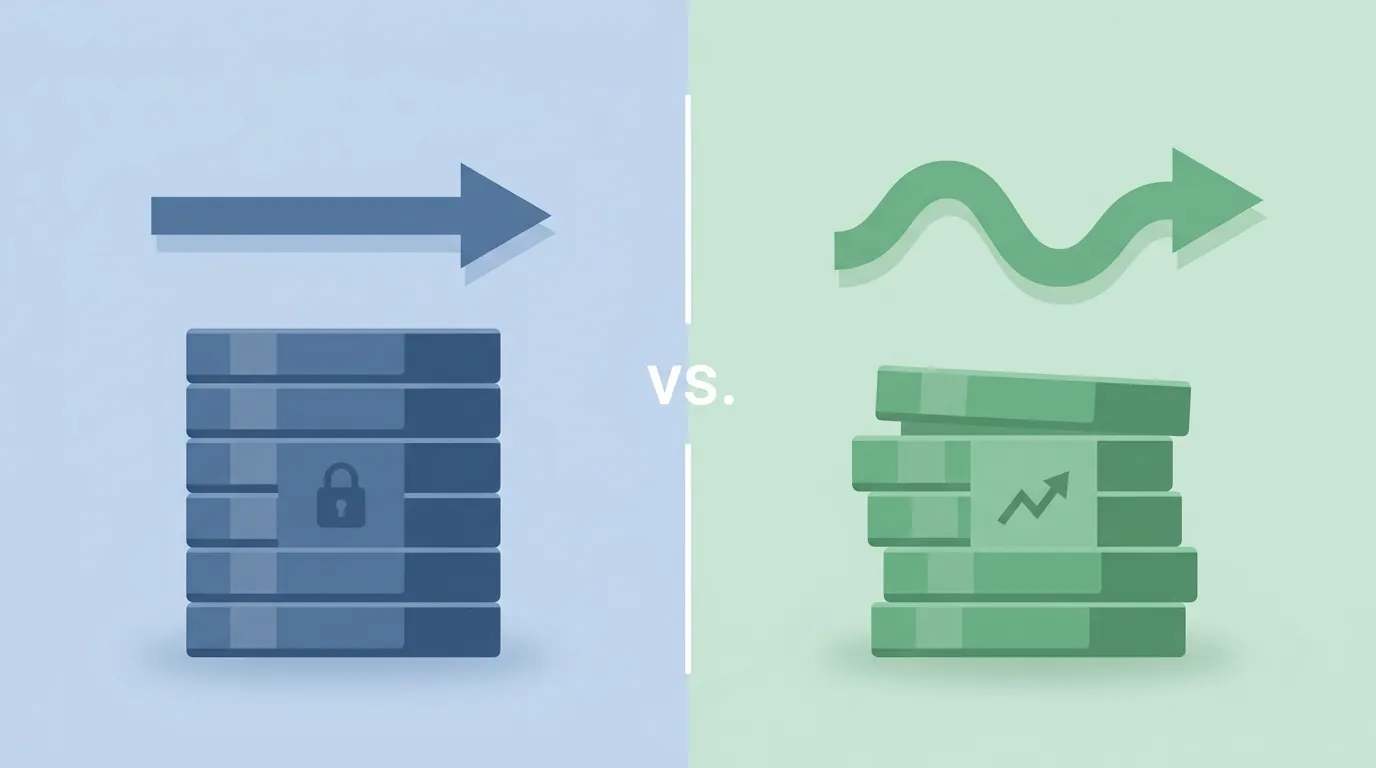
A fixed-rate loan generally keeps the stated interest rate unchanged for the applicable loan term. A variable-rate loan can change periodically according to the terms of the agreement, typically based on a reference index plus a lender-defined margin.
The distinction becomes especially important when borrowing over a long period. A small change in the interest rate can have a meaningful effect on the amount a borrower ultimately pays.
Understanding how each structure works—and how the payment could change under different economic conditions—can make it easier to evaluate a loan before signing.
What Is a Fixed-Rate Loan?
A fixed-rate loan has an interest rate that remains unchanged throughout the period specified in the loan agreement.
If a borrower takes out a five-year personal loan at a fixed 10% rate, the interest rate does not move to 11% or 8% simply because market rates change.
The borrower's payment schedule is generally established when the loan is originated.
Fixed rates are common in products such as:
- Fixed-rate mortgages
- Personal loans
- Auto loans
- Some student loans
- Certain business loans
- Some home equity loans
The exact structure varies by lender and product, but the central feature is rate stability.
What Is a Variable-Rate Loan?
A variable-rate loan has an interest rate that can change during the repayment period.
The rate is typically based on two components:
Reference index + lender margin = applicable interest rate
The reference index is a benchmark used to determine how the rate changes.
The loan agreement generally specifies:
- Which index is used
- The lender's margin
- How often the rate can change
- Any periodic adjustment limits
- Any lifetime rate cap
- How payment changes are calculated
The borrower therefore needs to understand not only today's interest rate but also the rules governing future adjustments.
How Variable Rates Change
Suppose a loan is priced at an index plus a 3% margin.
If the applicable index is 4%, the loan's rate might be 7%.
If the index later rises to 6%, the loan could adjust to 9%, subject to the agreement's adjustment rules and caps.
If the index falls, the rate may decline as well.
The timing and magnitude of the change depend on the specific loan.
For example, some variable-rate loans adjust monthly, while others adjust annually or according to another schedule.
The loan documents determine the actual mechanics.
Fixed vs. Variable Rates
| Feature | Fixed-Rate Loan | Variable-Rate Loan |
|---|---|---|
| Initial rate | Fixed under the agreement | Can vary |
| Monthly payment | Generally more predictable | May change |
| Exposure to rising rates | Lower | Higher |
| Benefit from falling rates | Usually requires refinancing or another contractual adjustment | Rate may decline |
| Budgeting | Easier to forecast | Requires flexibility |
| Long-term uncertainty | Lower | Higher |
| Common structure | Mortgages, auto loans, personal loans | HELOCs, some mortgages, business credit |
The exact characteristics depend on the particular loan agreement.
Why Fixed Rates Can Help With Budgeting
Predictability is one of the primary advantages of fixed-rate borrowing.
If a household has a fixed-rate mortgage, it can generally forecast the principal-and-interest portion of the payment for the life of the loan.
That makes long-term financial planning easier.
A business can also benefit from predictable debt service when it is forecasting operating expenses and cash flow.
However, a fixed mortgage payment does not necessarily mean the entire housing payment remains unchanged.
Property taxes, homeowners insurance, mortgage insurance, and escrow requirements can change independently of the mortgage interest rate.
The distinction is therefore between a fixed interest rate and a completely fixed household expense.
Variable Rates Can Decline
Variable-rate borrowing has an important potential advantage: the borrower may benefit when the relevant benchmark declines.
Suppose a variable-rate loan begins at 8%.
If the reference index subsequently falls and the loan adjusts downward according to its terms, the borrower could see a lower interest rate and potentially lower payments.
A fixed-rate borrower generally does not receive that benefit automatically.
Instead, a borrower with a fixed-rate loan would generally need to refinance or use another contractual mechanism to obtain a different rate.
That flexibility can make variable-rate borrowing attractive in some circumstances, but it comes with greater uncertainty.
The Risk of Rising Interest Rates
The primary concern with variable-rate debt is that the rate can rise.
Consider a borrower with a $100,000 balance.
If the applicable rate increases from 6% to 9%, the annual interest expense on a simple interest calculation would rise from approximately $6,000 to $9,000 before considering amortization or other loan mechanics.
The actual payment increase depends on the loan's structure.
For a large or long-term loan, even relatively modest rate changes can have a substantial financial effect.
Borrowers should therefore examine whether they could afford the payment under a significantly higher rate.
Rate Caps Limit Some Adjustments
Variable-rate loans may include rate caps.
These provisions limit how much the interest rate can change.
A loan might specify:
- A maximum increase at each adjustment
- A maximum lifetime rate
- A minimum rate or floor
The presence of a cap does not mean the payment cannot increase substantially.
For example, a loan that starts at 6% and has a 2-percentage-point periodic cap could potentially rise to 8% at an adjustment, subject to the agreement's other terms.
The borrower should identify the maximum possible rate and understand how it would affect the payment.
Introductory Rates Require Careful Review
Some variable-rate loans advertise an initial rate that is lower than the rate that may apply later.
This introductory rate can make the loan appear inexpensive at first.
However, borrowers should determine:
- How long the introductory rate lasts
- What index determines the subsequent rate
- What margin applies
- When the first adjustment occurs
- How frequently adjustments occur
- Whether there is a cap
- What the maximum potential rate is
A low initial rate is only one part of the financing structure.
The borrower should understand the rate that could apply after the introductory period ends.
Fixed-Rate Loans Can Cost More Initially
Fixed-rate loans can sometimes carry a higher initial rate than variable-rate alternatives.
The difference represents, in part, the value of rate certainty.
A borrower may pay more initially in exchange for protection against future rate increases.
For example:
Fixed rate: 7.5%
Variable rate: 6.5%
The variable loan may initially cost less.
But if its rate later rises to 9%, the initial advantage could disappear.
Conversely, if market rates decline and the variable loan falls to 5.5%, the variable-rate borrower could benefit.
The future path of rates is uncertain, which is why the borrower's ability to absorb changes matters.
Loan Term Changes the Importance of Rate Risk
Rate structure becomes increasingly important as the repayment period lengthens.
A short-term variable-rate loan may have relatively limited exposure to changing rates.
A long-term variable-rate loan can experience multiple adjustments over many years.
This is particularly relevant to mortgages and business financing.
A borrower should consider not only the current rate but also how long the debt is expected to remain outstanding.
Personal Loans: Fixed Rates Are Common
Many unsecured personal loans use fixed interest rates.
This structure allows borrowers to know the scheduled payment when the loan is originated.
For example, a $15,000 personal loan with a fixed rate and a defined repayment period can be incorporated into a household budget with relatively predictable principal-and-interest payments.
Variable-rate personal loans exist, but the availability and structure depend on the lender.
Borrowers should read the loan agreement rather than assume that every personal loan uses the same rate structure.
Auto Loans and Fixed Rates
Auto loans are commonly offered with fixed interest rates.
A fixed-rate auto loan can provide a predictable monthly principal-and-interest payment throughout the repayment period.
This can make it easier to compare financing offers.
Borrowers should still evaluate the total finance charge because a longer term can increase total interest even when the rate is fixed.
The vehicle's purchase price, down payment, trade-in value, taxes, fees, optional products, APR, and loan term all contribute to the total cost.
Mortgages: Fixed vs. Adjustable Rates
Mortgages provide one of the clearest examples of the distinction.
A fixed-rate mortgage generally keeps the contractual interest rate unchanged for the life of the loan.
An adjustable-rate mortgage (ARM) typically begins with a fixed period and then adjusts according to the loan's terms.
For example, an ARM might have a fixed rate for an initial period before transitioning to periodic adjustments.
The CFPB explains that an ARM's future rate generally depends on an index plus a margin and that the loan's terms specify when adjustments occur and how much the rate can change. (consumerfinance.gov)
This makes the initial rate only one part of the mortgage analysis.
HELOCs and Variable Rates
Home equity lines of credit frequently use variable interest rates.
Because a HELOC can allow borrowers to draw and repay funds during a draw period, the balance itself can change in addition to the interest rate.
A homeowner could therefore face two variables:
How much is borrowed
and
What interest rate applies
The combination can make future payments more difficult to predict.
The CFPB advises HELOC borrowers to understand how the interest rate is determined, how frequently it can change, and whether the loan has rate caps. (consumerfinance.gov)
Business Loans Can Use Either Structure
Businesses may encounter both fixed- and variable-rate financing.
A fixed-rate business loan can simplify cash-flow forecasting because scheduled debt payments are more predictable.
A variable-rate loan may initially offer different pricing and can become less expensive if market rates decline.
Businesses should evaluate rate risk alongside revenue volatility.
A company with highly predictable cash flow may have greater capacity to absorb changing debt costs than a seasonal company whose revenue fluctuates significantly.
For variable-rate business debt, management should model higher-rate scenarios before borrowing.
How to Compare the Total Cost
Interest rate alone does not determine the cost of a loan.
Borrowers should also consider:
- APR
- Origination fees
- Closing costs
- Repayment period
- Prepayment provisions
- Rate adjustment rules
- Rate caps
- Loan balance
- Monthly payment
For variable-rate loans, the borrower should estimate the cost at several potential rates.
For example:
| Scenario | Interest Rate | Approximate Annual Interest on $50,000* |
|---|---|---|
| Lower-rate scenario | 5% | $2,500 |
| Initial rate | 7% | $3,500 |
| Higher-rate scenario | 9% | $4,500 |
| Stress scenario | 11% | $5,500 |
*Simple illustration before principal amortization and other loan mechanics.
This is not a payment schedule. It demonstrates how the cost of interest changes as the rate moves.
When a Variable Rate Requires More Caution
A borrower may want to pay particular attention to variable-rate financing when:
- The loan balance is large
- The repayment period is long
- Household cash flow is tight
- Business revenue is unpredictable
- The rate can adjust frequently
- There is little emergency savings
- The maximum rate is substantially above the starting rate
The important question is whether the borrower can still make payments if the rate moves materially higher.
A loan should not be evaluated solely on the assumption that rates will remain at today's level.
When a Fixed Rate Can Be Useful
Fixed-rate financing can provide greater predictability when:
- The borrower expects to hold the debt for several years
- Budget certainty is important
- The payment already fits comfortably within the budget
- The borrower does not want to monitor rate changes
- The loan balance is substantial
- Future income is relatively uncertain
A fixed rate can function as a form of protection against future interest-rate increases.
The borrower pays for that certainty through the rate offered at origination.
Refinancing Can Change the Equation
A fixed-rate borrower may eventually refinance if market rates decline sufficiently.
However, refinancing involves costs and does not guarantee that the borrower will save money.
Potential expenses can include:
- Application fees
- Appraisal costs
- Title services
- Origination charges
- Closing costs
- Prepayment costs on the existing loan, where applicable
The borrower should calculate the break-even period and consider how long they expect to keep the new loan.
A variable-rate borrower may see the interest rate decline automatically under the loan's adjustment rules, but that benefit is not guaranteed.
Questions to Ask Before Choosing a Rate Structure
Before accepting a loan, ask:
Is the interest rate fixed for the entire term?
If it is variable, what index is used?
What margin does the lender add to the index?
How often can the rate change?
When can the first adjustment occur?
Is there an introductory rate?
What are the periodic and lifetime caps?
What is the highest possible rate?
How would my payment change at that rate?
Are there fees for refinancing or prepaying the loan?
What is the total cost under several rate scenarios?
These questions can reveal risks that are not obvious from the initial advertised rate.
A Practical Comparison Example
Imagine two $30,000 loans with five-year repayment periods.
Fixed-rate option
- Starting rate: 8%
- Rate remains fixed
- Predictable scheduled payments
Variable-rate option
- Starting rate: 6.5%
- Rate can adjust according to the agreement
- Payment can change
If the variable rate remains below the fixed rate throughout the repayment period, the borrower could pay less interest.
If the variable rate rises substantially, the fixed-rate loan could ultimately produce a lower total cost.
Neither outcome is guaranteed.
The appropriate analysis depends on how much rate risk the borrower is prepared to accept and how long the debt is expected to remain outstanding.
Reading the Loan Agreement
The most important details are often buried in the financing documents.
For a fixed-rate loan, verify that the rate remains fixed for the intended period.
For a variable-rate loan, locate the section explaining:
- Index
- Margin
- Adjustment dates
- Initial rate
- Periodic cap
- Lifetime cap
- Floor
- Payment calculation
- Conversion options, if any
Do not rely exclusively on the salesperson's description or an advertisement.
The contract determines the actual borrowing terms.
Building a Rate Strategy Around Your Financial Situation
Fixed- and variable-rate loans represent different approaches to interest-rate risk.
A fixed-rate loan transfers more of that uncertainty away from the borrower. The borrower accepts the stated rate in exchange for payment predictability.
A variable-rate loan leaves more exposure with the borrower. The initial rate may be lower, and the borrower can potentially benefit if the reference rate declines, but payments can increase if rates rise.
That trade-off becomes particularly important for long-term or large-balance debt.
Before choosing, borrowers should calculate the payment under the current rate and under several higher-rate scenarios. They should also consider how long they expect to keep the loan and whether their income and cash reserves could absorb a higher payment.
For fixed-rate financing, the analysis should focus on the rate, fees, repayment period, and potential refinancing costs.
For variable-rate financing, the analysis should go further by examining the index, margin, adjustment schedule, caps, and maximum potential payment.
Ultimately, the difference between fixed and variable financing is not simply whether the interest rate can change. It is who carries the risk of future interest-rate movements.
Understanding that risk before borrowing can make the difference between a payment that remains manageable and one that becomes difficult when economic conditions change.