
Whenever a lender, credit card company, or another business checks a consumer's credit report, that activity may be recorded as a credit inquiry. But not every inquiry has the same effect.
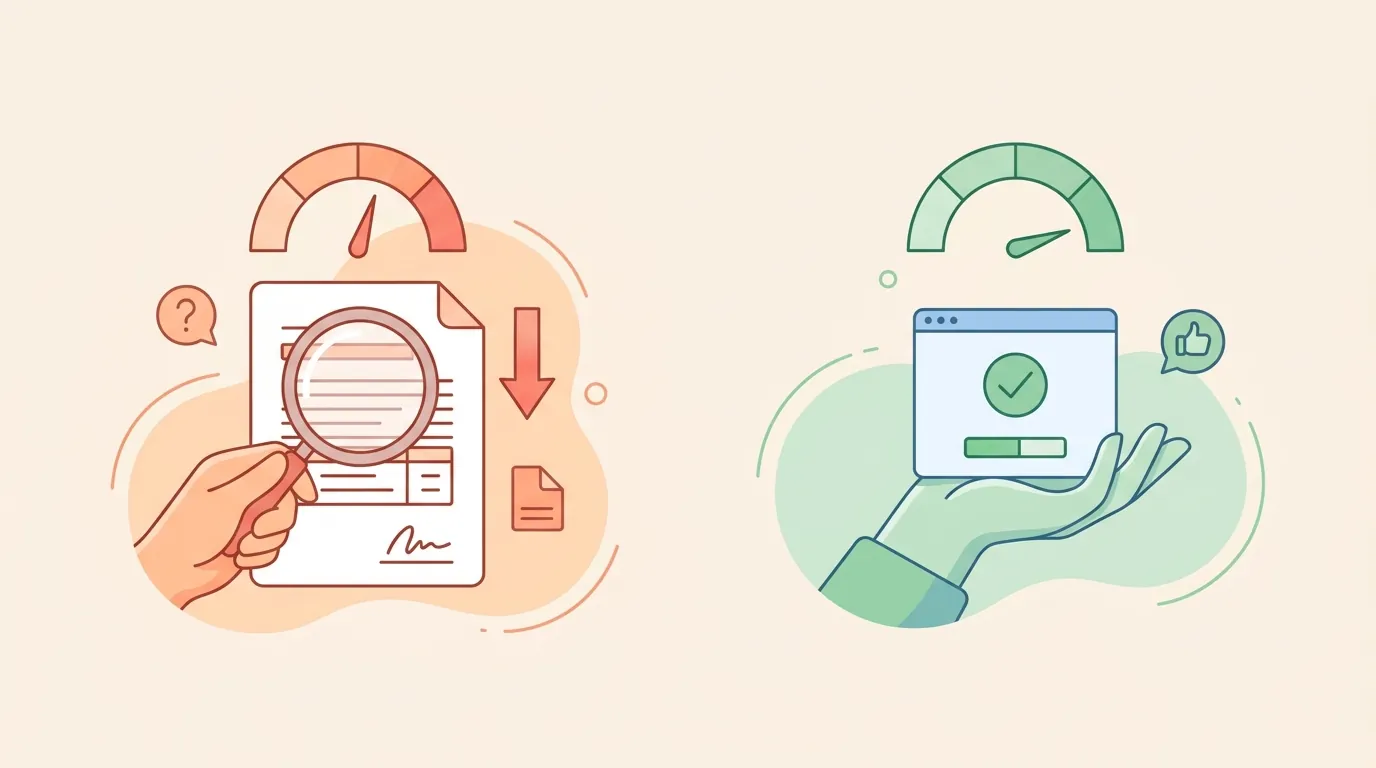
Credit inquiries generally fall into two categories: hard inquiries and soft inquiries.
A hard inquiry usually occurs when a consumer actively applies for new credit and gives the lender permission to review the credit report as part of the application process. Hard inquiries can affect credit scores.
A soft inquiry can occur when a consumer checks their own credit, an existing creditor reviews an account, or a company evaluates someone for a prescreened credit offer. Soft inquiries do not affect credit scores. The Consumer Financial Protection Bureau (CFPB) distinguishes these two categories and explains that they appear differently on consumer credit reports.
Knowing when an inquiry occurs—and what type it is—can help consumers understand credit applications without unnecessarily avoiding routine credit checks.
What Is a Credit Inquiry?
A credit inquiry is a request to access information contained in a consumer's credit report.
Companies may request credit information for different purposes, including:
- Applying for a credit card
- Applying for a mortgage
- Financing a vehicle
- Applying for a personal loan
- Managing an existing credit account
- Prescreening consumers for credit offers
- Certain employment-related screening
- Insurance-related purposes where permitted
- Checking your own credit report
The purpose of the inquiry helps determine whether it is considered hard or soft.
The CFPB explains that hard inquiries are commonly associated with applications for new credit, while soft inquiries include reviews of existing accounts, prescreening, and a consumer's own requests for their credit report.
What Is a Hard Credit Inquiry?
A hard inquiry, sometimes called a hard pull, generally occurs when a consumer applies for credit and a lender reviews their credit report to determine whether to approve the application.
Common examples include:
- Applying for a new credit card
- Applying for an auto loan
- Applying for a mortgage
- Applying for a personal loan
- Applying for certain private student loans
- Requesting some credit-limit increases
The CFPB says hard inquiries can affect credit scores because scoring models consider how recently and how frequently a consumer has applied for credit.
A hard inquiry does not mean an application was approved. It simply records that a creditor accessed the report as part of the credit decision process.
What Is a Soft Credit Inquiry?
A soft inquiry occurs when a credit report is accessed for a purpose that does not represent a new application for credit in the same way as a hard inquiry.
Examples can include:
- Checking your own credit report
- An existing lender reviewing your account
- A credit card issuer evaluating an existing customer
- Prescreening for certain credit offers
- Certain employment-related credit checks
Soft inquiries do not affect credit scores.
This distinction is useful because consumers can review their own credit reports without worrying that the act of checking the report will lower their score.
Checking Your Own Credit Is a Soft Inquiry
Consumers sometimes avoid checking their credit because they believe viewing their own report could reduce their score.
It does not.
The CFPB explicitly states that requesting your own credit report does not hurt your credit score.
Regularly reviewing a credit report can instead help identify inaccurate information, unfamiliar accounts, or unauthorized inquiries.
Consumers can currently access their credit reports from the three nationwide credit reporting companies through AnnualCreditReport.com, with free weekly access available under the current arrangement.
Why Do Hard Inquiries Affect Credit Scores?
Credit scoring models use numerous pieces of information to estimate credit risk.
A recent application for new credit can indicate that a consumer is seeking additional borrowing capacity.
One hard inquiry generally has a relatively small effect on a credit score, although the impact can vary depending on the scoring model and the person's overall credit profile. The CFPB describes the effect of a single inquiry as generally small.
The effect can be more noticeable when several applications occur within a short period, particularly when they involve different types of credit.
This is one reason consumers should distinguish between necessary applications and repeated applications made without a clear borrowing need.
How Long Does a Hard Inquiry Stay on a Credit Report?
Hard inquiries can remain on a credit report for up to two years.
That does not mean they affect a credit score for the entire two-year period.
FICO explains that its scoring models generally consider hard inquiries for 12 months even though the inquiries can remain visible on credit reports for up to 24 months.
The precise scoring effect depends on the scoring model being used.
Consumers should therefore distinguish between:
How long the inquiry appears on the credit report
and
How long the inquiry is considered by a particular credit-scoring model.
These are not necessarily the same period.
Does One Hard Inquiry Lower Your Score?
A hard inquiry can lower a credit score, but the effect is generally small.
The CFPB says a single inquiry from a lender will have little impact on a credit score.
FICO similarly explains that a single additional hard inquiry typically results in a small score change, although the exact effect varies depending on the consumer's credit profile.
For someone with an established credit history and several well-managed accounts, one inquiry may have little practical significance.
For someone with a relatively thin credit file, the same inquiry can potentially have a different effect.
Multiple Hard Inquiries Can Matter More
Several hard inquiries within a short period can have a greater effect than one inquiry.
For example, applying for five different credit cards in a short period can create multiple separate hard inquiries.
Credit card applications generally do not receive the same rate-shopping treatment that mortgage, auto-loan, and student-loan inquiries can receive under certain scoring models. FICO specifically distinguishes credit card applications from loan types where consumers commonly compare multiple lenders.
This means consumers should be selective about submitting applications for multiple credit cards.
Comparing card terms before applying can help avoid unnecessary hard inquiries.
Rate Shopping for a Mortgage Is Different
Mortgage lending is one area where multiple credit inquiries are generally treated differently by credit-scoring models.
Consumers commonly apply with multiple lenders when comparing mortgage rates and terms.
The CFPB explains that multiple mortgage-related inquiries made within a 45-day period are recorded on the credit report but are generally treated as a single inquiry for scoring purposes.
FICO's newer scoring models similarly provide a 45-day rate-shopping window for mortgage, auto, and student loans, while older scoring models can use a shorter 14-day period.
Because lenders can use different scoring models, completing rate comparisons within a relatively concentrated period can help keep the process organized.
Auto Loans and Student Loans Can Receive Similar Treatment
The same general concept applies to auto and student loan rate shopping.
A consumer might apply with several lenders to compare:
- Interest rates
- Loan terms
- Down-payment requirements
- Monthly payments
- Fees
- Other financing conditions
Credit-scoring models recognize that multiple inquiries for the same type of loan during a short period can represent one shopping process rather than several unrelated attempts to borrow.
The CFPB says multiple inquiries for the same type of loan made within roughly 14 to 45 days are generally treated as no more than one inquiry by commonly used scoring models.
The exact treatment depends on the scoring model.
Credit Card Shopping Works Differently
Credit card applications generally do not receive the same special rate-shopping treatment as mortgage, auto, and student loan applications.
If a consumer applies for several credit cards, each application can result in its own hard inquiry.
FICO states that each new credit card application is counted separately as an individual inquiry on the credit report.
This does not mean consumers should never apply for multiple cards.
It means that submitting several applications simply to see which ones approve the consumer can create unnecessary hard inquiries.
A more deliberate approach is to compare eligibility requirements, fees, APRs, rewards, and other terms before submitting an application.
Prequalification May Use a Soft Inquiry
Some lenders offer prequalification tools that allow consumers to see whether they may qualify for a product before submitting a full application.
When a lender uses a soft inquiry for this initial evaluation, it does not affect the consumer's credit score.
However, consumers should verify the lender's terms because not every prequalification process works identically.
A prequalification result also does not guarantee final approval.
The lender may perform a hard inquiry later when the consumer submits a complete application.
Preapproval Does Not Always Mean No Hard Inquiry
The terminology used by lenders can be confusing.
Words such as:
- Prequalified
- Preapproved
- Preselected
- Approved
- Check your rate
do not necessarily tell you whether a hard inquiry will occur.
The important question is what type of credit check the lender performs.
Before submitting information, consumers can ask:
"Will this application result in a hard inquiry?"
If the answer is unclear, review the lender's disclosures before proceeding.
Existing Creditors Can Check Your Credit
A credit inquiry does not always mean that a consumer has applied for something new.
An existing creditor may review a customer's credit report for account-management purposes.
The CFPB explains that an existing credit card issuer can review a customer's credit report without creating a hard inquiry affecting the credit score.
This can happen as part of ongoing account management or credit-risk evaluation.
The presence of an inquiry therefore needs to be interpreted in context.
Employers Can Make Certain Soft Inquiries
Credit reports can also be accessed for certain employment-related purposes when legally permitted.
Employment-related inquiries are generally treated as soft inquiries and do not affect credit scores.
Employers generally need the consumer's permission to obtain a credit report for employment purposes under federal law.
The employment-related credit report can also differ from the information a lender receives for a credit application.
Insurance and Prescreening Can Also Involve Soft Inquiries
Insurance companies and prospective creditors can access credit information for certain permitted purposes.
For example, a lender may conduct a prescreening inquiry when evaluating consumers for potential credit offers.
These inquiries are generally soft inquiries and do not affect credit scores.
This is another reason consumers may see inquiries on a credit report that they do not immediately recognize as loan applications.
Hard and Soft Inquiries Can Appear Differently
When consumers obtain their own credit report, they may see both hard and soft inquiries.
However, not every inquiry shown on a consumer's version of the report is necessarily visible to companies that purchase the report.
The CFPB explains that soft inquiries are shown only to the consumer when reviewing their own credit report and are not visible to others purchasing the report.
Hard inquiries, by contrast, can be visible to lenders reviewing the report.
This distinction helps explain why a consumer may see substantially more inquiry activity than a lender sees.
An Unknown Hard Inquiry Can Be a Warning Sign
A hard inquiry that the consumer does not recognize deserves attention.
It could have a legitimate explanation, such as:
- A recently submitted application
- A financing application completed at a retailer
- An application submitted through an auto dealer
- A lender using a different business name
- An application the consumer forgot about
But an unfamiliar inquiry can also indicate that someone attempted to apply for credit using the consumer's information.
The CFPB recommends checking credit reports for unfamiliar inquiries and other signs of inaccurate or fraudulent information.
What to Do About an Unauthorized Inquiry
If an inquiry appears that you do not recognize, start by identifying the company associated with it.
Check whether:
- You recently applied for credit
- A merchant submitted a financing application
- An existing creditor performed a permitted review
- The company uses another business name
- Someone else may have applied using your information
If the inquiry is unauthorized or inaccurate, contact the credit reporting company and the business that supplied the information.
The CFPB advises consumers to dispute inaccurate or incomplete information with both the reporting company and the company that furnished the information.
If identity theft is suspected, additional identity-theft recovery steps may be necessary.
A Credit Freeze Can Add Another Layer of Protection
Consumers concerned about unauthorized applications can also consider a credit freeze.
A security freeze restricts certain access to a credit report and can make it more difficult for an identity thief to open new credit accounts.
A freeze does not affect the consumer's credit score and does not prevent the consumer from checking their own credit report.
It also does not eliminate existing fraudulent accounts or prevent all forms of financial fraud.
The tool is specifically designed to restrict certain access to the credit file.
Hard Inquiries Are Not the Same as New Debt
An inquiry indicates that a credit report was accessed.
It does not mean the consumer actually opened a new account.
For example, someone could apply for a $20,000 personal loan and be declined. The hard inquiry may still appear even though no loan was created.
Similarly, someone can receive a hard inquiry during an application and ultimately decide not to accept the offered credit.
The inquiry and the account are separate pieces of information.
Inquiries Are Only One Part of a Credit Score
Credit scores are based on multiple categories of information.
A hard inquiry is only one component.
Other factors can include:
- Payment history
- Amounts owed
- Credit utilization
- Length of credit history
- Types of credit accounts
- New credit activity
The precise weighting depends on the scoring model.
FICO identifies new credit as one component of its scoring methodology, with hard inquiries representing only part of that category.
This is why consumers generally should not focus on inquiries in isolation.
A single inquiry is unlikely to outweigh a long record of responsible credit management.
How to Manage Hard Inquiries
A few habits can help consumers keep inquiry activity under control.
Check your credit before applying.
Reviewing your own report is a soft inquiry and does not lower your score.
Compare offers before submitting applications.
Research rates, fees, eligibility criteria, and account features first.
Use prequalification when available.
If the lender confirms that the process uses a soft inquiry, you can potentially compare eligibility without creating a hard inquiry.
Group loan rate shopping together.
For mortgages, auto loans, and student loans, completing applications within a concentrated period can help ensure applicable rate-shopping protections under the scoring model.
Avoid unnecessary applications.
Do not submit applications simply to collect potential approvals.
Investigate unfamiliar inquiries.
An inquiry you do not recognize should not automatically be ignored.
Hard vs. Soft Inquiries at a Glance
A hard inquiry is generally connected to an application for new credit and can affect a credit score.
A soft inquiry generally occurs for purposes such as checking your own credit, managing an existing account, or certain prescreening activities and does not affect a credit score.
The distinction is important, but the effect of a hard inquiry should remain in perspective.
A single hard inquiry generally has a small effect, and its impact does not last indefinitely. The larger concern is unnecessary or repeated applications, particularly when they occur alongside other signs of new borrowing activity.
The Bottom Line
Hard and soft credit inquiries are both requests to access credit-report information, but they serve different purposes.
Hard inquiries generally occur when consumers apply for new credit. They can affect credit scores, although the impact of a single inquiry is typically small.
Soft inquiries can occur when consumers check their own credit, existing creditors review accounts, or companies perform certain prescreening activities. They do not affect credit scores.
Consumers shopping for mortgages, auto loans, or student loans can generally compare multiple lenders within a limited period without having every inquiry treated separately by commonly used scoring models. Credit card applications, however, generally do not receive the same rate-shopping treatment.
The practical approach is to check your credit regularly, understand whether an application will produce a hard inquiry, compare terms before applying, and investigate any inquiry you do not recognize.
References
- Consumer Financial Protection Bureau — What Is a Credit Inquiry?
- Consumer Financial Protection Bureau — What Kind of Credit Inquiry Has No Effect on My Credit Score?
- Consumer Financial Protection Bureau — When Can a Credit Card Company Look at My Credit Reports?
- Consumer Financial Protection Bureau — When Will My Lender Run or Obtain a Copy of My Credit Report?
- Consumer Financial Protection Bureau — Does Requesting My Credit Report Hurt My Credit Score?
- Consumer Financial Protection Bureau — Common Credit Report Errors
- FICO — The Timing of Hard Credit Inquiries
- FICO — Managing Credit Inquiries