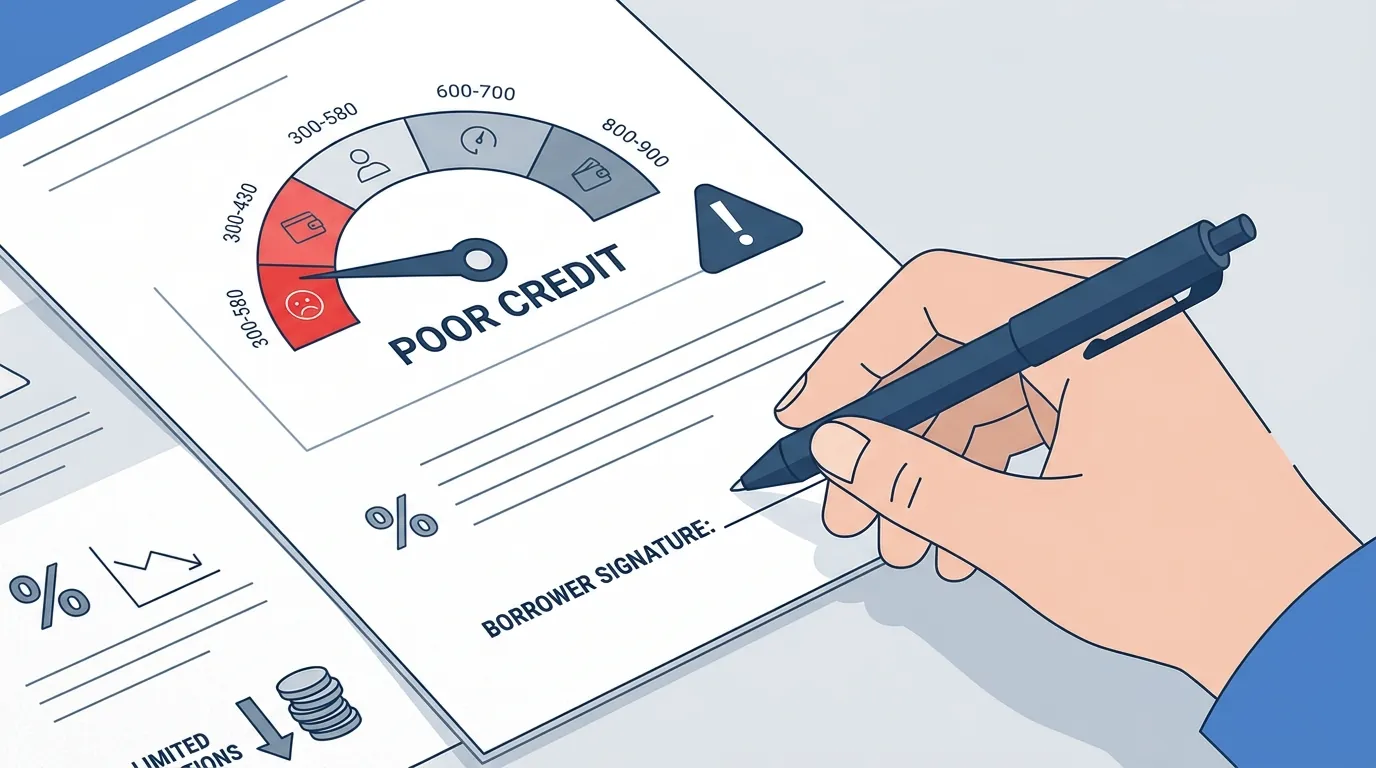

Buying a home often starts long before a buyer makes an offer. One of the most important early steps is obtaining a mortgage preapproval, which gives a prospective buyer an indication of how much a lender may be willing to finance based on their financial information.
A preapproval can help establish a realistic home-shopping range, identify potential financing issues, and demonstrate to sellers that the buyer has already begun the mortgage process. It is not, however, a final mortgage approval or a guarantee that the buyer will receive the stated loan amount.
The Consumer Financial Protection Bureau (CFPB) explains that a preapproval letter is generally a lender's tentative indication that it is willing to lend up to a specified amount, subject to further verification and conditions.
Understanding what lenders review—and what buyers should prepare before applying—can make the transition from house hunting to formal mortgage underwriting considerably smoother.
What Mortgage Preapproval Actually Means
A mortgage preapproval generally means that a lender has reviewed at least some of the borrower's financial information and determined that the borrower may qualify for financing up to a specified amount.
The exact process varies considerably between lenders. Some may conduct a relatively limited review, while others verify income, assets, employment, debts, and credit information in greater detail.
The terminology can also be confusing. Some lenders use prequalification and preapproval differently. A lender might issue a prequalification based largely on information supplied by the borrower, while another may use the term preapproval after verifying financial documents. The CFPB recommends focusing less on the label and more on what the lender actually reviewed.
A preapproval letter is therefore best viewed as a conditional indication of borrowing capacity rather than a completed mortgage approval.
Why Buyers Seek Preapproval Before House Hunting
There are several practical reasons to obtain preapproval before making offers.
First, it can provide a clearer picture of the financing range a lender is currently willing to consider. This can help buyers avoid spending time evaluating properties that are difficult to finance.
Second, sellers may request or expect a preapproval letter before accepting an offer. The document signals that the buyer has already discussed financing with a lender.
Third, the process can uncover problems early. Issues involving credit reports, income documentation, debt balances, or unusual deposits may take time to resolve.
The CFPB notes that getting preapproved early can help buyers identify issues that may need attention before they are ready to purchase.
What Lenders Review
Mortgage lenders generally examine several areas of a borrower's financial profile.
Freddie Mac describes these considerations through the traditional four Cs:
- Capacity — ability to repay the mortgage
- Capital — available cash and financial reserves
- Collateral — the property securing the loan
- Credit — history of managing debts and payments
Income and Employment
Lenders need to determine whether income is sufficient and reasonably reliable for the proposed mortgage payment.
Documentation may include:
- Recent pay stubs
- W-2 forms
- Tax returns
- Employment information
- Documentation of supplemental income
- Business financial records for self-employed borrowers
Income from bonuses, commissions, rental properties, investments, or other sources may require additional documentation.
A borrower whose income varies substantially from month to month may face a more detailed verification process than someone receiving a consistent salary.
Assets and Down Payment Funds
Lenders may review bank and investment statements to determine whether the borrower has enough money for the down payment, closing costs, and required reserves.
Potentially relevant assets can include:
- Checking accounts
- Savings accounts
- Brokerage accounts
- Retirement accounts
- Certificates of deposit
- Other documented assets
Large or unusual deposits may require an explanation and supporting documentation.
Keeping financial records organized before applying can reduce delays later.
Existing Debts
Mortgage underwriting does not look at the proposed home loan in isolation.
Existing obligations can include:
- Auto loans
- Student loans
- Credit card balances
- Personal loans
- Other mortgages
- Certain recurring financial obligations
Lenders use this information when assessing the borrower's debt-to-income ratio (DTI) and overall repayment capacity.
Freddie Mac identifies outstanding debts as part of the information used during mortgage underwriting.
Credit History and Credit Scores
Credit history is another major component of mortgage underwriting.
A lender may review:
- Payment history
- Current balances
- Credit utilization
- Length of credit history
- Recent credit activity
- Outstanding collections or other negative information
The exact credit requirements depend on the mortgage program and lender.
Before requesting preapproval, buyers can review their credit reports for inaccuracies. Correcting an error before submitting a mortgage application may be preferable to discovering the problem during underwriting.
Buyers should also avoid making unnecessary major credit changes immediately before or during the mortgage process without discussing them with the lender.
Documents to Prepare
Having documentation ready can make the preapproval process more efficient.
A lender may request:
| Category | Examples |
|---|---|
| Employment | Pay stubs, employment history, W-2s |
| Income | Tax returns, bonus or commission documentation |
| Assets | Bank and investment statements |
| Debts | Credit card, auto, student and other loan statements |
| Identity | Government-issued identification and other requested information |
| Self-employment | Business returns, profit-and-loss statements, business account records |
| Additional income | Rental, investment, pension or other supporting documentation |
Freddie Mac specifically recommends preparing pay stubs, W-2s, bank and investment statements, debt statements, tax returns, and documentation of supplemental income.
The exact documentation varies by borrower and lender.
Preapproval Amount vs. Affordable Home Price
One of the most important distinctions for buyers is that a preapproval amount is not the same thing as a recommended home budget.
A lender may determine that a borrower qualifies for a mortgage of $500,000, for example. That does not necessarily mean the borrower should purchase a $500,000 home.
Homeownership involves expenses beyond principal and interest, including:
- Property taxes
- Homeowners insurance
- Mortgage insurance when applicable
- HOA or condominium fees
- Utilities
- Maintenance
- Repairs
- Renovations
- Emergency reserves
The CFPB specifically notes that buyers are responsible for deciding how much they can actually afford, while lenders evaluate borrowing capacity based on income, assets, debts, and credit history.
A personal budget should therefore be considered alongside the lender's maximum loan amount.
Comparing Mortgage Lenders
Getting preapproved does not necessarily mean that a buyer has committed to that lender.
The CFPB encourages consumers to contact multiple lenders and compare mortgage offers. Its mortgage-shopping guidance recommends seeking multiple preapprovals and later comparing formal loan offers.
When comparing lenders, buyers can ask about:
- Fixed-rate versus adjustable-rate mortgages
- Interest rate
- APR
- Loan term
- Down payment requirements
- Mortgage insurance
- Origination charges
- Discount points
- Lender credits
- Closing costs
- Rate-lock policies
- Prepayment provisions
- Estimated cash required at closing
A lender offering a lower advertised mortgage rate may have a different fee structure from another lender, so the rate alone does not provide a complete cost comparison.
Preapproval and Mortgage Rate Shopping
A preapproval may include an estimated rate, but that rate is not necessarily guaranteed for the future purchase.
Mortgage rates can change between the time a buyer receives a preapproval and the time a purchase contract is signed.
A rate lock is a separate step that can protect an agreed interest rate for a specified period under the lender's terms.
Buyers should ask:
- When can the rate be locked?
- How long does the lock last?
- Is there a fee?
- What happens if closing is delayed?
- Can the lock be extended?
- What does an extension cost?
The CFPB recommends reviewing these issues when comparing Loan Estimates and asking lenders what happens if a transaction cannot close within the specified period.
Preapproval vs. Loan Estimate
These are different stages of the mortgage process.
A preapproval letter primarily communicates that the lender is tentatively willing to lend up to a certain amount based on information reviewed.
A Loan Estimate is a standardized disclosure showing important terms and estimated costs for a specific mortgage application.
Once a borrower provides the six required pieces of information—name, income, Social Security number, property address, estimated property value, and desired loan amount—the lender generally must provide a Loan Estimate within three business days.
The Loan Estimate includes information such as:
- Estimated interest rate
- Monthly payment
- Closing costs
- Taxes and insurance estimates
- Loan terms
- Certain adjustable-rate or other special features
This makes Loan Estimates particularly useful when the buyer is ready to compare actual mortgage offers.
What Happens After an Offer Is Accepted?
Once a seller accepts an offer, the mortgage process moves into a more detailed stage.
The lender may verify the borrower's financial information again and evaluate the specific property.
The process can include:
- Completing the formal mortgage application
- Providing updated financial documentation
- Verifying income and employment
- Reviewing assets and debts
- Ordering a property appraisal
- Reviewing title and property information
- Completing underwriting
- Addressing outstanding conditions
- Receiving final approval
- Reviewing the Closing Disclosure
- Closing the loan
Freddie Mac explains that underwriting involves verifying employment, income, assets, debts, credit history, and the relationship between the loan amount and the property's value.
A preapproval therefore does not eliminate underwriting.
Common Mistakes Before Mortgage Preapproval
Buyers can create unnecessary complications by making major financial changes shortly before closing.
Potential issues include:
- Taking on a new auto loan
- Applying for several new credit accounts
- Moving large amounts of money without documentation
- Changing employment without discussing the situation with the lender
- Making large unexplained deposits
- Spending down reserves needed for closing
- Assuming the preapproval amount represents a comfortable budget
- Ignoring outstanding credit-report errors
This does not mean buyers can never make financial changes. Instead, significant changes should be discussed with the lender so the borrower understands how they could affect underwriting.
Questions to Ask Before Accepting a Preapproval
Before relying on a preapproval letter, buyers can ask the lender:
- What information was verified?
- Was my credit report reviewed?
- How long is the preapproval valid?
- What assumptions were used to calculate the loan amount?
- Is the estimated interest rate guaranteed?
- What mortgage programs am I being considered for?
- What down payment is assumed?
- What closing costs should I anticipate?
- What could cause the final loan amount to change?
- What additional documentation will I need?
- What could cause the mortgage application to be denied later?
- When should I lock the mortgage rate?
- What happens if the home appraisal is lower than the purchase price?
- When will I receive a formal Loan Estimate?
The CFPB specifically recommends asking lenders what assumptions were made and whether anything about the borrower's situation could lead to a later denial or higher mortgage costs.
Preparing for a Smoother Home Financing Process
Mortgage preapproval is most useful when buyers treat it as a financial preparation exercise rather than simply a letter to show a seller.
Organizing income documentation, reviewing credit, understanding existing debt, calculating a realistic down payment, maintaining adequate reserves, and comparing multiple lenders can make the eventual mortgage application easier to manage.
Most importantly, buyers should distinguish between what a lender is willing to finance and what they personally want to spend.
Once a property is selected, formal Loan Estimates provide a more meaningful basis for comparing mortgage rates, APRs, closing costs, monthly payments, and other loan terms. The CFPB emphasizes that a preapproval does not commit a buyer to a particular lender, and buyers can continue comparing lenders before selecting their mortgage.
A well-prepared borrower enters the home search with a clearer understanding of financing capacity while retaining the flexibility to evaluate the actual mortgage terms available for the property ultimately chosen.
References
- Consumer Financial Protection Bureau — Get a Preapproval Letter CFPB: Get a Preapproval Letter
- Consumer Financial Protection Bureau — Prequalification vs. Preapproval CFPB: Prequalification vs. Preapproval
- Consumer Financial Protection Bureau — Shopping for a Mortgage CFPB: Shopping for a Mortgage
- Consumer Financial Protection Bureau — Loan Estimate CFPB: Loan Estimate Explainer
- Freddie Mac — Applying for a Home Loan Freddie Mac: Applying for a Home Loan