Mortgage rates can change from one week to the next, sometimes moving even when a borrower has not changed anything about their financial situation. The reason is that mortgage pricing depends on much more than an individual's credit score or the Federal Reserve's latest interest-rate decision.
Mortgage rates are influenced by inflation, economic growth, bond markets, investor expectations, mortgage-backed securities, lender pricing, and borrower-specific risk. Understanding these factors can make it easier to interpret rate movements and evaluate a mortgage offer.
As of September 24, 2026, Freddie Mac's weekly survey showed the average U.S. 30-year fixed mortgage rate at 7.03%, compared with 6.30% one year earlier. The average 15-year fixed rate was 6.42%. These figures are market averages rather than rates guaranteed to individual borrowers.
Mortgage Rates Do Not Come From One Source
There is no single institution that directly sets the mortgage rate every homeowner receives.
The Federal Reserve influences financial conditions through monetary policy, particularly the federal funds rate. However, the federal funds rate is a short-term rate, while fixed-rate mortgages are generally priced based on longer-term market conditions.
Mortgage lenders consider the cost of obtaining and funding mortgages, investor demand for mortgage-related securities, market risk, operating expenses, and the characteristics of the individual borrower and loan.
That is why a Federal Reserve rate cut does not automatically produce an equivalent decline in 30-year mortgage rates.
The Federal Reserve's Role
The Federal Reserve's monetary policy decisions can have a significant indirect effect on mortgage rates.
The Federal Open Market Committee sets a target range for the federal funds rate, which influences short-term borrowing costs throughout the financial system. Changes in the federal funds rate can affect economic activity, inflation expectations, and other interest rates.
When monetary policy becomes more restrictive, borrowing costs across parts of the economy can rise. When policy becomes less restrictive, financial conditions can ease.
Mortgage rates, however, also respond to what investors expect the Federal Reserve will do in the future. Markets may begin adjusting long-term rates before an actual policy decision occurs.
This is one reason mortgage rates can rise on a day when the Federal Reserve has not changed its policy rate.
Inflation and Mortgage Rates
Inflation is one of the most important economic forces affecting longer-term interest rates.
When investors expect inflation to remain elevated, they may demand higher yields on longer-term investments. Investors are concerned that future inflation can reduce the purchasing power of the interest and principal they receive.
Higher long-term market yields can contribute to higher mortgage rates.
The relationship is not mechanical, however. Mortgage rates reflect a combination of current economic data and expectations about future inflation, growth, monetary policy, and financial-market conditions.
This means a favorable inflation report does not necessarily guarantee an immediate decline in mortgage rates.
Treasury Yields and the 10-Year Treasury
The 10-year U.S. Treasury yield is often discussed alongside mortgage rates because both are influenced by long-term economic and financial-market expectations.
A mortgage is not priced at the same rate as a 10-year Treasury bond. Instead, the two rates tend to move in related ways because investors consider factors such as inflation, economic growth, and expected interest rates when pricing both types of assets.
The difference between Treasury yields and mortgage rates is known as a spread.
That spread can widen or narrow depending on market conditions.
The Consumer Financial Protection Bureau has noted that mortgage rates can be affected not only by monetary policy but also by changes in the relationship between Treasury yields and mortgage-backed securities.
Mortgage-Backed Securities Matter
Most mortgages do not simply remain on the originating lender's balance sheet for the entire loan term.
Mortgages can be pooled into mortgage-backed securities (MBS), which are purchased and traded by investors.
Because mortgage lenders can sell loans or use them to create securities, the pricing of the mortgage market is closely connected to investor demand for mortgage-backed securities.
When investors require higher yields to hold mortgage-backed securities, mortgage rates can rise. When demand and pricing conditions improve, mortgage rates can move lower.
This is one of the reasons mortgage rates can behave differently from the federal funds rate.
Economic Growth Can Push Rates in Either Direction
The overall strength of the economy can influence mortgage rates.
Strong economic growth can increase expectations for continued consumer spending, business activity, employment, and inflation. Those expectations can contribute to higher long-term yields.
A weakening economy can have the opposite effect if investors begin expecting lower inflation and lower future interest rates.
However, economic news does not always produce the same response. Markets react to whether new information is stronger or weaker than investors already expected.
A report showing solid economic growth may therefore affect mortgage rates differently depending on what financial markets had already priced in.
Employment Data Can Affect Mortgage Pricing
Employment reports are closely watched because the labor market provides information about economic strength and potential inflationary pressure.
Strong employment growth can support expectations of continued economic activity. If investors believe that stronger employment will keep inflation elevated or delay monetary easing, longer-term yields may rise.
Weak employment data can produce the opposite reaction if markets interpret it as evidence that economic growth is slowing.
Mortgage rates can therefore respond to employment reports even though the reports do not directly determine mortgage pricing.
Investor Expectations Matter as Much as Current Data
Financial markets are forward-looking.
Investors do not simply ask what inflation or economic growth looks like today. They also consider what those conditions could look like months or years from now.
For example, suppose inflation is currently declining but investors believe it could accelerate again. Long-term yields may remain elevated despite the recent improvement.
Similarly, mortgage rates can fall before an expected Federal Reserve policy change if investors anticipate easier monetary conditions in advance.
This is why trying to predict mortgage rates based on a single economic announcement can be misleading.
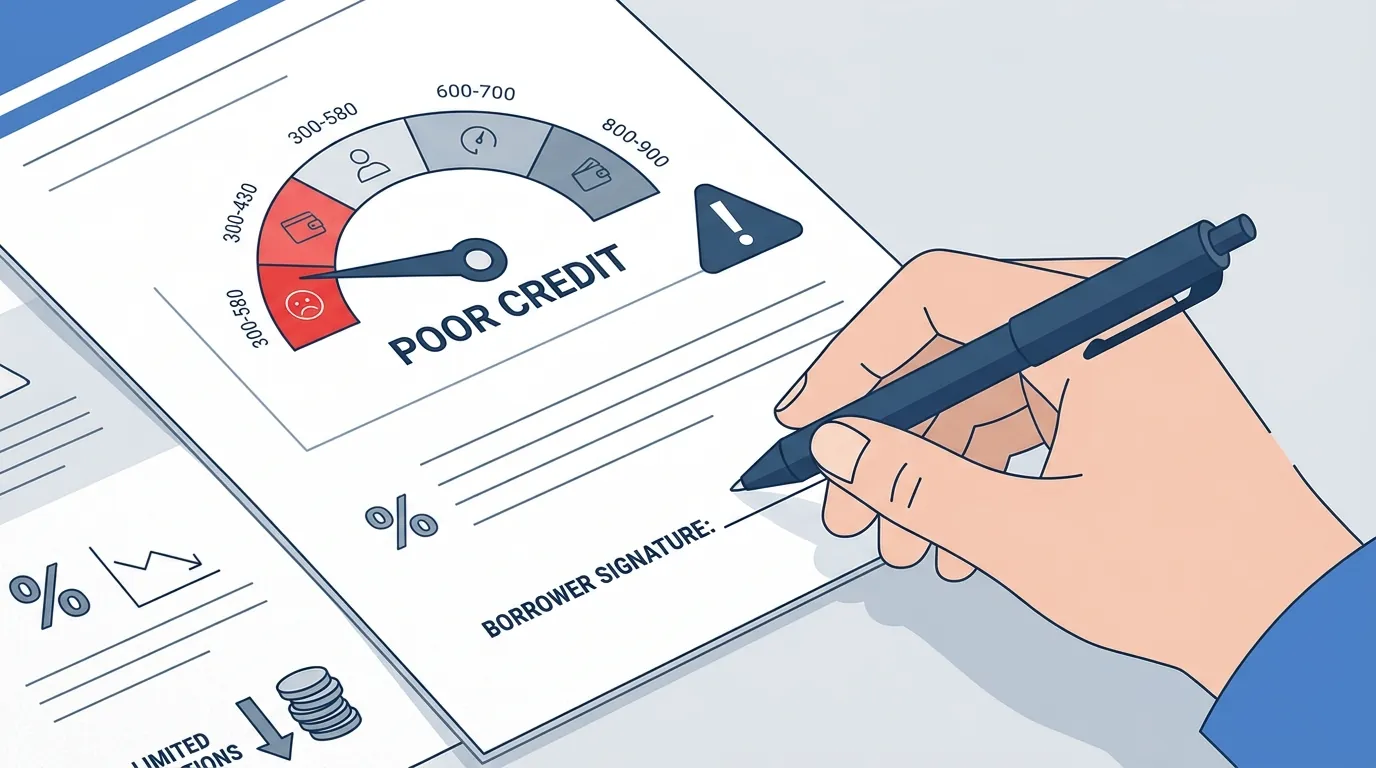
Borrower Credit Also Affects the Rate
Market conditions determine much of the overall mortgage-rate environment, but individual borrowers can receive different rates.
Lenders generally evaluate factors such as:
- Credit history and credit score
- Loan amount
- Down payment
- Loan-to-value ratio
- Property type
- Occupancy
- Loan program
- Debt-to-income ratio
- Whether the rate is fixed or adjustable
Freddie Mac notes that lenders set mortgage rates for individual borrowers using both current market rates and personal factors such as credit.
Therefore, a published market average should not be treated as a guaranteed quote.
The Down Payment Can Influence Pricing
The amount a borrower puts toward the purchase can affect mortgage pricing and loan structure.
A larger down payment generally reduces the loan-to-value ratio, meaning the lender is financing a smaller percentage of the property's value.
Depending on the loan program and borrower profile, this can affect the interest rate, mortgage insurance requirements, and overall borrowing cost.
However, putting more money down is not automatically appropriate for every buyer. A borrower also needs to consider emergency savings, closing costs, moving expenses, repairs, and other cash requirements.
Loan Type Makes a Difference
Mortgage rates can vary depending on the type of loan.
Common structures include:
- Conventional fixed-rate mortgages
- FHA loans
- VA loans
- USDA loans
- Adjustable-rate mortgages
- Other specialized mortgage products
A fixed-rate mortgage generally keeps the interest rate unchanged for the life of the loan, although the total monthly payment can still change if taxes or insurance change.
An adjustable-rate mortgage, by contrast, can change according to the terms of the loan after an initial fixed period.
The Consumer Financial Protection Bureau notes that borrowers should pay attention to the specific terms of adjustable-rate mortgages because their rates and payments can change.
Mortgage Points Can Change the Rate
Borrowers may encounter mortgage points when comparing loan offers.
Points are upfront charges paid to the lender in exchange for a lower interest rate. The relationship between points and the rate reduction varies by lender and market conditions.
A borrower considering points should calculate how long it would take for the monthly savings to recover the upfront cost.
For example, if paying additional points reduces a monthly payment by $100 but costs $4,000 upfront, the simple break-even period would be 40 months, before considering taxes, refinancing, selling the property, or the time value of money.
Points therefore need to be evaluated alongside the expected length of time the borrower will keep the mortgage.
Mortgage Rate vs. APR
The advertised mortgage rate is not the same thing as the annual percentage rate.
The interest rate is the cost of borrowing expressed as a percentage. APR is broader and incorporates the interest rate plus certain charges, such as points and mortgage-related fees.
When comparing lenders, borrowers should review both numbers.
They should also make sure the loans being compared have the same or similar terms. Comparing a 30-year fixed mortgage with a different loan structure solely by APR can produce a misleading result.
Why Mortgage Rates Can Change Daily
Mortgage rates can move frequently because financial markets continuously process new information.
Factors that can cause movement include:
- Inflation reports
- Employment data
- Economic growth figures
- Federal Reserve statements
- Treasury yields
- Investor demand
- Mortgage-backed securities pricing
- Geopolitical developments
- Changes in market expectations
Lenders can also adjust their pricing during the day as market conditions change.
This is why two borrowers who apply with the same lender on different days may receive different rate quotes even if their financial profiles are similar.
Why Your Mortgage Rate May Not Match the Advertised Rate
Published mortgage rates are usually averages or examples rather than individualized offers.
An advertised rate may assume a particular credit profile, down payment, loan size, property type, occupancy, and other conditions. It may also assume the borrower pays points.
The rate available to an individual borrower can therefore differ from the headline rate.
When comparing offers, ask lenders for the assumptions behind the quote.
Important questions include:
- What credit profile does this rate assume?
- How much down payment is required?
- Are points included?
- What fees are charged?
- Is the rate fixed or adjustable?
- How long is the rate available?
- What is the APR?
- What is the estimated cash needed at closing?
Rate Locks Protect Against Some Market Movement
Once a borrower is moving toward closing, a lender may offer a rate lock.
A rate lock generally protects the borrower from certain market-rate changes for a specified period, assuming the loan closes within the lock period and the terms of the agreement are satisfied.
Rate locks are not necessarily free, and the duration and conditions vary by lender.
Borrowers should understand what happens if closing is delayed or if they want to change loan terms after locking the rate.
What Current Rates Tell You
Current averages provide useful context but should not be treated as a forecast.
As of September 24, 2026, Freddie Mac reported a 30-year fixed average of 7.03%, up from 6.95% the previous week. The 15-year fixed average was 6.42%, compared with 6.26% the previous week. A year earlier, the corresponding averages were 6.30% and 5.49%.
These figures demonstrate how quickly mortgage-rate conditions can change. They also show why borrowers should distinguish between a national market average and the personalized offer available for a particular mortgage application.
How Borrowers Can Evaluate Rate Changes
Instead of focusing on whether rates moved up or down on a particular day, borrowers can look at the broader financing picture.
Compare:
- Interest rate
- APR
- Monthly principal and interest
- Points
- Lender fees
- Closing costs
- Loan term
- Fixed versus adjustable structure
- Estimated total interest
- Rate-lock terms
A slightly lower advertised rate may not produce a lower overall cost if it requires substantial upfront points or fees.
Similarly, waiting for a particular rate level involves uncertainty because future mortgage rates cannot be known with certainty.
Final Considerations
Mortgage rates are shaped by a combination of market forces rather than a single number or institution. Federal Reserve policy matters, but so do inflation expectations, Treasury yields, mortgage-backed securities, economic conditions, investor demand, lender pricing, and individual borrower characteristics.
The relationship between these factors also changes over time. A Federal Reserve decision can influence mortgage rates without producing an equal move in 30-year fixed rates, while economic data can cause mortgage rates to move before policymakers take action.
For borrowers, the practical takeaway is to evaluate the actual mortgage offer rather than relying solely on headlines about where rates are going. Comparing the interest rate, APR, points, fees, loan structure, and total borrowing cost provides a clearer picture of what a mortgage will actually cost.
References
- Freddie Mac — Mortgage Rates / Primary Mortgage Market Survey (Freddie Mac)
- Freddie Mac — Mortgage Rates and Affordability (My Home)
- Federal Reserve — Economy at a Glance: Policy Rate (Federal Reserve)
- Federal Reserve — Federal Open Market Committee (Federal Reserve)
- Consumer Financial Protection Bureau — Data Spotlight: The Impact of Changing Mortgage Interest Rates (Consumer Financial Protection Bureau)
- Consumer Financial Protection Bureau — What Is the Difference Between a Mortgage Interest Rate and an APR? (Consumer Financial Protection Bureau)
- Consumer Financial Protection Bureau — Why Did My Monthly Mortgage Payment Go Up or Change? (Consumer Financial Protection Bureau)