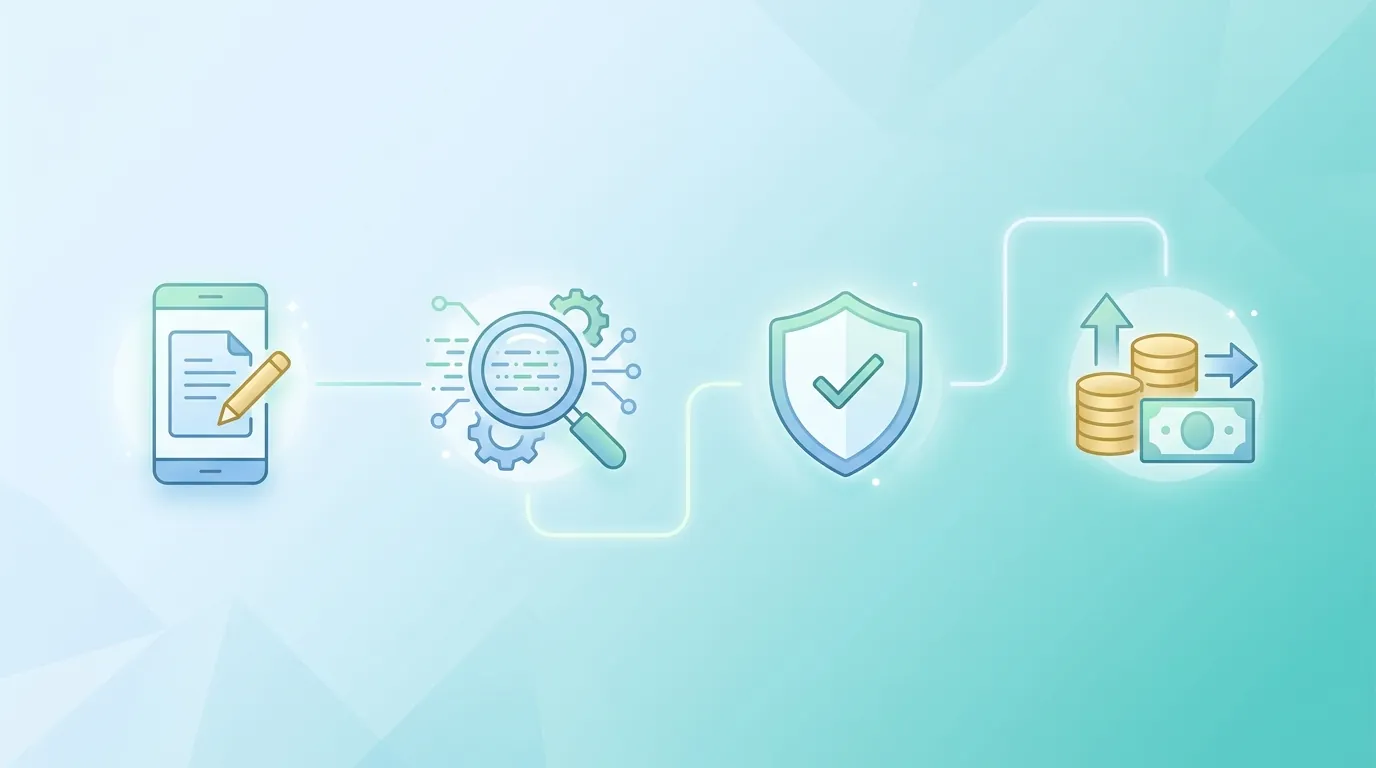
Online lending has changed the mechanics of borrowing money. Instead of visiting a branch, completing paper forms, and waiting for a loan officer to review documents manually, borrowers can often submit an application from a phone or computer, receive a decision electronically, and have approved funds deposited into a bank account.
The convenience is significant, but the basic economics of borrowing have not disappeared. Online lenders still evaluate creditworthiness, income, existing debt, loan amount, repayment period, and other information when determining whether to approve an application and what terms to offer.
For consumers, the important distinction is between a faster application process and a cheaper loan. Digital delivery can make borrowing more convenient, but borrowers still need to compare the total cost, understand repayment obligations, verify the lender, and protect sensitive financial information.
What Is an Online Loan?
An online loan is generally a credit product that can be applied for and managed through a digital platform rather than primarily through a physical branch.
The underlying product may be a personal installment loan, line of credit, business loan, auto loan, or another form of financing.
Personal installment loans are typically closed-end loans. The borrower receives a specific amount and repays it through scheduled installments over a defined period. The CFPB says lenders may consider credit history, income, existing debts, loan amount, repayment term, and other information when determining loan terms.
The fact that an application happens online does not fundamentally change these lending principles.
The Digital Application Process
Most online borrowing begins with an application requesting personal and financial information.
Depending on the lender and product, the application may ask for:
- Name and contact information
- Date of birth
- Social Security number
- Employment information
- Annual or monthly income
- Housing costs
- Existing debt obligations
- Desired loan amount
- Bank-account information
- Purpose of the loan
Some lenders can electronically verify portions of this information, while others may request supporting documents.
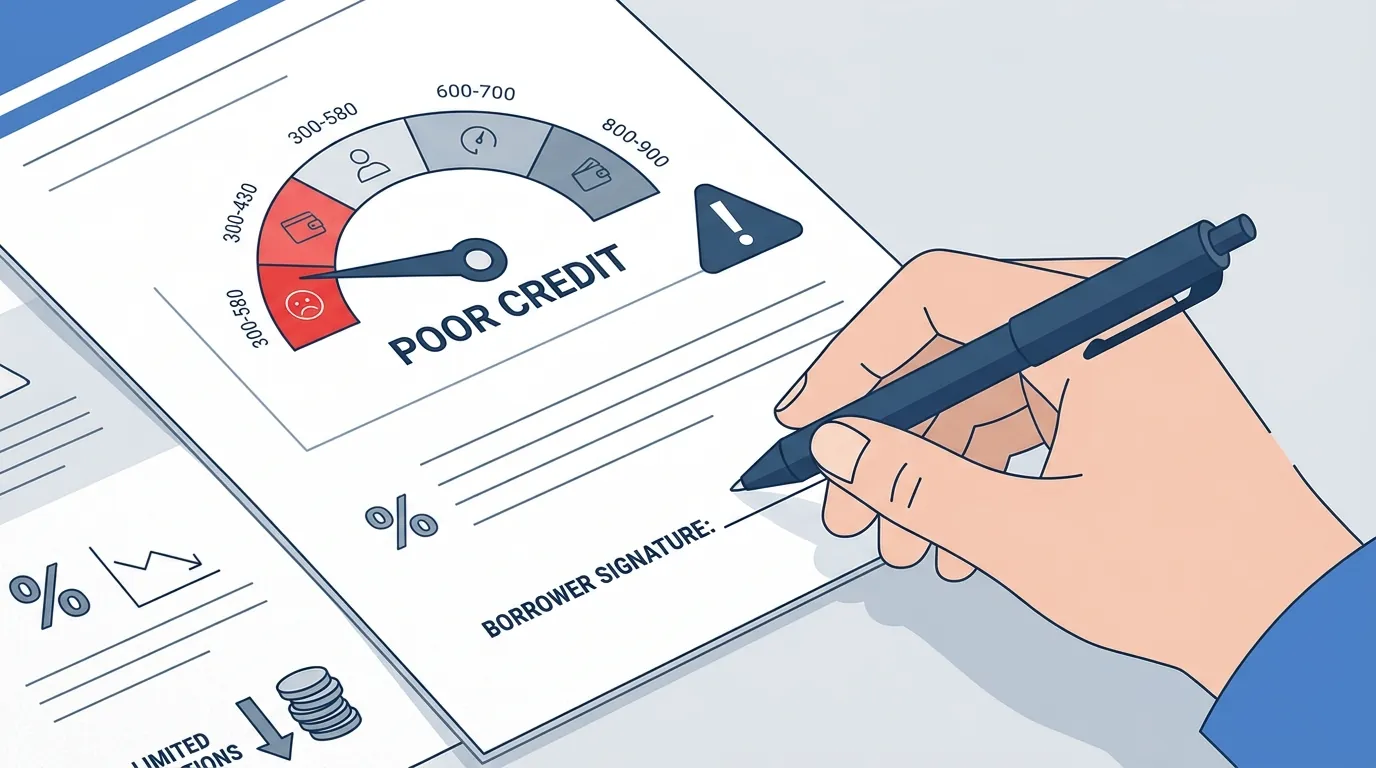
The lender may also obtain information from consumer reporting agencies as part of its underwriting process.
The CFPB explains that personal installment lenders may consider credit reports and scores, income, debts, loan size, loan term, and other financial information when determining the terms of a loan.
Prequalification Is Not the Same as Approval
Online lenders frequently use terms such as "prequalified," "preapproved," or "check your rate."
These terms can have different meanings depending on the lender.
A preliminary offer may be based on information available to the lender without a full underwriting review. The final terms can change after the lender verifies income, identity, credit information, or other details.
Consumers should therefore distinguish between an estimated offer and a final loan agreement.
A preliminary rate is not necessarily the rate that will apply after underwriting.
The same principle applies to advertised loan amounts. Seeing that a lender offers loans up to a particular amount does not mean every applicant qualifies for that amount.
Credit Checks Can Be Part of the Process
An online lender may use credit information to evaluate an application.
Depending on the lender and stage of the application, a consumer may encounter a soft inquiry, a hard inquiry, or both.
Consumers should check the lender's disclosures to understand whether completing an application will result in a hard credit inquiry.
A hard inquiry is generally recorded on a consumer's credit report and can affect credit scoring models, although the impact depends on the individual's credit profile.
The distinction is particularly relevant when a consumer is shopping among several lenders.
Underwriting Determines the Final Terms
After receiving the application, the lender evaluates the borrower's risk and ability to repay.
The underwriting process may examine:
- Credit history
- Income
- Existing debt
- Debt-to-income considerations
- Employment information
- Loan amount
- Repayment term
- Bank-account activity
- Other information relevant to the specific product
Not every lender uses the same underwriting model.
Two online lenders can receive identical information and produce different offers because they have different risk models, pricing structures, funding sources, and eligibility requirements.
That is one reason comparing multiple offers can be useful.
Interest Rate and APR Are Not the Same
Borrowers should pay particular attention to the annual percentage rate, or APR.
The interest rate represents the cost of borrowing the principal. APR incorporates the interest rate and certain additional fees associated with the loan.
The CFPB explains that APR is designed to provide a broader measure of borrowing cost and can make it easier to compare loan offers.
For example, a lender could advertise a relatively low interest rate while charging an origination fee that increases the overall cost.
Looking only at the nominal interest rate could therefore make two loans appear more similar than they actually are.
When comparing offers, consumers should compare APR with APR and examine the total repayment amount.
Fees Can Increase the Cost
Online personal loans can include several types of charges.
The CFPB identifies common personal-installment-loan fees such as:
- Origination fees
- Documentation fees
- Optional insurance charges
- Late fees
- Other contract-specific charges
The lender's disclosures and loan agreement should explain which fees apply.
An origination fee can be particularly important because it may be deducted from the loan proceeds.
For example, if a borrower is approved for $10,000 and the lender charges a 5% origination fee, the borrower could receive $9,500 while still having a loan based on the applicable $10,000 principal structure.
The exact treatment depends on the loan agreement.
Funding Can Happen Electronically
Once a loan is approved and the borrower accepts the final terms, the lender can transfer the proceeds electronically to the designated bank account.
The timing varies.
Some lenders advertise same-day or next-business-day funding, while others may take longer because of underwriting, verification, banking schedules, fraud checks, or other processing requirements.
Consumers should distinguish between the time required for the lender to approve the application and the time required for the money to become available in the bank account.
A "same-day decision" does not necessarily mean same-day access to funds.
Bank-Account Verification Can Be Part of Digital Lending
Online lenders may ask borrowers to connect or verify a bank account.
This can help establish ownership of the account and may be used to verify income or facilitate electronic loan payments.
Consumers should understand what permissions they are granting before connecting an account.
The CFPB has warned in the context of online payday lending that borrowers should understand how lenders handle sensitive information such as Social Security numbers and checking-account information, as well as how electronic payments are authorized.
The same general privacy principle is useful when evaluating digital lenders: know what information is being collected, why it is needed, and how it will be used.
Lead Generators Are Not Always Lenders
One of the most important distinctions in online borrowing is whether the website is an actual lender or a lead-generation service.
A lead generator may collect an application and send the information to a network of potential lenders.
The CFPB warns that consumers using online lending websites should determine whether they are dealing directly with a lender or with a lead generator. It also notes that lead-generation websites can share application information with multiple lenders or service providers.
This matters for both privacy and comparison shopping.
A consumer who believes they are submitting an application to one lender may actually be submitting information to a broader network.
Before entering sensitive information, verify the company's identity, contact information, privacy policy, and role in the transaction.
Online Loans Can Be Vulnerable to Scams
The convenience of digital lending also creates opportunities for fraud.
The FTC warns about advance-fee loan scams in which a supposed lender promises financing but demands an upfront payment before providing the loan. Scammers may describe the payment as a processing fee, insurance charge, application fee, or another expense.
A legitimate lender can charge legitimate fees in appropriate circumstances, so the issue is not simply whether a loan has a fee.
The warning sign is a demand for money in exchange for a promise that a loan will definitely be provided.
The FTC states that legitimate lenders do not guarantee a loan before reviewing the applicant's circumstances and then demand an upfront payment in exchange for the promised financing.
Unexpected Loan Texts Require Caution
Fraudsters also use text messages and other digital communications to impersonate lenders.
The FTC warned in 2026 about fake loan texts that tell recipients they have been preapproved or that a loan application is almost complete even though they never applied. The messages can be designed to obtain Social Security numbers, bank information, or other personal data.
Consumers who receive an unexpected loan message should avoid clicking links or replying through the contact information provided in the message.
Instead, if there is a legitimate concern about an account, the consumer can independently locate the company's official contact information.
Repayment Begins After Funding
Receiving the money is only the beginning of the loan relationship.
The borrower should understand:
- First payment date
- Monthly payment amount
- Number of payments
- Interest rate
- APR
- Late-payment charges
- Prepayment provisions
- Automatic-payment requirements
- Total repayment amount
Personal installment loans generally use scheduled payments over a defined term.
The monthly payment should therefore be considered alongside the total amount that will be repaid.
A lower monthly payment can sometimes result from extending the loan over a longer period, which may increase total interest costs.
Online Loans and Credit Reports
A loan can affect a borrower's credit history depending on whether and how the lender reports account activity to consumer reporting agencies.
The CFPB notes that personal lenders may report payments to one or more of the three major consumer reporting companies. Late payments can negatively affect credit reports and scores.
This makes repayment history important beyond the immediate loan.
A borrower should therefore avoid choosing a loan solely because the application process is convenient or the funding is fast.
The long-term credit implications can matter just as much as the speed of receiving the money.
Compare Offers Before Accepting
Digital lending makes it relatively easy to encounter multiple loan offers, but speed can create pressure to accept the first one.
A more deliberate comparison should examine:
APR: Compare the overall annual borrowing cost.
Interest rate: Determine whether the rate is fixed or variable.
Fees: Check origination, late, documentation, and other charges.
Loan term: Understand how long repayment will continue.
Monthly payment: Confirm that it fits within the household budget.
Total repayment: Calculate how much will ultimately be paid.
Funding conditions: Determine when the money will actually become available.
Credit requirements: Understand whether a hard inquiry is involved.
Security and privacy: Review how personal and financial information is collected and used.
The CFPB recommends comparing loan costs and terms rather than focusing on a single advertised feature.
Fast Funding Does Not Mean Low-Cost Borrowing
One of the main advantages of online loans is convenience.
Applications can be completed remotely, documents can often be uploaded electronically, and funds can potentially arrive through electronic transfer.
But convenience should not be confused with affordability.
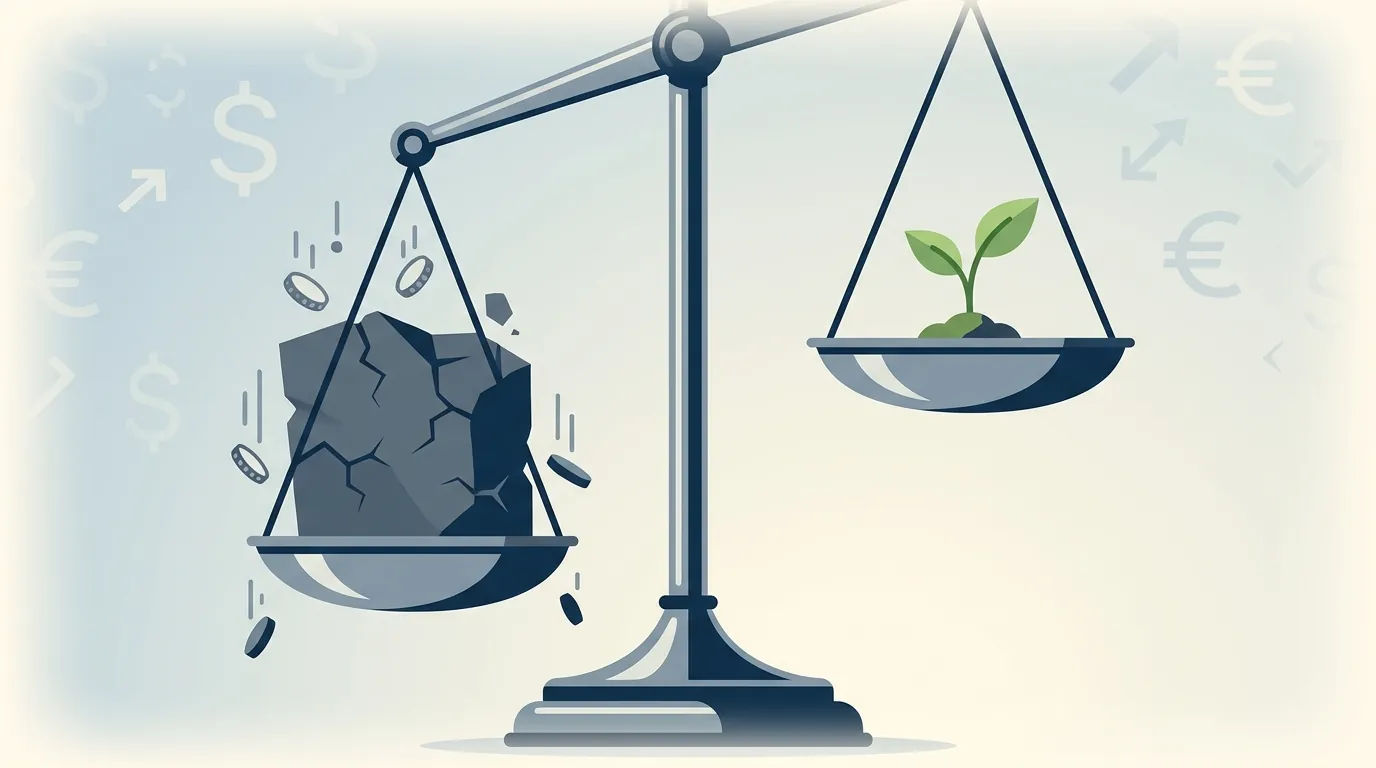
A loan with rapid funding can still have a high APR, substantial fees, or a repayment schedule that strains the borrower's budget.
The CFPB specifically advises consumers considering online payday loans to examine total costs, repayment requirements, alternatives, lender licensing, and information-security practices.
Those considerations are broadly useful when evaluating digital borrowing.
When an Online Loan May Fit
An online installment loan may be useful when a borrower needs a defined amount of money and can support a predictable repayment schedule.
Potential uses can include consolidating existing debt, financing a major purchase, or covering an unexpected expense.
The appropriate product depends on the purpose of the borrowing and the consumer's financial circumstances.
A revolving credit line may make more sense for recurring liquidity needs, while an installment loan can provide a defined amount with a fixed repayment schedule.
Borrowers should also consider whether alternatives—such as negotiating an existing bill, using available savings, or comparing credit-union financing—could reduce the cost of borrowing.
The Digital Borrowing Process in Perspective
Online lending has made the application and funding process considerably more convenient, but the fundamental financial decision remains the same.
A borrower is exchanging future income for access to money today.
The digital platform can simplify application, verification, underwriting, document delivery, and funding. It does not eliminate interest, fees, repayment obligations, or credit risk.
Before accepting an online loan, consumers should verify the lender, compare APR and total costs, understand the repayment schedule, protect sensitive information, and avoid offers that demand payment in exchange for guaranteed approval.
The most important feature of an online loan is ultimately not how quickly the application can be completed. It is whether the full cost and repayment structure fit the borrower's financial situation.
References
- Consumer Financial Protection Bureau — What Is a Personal Installment Loan?
- Consumer Financial Protection Bureau — Do Personal Installment Loans Have Fees?
- Consumer Financial Protection Bureau — What Is the Difference Between a Loan Interest Rate and the APR?
- Consumer Financial Protection Bureau — What Should I Look for When Shopping for a Personal Line of Credit?
- Consumer Financial Protection Bureau — What Should I Consider If I'm Thinking About Getting a Payday Loan Online?
- Federal Trade Commission — What To Know About Advance-Fee Loans
- Federal Trade Commission — Can You Spot a Fake Loan Text Scam?