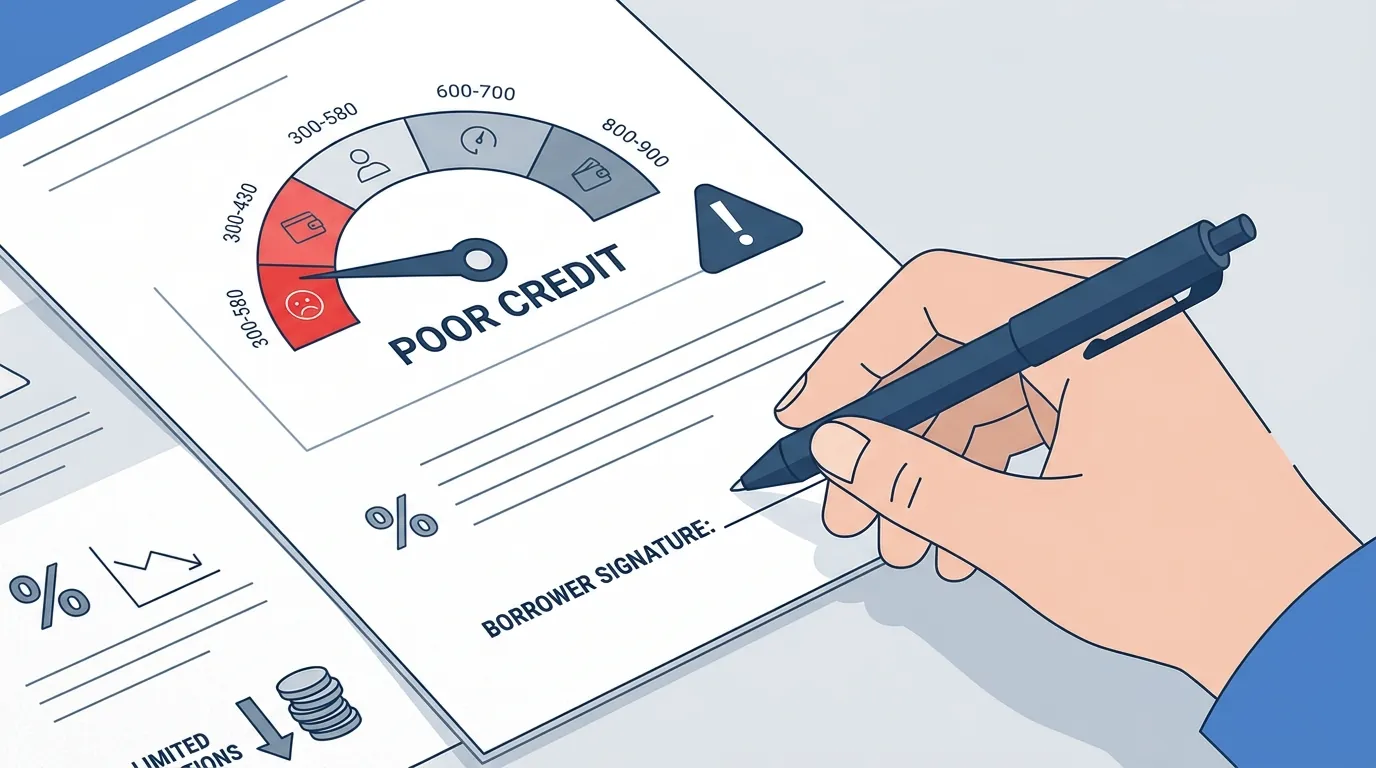

For homeowners entering retirement with substantial home equity but limited monthly income, a reverse mortgage can provide another way to access housing wealth without selling the property immediately.
The most common reverse mortgage in the United States is the Home Equity Conversion Mortgage (HECM), a Federal Housing Administration (FHA)-insured program available through FHA-approved lenders. HECMs are generally available to homeowners age 62 and older who meet additional eligibility requirements.
Unlike a conventional mortgage, a reverse mortgage generally does not require the borrower to make monthly principal-and-interest payments while the loan remains in good standing. Instead, interest and certain fees are added to the balance over time. The homeowner retains title to the property but must continue meeting obligations such as paying property taxes and homeowners insurance and maintaining the home.
Because the loan balance generally increases rather than decreases, a reverse mortgage is fundamentally a financing decision involving future home equity, retirement cash flow, and eventually the repayment of the loan.
What Is a Reverse Mortgage?
A reverse mortgage allows an eligible homeowner to borrow against the equity in a primary residence.
With a traditional mortgage, the borrower typically makes monthly payments that gradually reduce the outstanding principal.
With a reverse mortgage, the opposite can occur. The borrower receives proceeds, while interest and fees are added to the loan balance. As the balance grows, the homeowner's remaining equity generally declines.
The homeowner continues to own the property.
The lender does not automatically become the owner simply because a reverse mortgage is taken out. The home serves as collateral for the loan, much as it does with a conventional mortgage.
This distinction is important when evaluating advertisements that describe reverse mortgages as though the homeowner is selling the property to the lender. That is not how a standard HECM works.
What Is an HECM?
A Home Equity Conversion Mortgage is the FHA-insured reverse mortgage program administered by HUD.
According to HUD, HECMs are available through FHA-approved lenders, and the amount available to a borrower depends on factors including the age of the youngest borrower or eligible non-borrowing spouse, the interest rate, and the applicable home value or FHA mortgage limit.
For calendar year 2026, HUD lists a HECM maximum claim amount of $1,249,125. This is an FHA program limit used in calculating the maximum claim amount; it does not mean every homeowner can borrow that amount.
The actual proceeds available to an individual borrower can be considerably lower depending on the property, interest rate, age, existing mortgage balance, and other factors.
Who Can Qualify for an HECM?
Age is one of the primary eligibility requirements.
The homeowner must generally be 62 or older. The home must also be the borrower's principal residence, and the borrower must satisfy HUD's other financial and property requirements.
Other requirements can include:
- Owning the home outright or having a sufficiently low existing mortgage balance
- Paying off an existing mortgage at closing
- Meeting applicable financial assessment requirements
- Maintaining the home
- Paying property taxes and homeowners insurance
- Meeting HUD property standards
- Completing required counseling with a HUD-approved counseling agency
If an existing mortgage remains on the property, the HECM proceeds can generally be used to pay it off at closing, provided the transaction meets the applicable requirements.
How Much Can You Borrow?
There is no single percentage of home equity that applies to every reverse mortgage.
The available amount depends on factors including:
- Age
- Interest rate
- Home value
- Applicable HECM limits
- Existing mortgage balance
- Eligible non-borrowing spouse status
- Loan structure
CFPB explains that the principal limit is influenced by the borrower's age, interest rate, and home value. Generally, older borrowers and lower interest rates can result in higher principal limits, all else equal. When there is a younger co-borrower or eligible non-borrowing spouse, the younger person's age can affect the calculation.
This means two homeowners with identical properties can potentially qualify for different amounts.
A Simple Reverse Mortgage Example
Consider a hypothetical homeowner:
- Home value: $600,000
- Existing mortgage: $50,000
- Available HECM proceeds: hypothetical $250,000
If the homeowner uses $50,000 of the proceeds to pay off the existing mortgage, approximately $200,000 would remain available before accounting for other applicable costs or restrictions.
The homeowner could then potentially receive the remaining proceeds as a lump sum, monthly payments, or through a line of credit, depending on the loan structure.
The example is illustrative rather than a calculation of actual HECM eligibility.
How Can Reverse Mortgage Proceeds Be Received?
HECM proceeds can generally be structured in several ways.
Lump-sum payment
A borrower can receive a substantial amount of available proceeds at once under an applicable fixed-rate structure.
This can provide immediate liquidity but means interest and fees begin accumulating on the amount borrowed.
Monthly payments
A borrower can receive scheduled payments.
HECM structures can include tenure payments, which are designed to continue while the borrower meets the loan obligations and occupies the property as required, or term payments, which continue for a specified period.
Line of credit
A line of credit allows the homeowner to draw funds as needed, subject to the terms of the loan.
One feature of an HECM line of credit is that unused credit can have a growth feature under the program's terms.
Combination approach
Some borrowers may combine a line of credit with scheduled monthly proceeds.
The appropriate structure depends on the homeowner's spending needs, liquidity requirements, interest costs, and long-term housing plans.
Does a Reverse Mortgage Eliminate Monthly Mortgage Payments?
A reverse mortgage can eliminate the requirement for traditional monthly mortgage payments on the reverse-mortgage balance, but that does not mean the homeowner has no housing-related financial obligations.
The homeowner remains responsible for requirements including:
- Property taxes
- Homeowners insurance
- Maintaining the property
- Keeping the home as the principal residence
Failure to meet these obligations can put the borrower at risk of default or foreclosure.
This is one of the most important distinctions to understand when comparing a reverse mortgage with other retirement-financing options.
What Happens to the Loan Balance?
The loan balance generally increases over time because interest and applicable fees are added to the outstanding balance.
For example, if a homeowner initially receives $150,000 and interest and fees subsequently accumulate, the amount owed can eventually become substantially larger than the original amount borrowed.
The homeowner therefore needs to consider both:
Current liquidity received
and
Future equity remaining in the property.
CFPB specifically describes a reverse mortgage as a loan rather than free money and notes that the growing balance reduces home equity over time.
What Happens When the Homeowner Moves?
A HECM generally becomes due when the last surviving borrower dies, sells the home, or no longer maintains it as a principal residence.
Certain circumstances involving extended stays in healthcare facilities can also affect the loan's status.
For this reason, homeowners considering a reverse mortgage should think carefully about potential future moves.
Someone who expects to relocate within a few years may have a very different financing situation from someone who expects to remain in the home for the foreseeable future.
What Happens If the Homeowner Dies?
When the last borrower dies, the HECM generally becomes due and payable.
The heirs can typically choose among options that may include:
- Selling the home and using the proceeds to repay the loan
- Paying off the reverse mortgage and keeping the home
- Turning the property over to the lender
For HECMs, heirs generally will not be required to repay more than the home's value under the applicable mortgage-insurance protections. If the loan balance exceeds the home's appraised value, heirs may be able to satisfy the obligation by paying 95% of the appraised value when the relevant HECM rules apply.
This does not mean the family automatically receives the property free of the reverse mortgage.
The outstanding loan must still be addressed.
Non-Borrowing Spouses
Spousal circumstances require particular attention.
A spouse who is not a co-borrower may have certain protections if they qualify as an Eligible Non-Borrowing Spouse under HUD requirements.
Eligibility can depend on factors including when the HECM was originated, marital status, residency, and compliance with the applicable rules.
A homeowner should therefore avoid assuming that a spouse automatically has the same rights as a co-borrower.
The status of everyone living in the home should be discussed before the loan is finalized.
Reverse Mortgages and Existing Mortgages
A homeowner generally cannot simply leave an existing conventional mortgage in place and use the reverse mortgage proceeds entirely for other purposes.
If there is an existing mortgage balance, it generally must be paid off at closing.
This can substantially reduce the amount of cash available to the homeowner.
For example, a homeowner might have a property worth $500,000 but still owe $150,000 on a conventional mortgage. Even if the reverse mortgage produces a significant principal limit, part of the proceeds may need to retire that existing debt.
The homeowner should therefore evaluate net available proceeds, rather than looking only at the home's market value.
Reverse Mortgage Costs
Reverse mortgages can involve several categories of costs.
Potential expenses include:
- Origination charges
- Mortgage insurance premiums
- Closing costs
- Appraisal fees
- Title-related costs
- Interest
- Servicing-related charges
The exact costs depend on the loan structure and applicable limits.
A loan with no traditional monthly mortgage payment can still be expensive because interest and fees accumulate against the outstanding balance.
This is why comparing the initial proceeds alone can produce an incomplete picture of the financing.
HECM Mortgage Insurance
HECMs are insured through the FHA.
Mortgage insurance is an important component of the program because it supports protections associated with the HECM structure, including the non-recourse framework.
A borrower or heirs generally cannot be required to repay more than the value of the home when the HECM becomes due, subject to the program's rules.
Mortgage insurance therefore affects the cost structure of the loan while also supporting important protections.
Reverse Mortgage vs. Home Equity Loan
Both products allow homeowners to borrow against home equity, but the repayment structure is substantially different.
| Feature | Reverse Mortgage / HECM | Home Equity Loan |
|---|---|---|
| Typical age requirement | 62+ for HECM | Generally no HECM-style age requirement |
| Monthly principal-and-interest payment | Generally not required while loan remains in good standing | Generally required |
| Loan balance | Generally increases | Generally decreases with payments |
| Home ownership | Remains with homeowner | Remains with homeowner |
| Principal residence requirement | Yes for HECM | Depends on product |
| Property taxes and insurance | Borrower remains responsible | Borrower remains responsible |
| Counseling | HUD-approved counseling required for HECM | Generally not a federal HECM requirement |
| Repayment | Typically triggered by sale, move, or death | Scheduled repayment |
| Access to funds | Lump sum, payments, line of credit, depending on structure | Usually lump sum |
CFPB identifies home equity loans and HELOCs as alternatives that homeowners may want to consider before choosing a reverse mortgage.
Reverse Mortgage vs. HELOC
A home equity line of credit (HELOC) can also provide access to home equity.
The difference becomes particularly important in retirement.
A HELOC generally requires the borrower to qualify for credit based on income, debts, credit history, and other financial factors. It also normally requires payments.
A reverse mortgage can provide access to equity without the same conventional monthly mortgage-payment structure.
However, the reverse mortgage balance generally grows over time, while a properly managed HELOC balance can decline as the borrower makes payments.
The right comparison therefore depends on retirement income, credit qualification, expected housing duration, liquidity needs, and the amount of equity the homeowner wants to preserve.
Using a Reverse Mortgage for Retirement Income
One potential use of a reverse mortgage is supplementing retirement cash flow.
A homeowner might use proceeds for:
- Regular living expenses
- Home repairs
- Healthcare-related expenses
- Emergency liquidity
- Paying off an existing mortgage
- Delaying withdrawals from investment accounts
- Other permitted personal expenses
However, borrowing against home equity changes the household balance sheet.
A retirement plan should therefore consider how reverse-mortgage proceeds interact with:
- Social Security
- Pension income
- Retirement accounts
- Investment portfolios
- Taxable assets
- Healthcare expenses
- Long-term-care costs
- Estate-planning objectives
A reverse mortgage is a financing tool, not automatically a replacement for retirement income planning.
Reverse Mortgages and Debt Consolidation
Some homeowners consider using home equity to pay off credit cards, personal loans, or other debts.
That strategy requires careful analysis.
Replacing unsecured debt with debt secured by the home changes the consequences of nonpayment. CFPB warns that using a reverse mortgage for debt consolidation can create risks because failure to meet ongoing obligations such as property taxes and insurance can put the home at risk.
The homeowner should compare:
- Current debt interest rates
- Reverse mortgage costs
- Available alternatives
- Monthly cash flow
- Remaining home equity
- Expected housing duration
Paying off one form of debt does not eliminate the underlying financial obligation.
Reverse Mortgage and Estate Planning
Home equity can represent a significant portion of a household's net worth.
Taking a reverse mortgage can reduce the amount of equity eventually available to heirs.
Suppose a homeowner's property is worth $700,000 and the reverse mortgage balance eventually reaches $350,000.
Ignoring selling costs and changes in property value, approximately $350,000 of gross equity would remain.
If the loan balance grows further, the remaining equity can decline.
This makes estate planning particularly important for homeowners who intend to leave the property to children or other beneficiaries.
Heirs should understand the potential repayment requirements before the loan is taken out.
Maintaining the Property
The homeowner remains responsible for maintaining the property.
That includes keeping the home in suitable condition and addressing required repairs.
A homeowner who allows the property to deteriorate can create problems with the loan.
Maintenance expenses can also be significant during retirement, particularly for older homes.
A reverse mortgage should therefore be evaluated alongside a realistic estimate of:
- Roof replacement
- HVAC repairs
- Plumbing
- Electrical work
- Property taxes
- Insurance
- Routine maintenance
- Accessibility modifications
The absence of a traditional monthly mortgage payment does not eliminate these costs.
Required Counseling
HECM borrowers must receive counseling from a HUD-approved reverse mortgage counseling agency.
The counseling process is designed to help borrowers understand the loan, its financial implications, alternatives, and ongoing responsibilities.
This is an important step because reverse mortgages can have consequences that extend far beyond the initial cash received.
A counselor can help the homeowner examine alternatives such as:
- Home equity loans
- HELOCs
- Refinancing
- Downsizing
- Selling the property
- Reducing expenses
- Other housing or retirement-income strategies
Questions to Ask Before Applying
Before proceeding with a reverse mortgage, homeowners should ask:
- How much can I actually receive after paying off my existing mortgage?
- What are the upfront and ongoing costs?
- How will the loan balance change under different interest-rate scenarios?
- Which payout structure fits my cash-flow needs?
- What happens if I move?
- What happens if I enter a long-term healthcare facility?
- How does the loan affect my spouse?
- What will my heirs need to do?
- How much home equity might remain under different scenarios?
- What happens if my home's value declines?
- Can I afford property taxes and homeowners insurance?
- What alternatives should I compare?
- How will the loan affect my broader retirement plan?
- Could the loan affect other financial or government benefits?
- What obligations remain after closing?
These questions can make the long-term consequences easier to understand before signing the loan documents.
Evaluating Reverse Mortgage Financing
A reverse mortgage can provide access to home equity without requiring the traditional monthly mortgage payments associated with a forward mortgage.
For an eligible homeowner, that structure can create additional retirement liquidity while allowing the homeowner to remain in the property.
But the trade-off is important: the loan balance generally grows, and home equity generally declines as interest and fees accumulate.
The decision therefore requires more than asking how much cash is available today.
Homeowners should consider the cost of the financing, the expected time they will remain in the property, retirement income, taxes and insurance, maintenance obligations, the effect on heirs, and alternative ways to access capital.
For many households, the most useful starting point is a side-by-side comparison of the available financing options rather than focusing exclusively on the promise of no traditional monthly mortgage payments.
A reverse mortgage can be an important retirement-financing tool, but understanding its mechanics is essential. The homeowner is exchanging part of the future value of the home for liquidity today, while continuing to carry responsibility for the property and the loan's ongoing requirements.
References
- Consumer Financial Protection Bureau — What Is a Reverse Mortgage?
- Consumer Financial Protection Bureau — Reverse Mortgage Loans
- HUD — Home Equity Conversion Mortgages for Seniors
- HUD — 2026 HECM Maximum Claim Amount
- Consumer Financial Protection Bureau — Reverse Mortgage Counseling and Questions to Ask
- Consumer Financial Protection Bureau — Reverse Mortgages and Heirs