Small businesses often need financing for more than one reason. A company may need working capital to hire employees, purchase inventory, acquire another business, or manage seasonal expenses. Another business may primarily need long-term financing for a building, major equipment purchase, or facility expansion.
Two major U.S. Small Business Administration (SBA) programs address these different financing needs: SBA 7(a) loans and SBA 504 loans.
The programs share some characteristics. Both are designed for eligible small businesses, both involve SBA-backed financing, and both can support business expansion. But their permitted uses, financing structures, loan terms, and delivery channels are different.
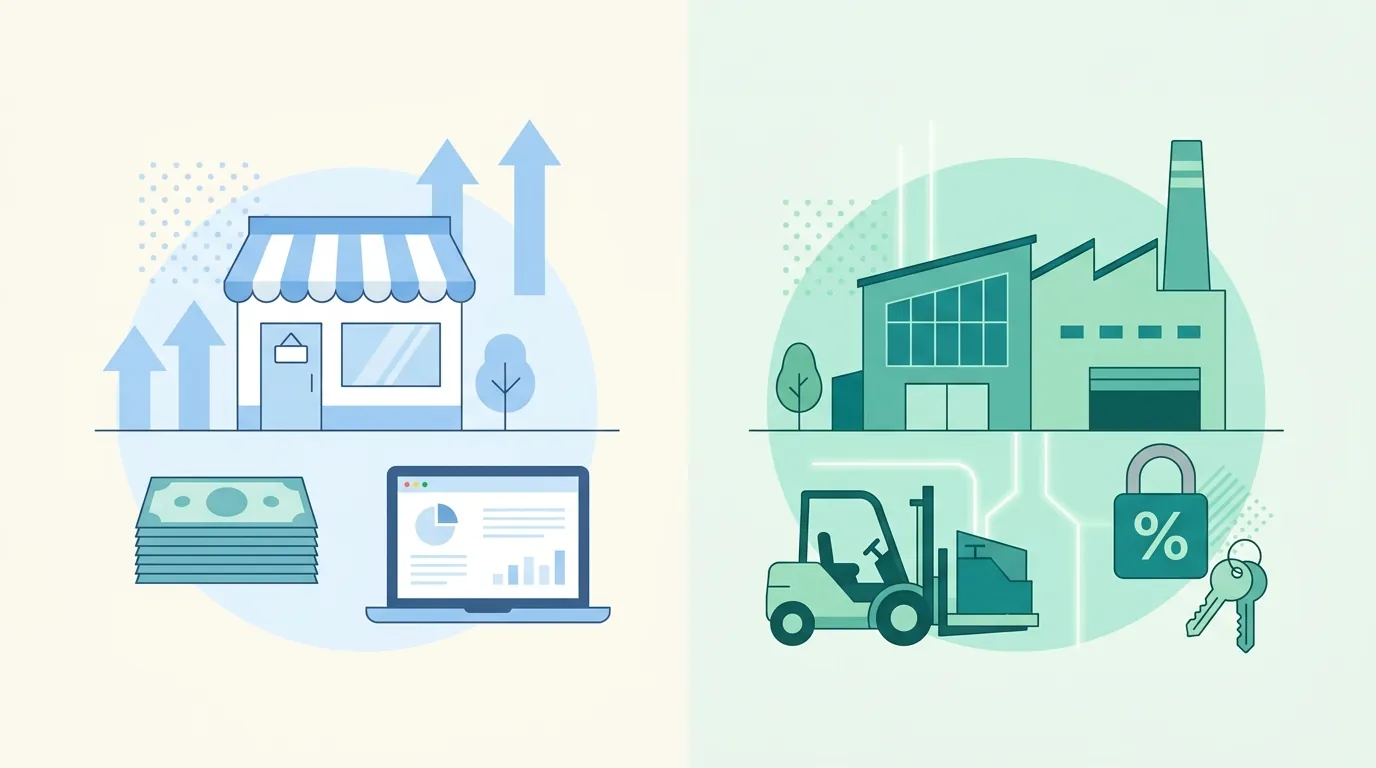
The SBA describes 7(a) as its primary business loan program, with funds available for purposes including working capital, real estate, equipment, business acquisitions, and refinancing certain debt. The 504 program focuses on long-term, fixed-rate financing for major fixed assets.
Understanding those differences can help business owners determine which program aligns with the project they are actually trying to finance.
What Is an SBA 7(a) Loan?
The 7(a) loan program provides SBA guarantees to participating lenders that make qualifying loans to small businesses.
The program is relatively flexible because loan proceeds can be used for several business purposes.
Eligible uses can include:
- Working capital
- Purchasing or improving real estate
- Purchasing machinery and equipment
- Furniture, fixtures, and supplies
- Business acquisition
- Ownership changes
- Certain debt refinancing
- Starting or expanding a business
- Multiple-purpose financing
The standard maximum 7(a) loan amount is $5 million. For most 7(a) loans, SBA guarantees up to 85% for loans of $150,000 or less and up to 75% for loans above $150,000, subject to the program's applicable rules.
The SBA does not generally lend the money directly to the business. The borrower works with a participating lender, such as a bank or other approved lender.
What Is an SBA 504 Loan?
The 504 loan program is designed primarily for major fixed assets that support business growth and job creation.
Eligible uses can include:
- Purchasing commercial real estate
- Constructing buildings
- Renovating facilities
- Purchasing long-term machinery and equipment
- Certain eligible refinancing transactions
The current maximum 504 loan amount is $5.5 million. Certain qualifying small-business energy projects can have special project-level limits under the program.
Unlike 7(a), a 504 loan is delivered through an SBA-certified Certified Development Company (CDC) in combination with a third-party lender.
The SBA describes 504 financing as long-term, fixed-rate financing for major fixed assets. Available maturity terms include 10, 20, and 25 years, depending on the project and asset being financed.
SBA 7(a) vs. 504: The Basic Difference
The simplest distinction is the type of business need each program is designed to address.
| Feature | SBA 7(a) | SBA 504 |
|---|---|---|
| Maximum loan amount | $5 million | $5.5 million |
| Primary purpose | Broad business financing | Major fixed assets |
| Working capital | Permitted | Generally not permitted |
| Business acquisition | Permitted | Generally not the program's primary purpose |
| Commercial real estate | Permitted | Core use |
| Equipment | Permitted | Core use for qualifying fixed assets |
| Interest structure | Negotiated; fixed or variable depending on loan | Fixed-rate SBA portion |
| Typical maturity | Up to 10 years for many uses; up to 25 years for real estate | 10, 20, or 25 years |
| Delivery | Participating 7(a) lender | CDC plus third-party lender |
| Inventory | Permitted as part of eligible financing | Not permitted |
| Rental real estate | Generally restricted under SBA eligibility rules | Not permitted as speculative/investment rental real estate |
The exact eligibility and maturity depend on the transaction and applicable SBA rules.
How 7(a) Financing Can Be Used
One of the defining features of 7(a) is its flexibility.
Suppose a company wants to purchase a $1.5 million business and also needs $250,000 of working capital after the acquisition.
A 7(a) structure can potentially combine eligible uses into one financing package.
The program can also finance real estate and equipment.
For example, a manufacturing company could potentially use 7(a) proceeds for:
- Facility improvements
- Equipment
- Inventory
- Working capital
The SBA specifically identifies multiple-purpose financing among permitted 7(a) uses.
This flexibility can be useful when a project involves several different categories of business expenses.
How 504 Financing Works
A 504 project generally involves a more structured capital stack.
A typical transaction includes:
- A borrower contribution
- A third-party lender loan
- An SBA-backed 504 loan arranged through a CDC
The precise percentages can vary depending on the project, borrower, and applicable SBA requirements.
The structure is designed to provide long-term financing for major fixed assets while distributing the financing among the project participants.
Because the 504 program is focused on fixed assets, it is not designed as a general-purpose working-capital facility.
The SBA specifically states that 504 loans cannot be used for working capital or inventory and cannot be used for speculation or investment in rental real estate.
Commercial Real Estate Financing
Both programs can potentially finance commercial real estate, but the structure differs.
A business purchasing its own operating facility may consider 504 financing when the transaction primarily involves qualifying fixed assets.
A 7(a) loan can also finance the acquisition or improvement of real estate while potentially incorporating other eligible business expenses.
For example, suppose a company wants to purchase a $3 million facility but also needs $500,000 for working capital and equipment.
The ability to combine multiple eligible uses can make 7(a) relevant to a transaction of this type.
By contrast, a project centered primarily on purchasing or constructing a qualifying long-term facility may align more closely with the 504 structure.
Equipment Financing
Both programs can support equipment purchases, but the project structure matters.
7(a) can finance machinery and equipment as part of its broader eligible-use framework.
504 is specifically designed for major fixed assets, including qualifying long-term machinery and equipment.
For a business purchasing several million dollars of long-lived equipment as part of a facility expansion, the 504 structure can therefore be particularly relevant.
For a smaller equipment purchase combined with working capital or another financing need, 7(a) may provide a different structure.
Working Capital
This is one of the clearest distinctions.
7(a) can finance working capital.
504 generally cannot.
Working capital can include funding needed for normal business operations, depending on the specific transaction and SBA rules.
A company might need financing for:
- Payroll
- Inventory
- Marketing
- Supplier payments
- Expansion expenses
- Operating cash reserves
Those needs can potentially fit within a 7(a) financing structure.
The 504 program is instead centered on fixed assets rather than general operating liquidity.
Business Acquisition Financing
7(a) can be used for eligible changes of ownership and business acquisitions.
This makes the program relevant to entrepreneurs purchasing an existing company.
For example, an acquisition financing package could potentially include:
- Purchase of the business
- Eligible real estate
- Equipment
- Working capital
The transaction still has to satisfy SBA eligibility and underwriting requirements.
The 504 program does not function as a general business-acquisition loan.
Interest Rates
7(a) interest rates are negotiated between the borrower and participating lender, subject to SBA maximums.
Depending on the particular loan, the rate may be fixed or variable.
The SBA publishes maximum rate structures based on loan size and whether the rate is fixed or variable, with the applicable limits governed by current SBA rules.
504 financing has a different structure.
The SBA states that 504 rates are pegged to an increment above the current market rate for 10-year U.S. Treasury issues and that 10-, 20-, and 25-year maturity terms are available.
The borrower's total financing cost can still include fees and the separate third-party lender component.
Therefore, comparing only the stated interest rate does not provide a complete picture.
Loan Terms
Loan maturity depends heavily on how the funds are used.
For 7(a), SBA materials generally provide:
- Up to 10 years for many purposes
- Up to 25 years for qualifying real-estate financing
The SBA's lender guidance identifies a maximum maturity of 25 years for real estate, while other uses can have shorter maturities.
For 504, the SBA currently lists:
- 10-year maturity
- 20-year maturity
- 25-year maturity
The appropriate term depends on the financed asset and transaction structure.
Longer repayment periods can reduce scheduled payments but can also increase the amount of interest paid over the life of the financing.
SBA Loan Fees
SBA-backed financing can involve several categories of costs.
Depending on the program and transaction, borrowers may encounter:
- Guarantee fees
- Lender fees
- CDC fees
- Packaging or processing charges
- Appraisal costs
- Environmental reports
- Title costs
- Legal expenses
- Recording fees
- Other closing costs
The precise fee structure depends on the program, loan amount, lender, and transaction.
A borrower should request a complete estimate of financing costs before comparing offers.
Down Payment and Equity Contribution
Neither program should be evaluated solely on its advertised maximum loan amount.
The borrower may need to contribute equity to the transaction.
The amount depends on factors such as:
- Business type
- Project structure
- Use of proceeds
- Existing business
- Startup status
- Special eligibility considerations
- Lender requirements
504 transactions generally involve a defined project-financing structure with borrower equity, third-party financing, and the SBA-backed component.
Certain projects can require a larger borrower contribution depending on circumstances.
The SBA's 504 documentation establishes specific requirements governing borrower contributions and third-party financing.
Collateral and Personal Guarantees
SBA financing does not necessarily mean that a business can borrow without collateral or personal guarantees.
Collateral requirements depend on the program, loan amount, lender, and transaction.
For 7(a) loans, SBA lender guidance includes requirements concerning collateral and the assets being financed.
Owners can also be required to provide personal guarantees under applicable SBA rules.
Business owners should therefore ask the lender:
- What assets will secure the loan?
- Will the financed property serve as collateral?
- Are additional business assets required?
- Is a personal guarantee required?
- Are spouses or other owners required to guarantee the loan?
These details can materially affect the risk associated with the financing.
Eligibility Requirements
Both programs have SBA eligibility requirements.
In general, an eligible business must:
- Operate for profit
- Be located in the United States
- Meet applicable SBA size standards
- Have an eligible business purpose
- Demonstrate an ability to repay
- Meet the applicable program's other requirements
The SBA notes that 7(a) applicants must be creditworthy and demonstrate a reasonable ability to repay the loan.
504 borrowers must likewise satisfy SBA eligibility rules and use the financing for an eligible project.
Not every business or real estate transaction qualifies.
504 Loans and Rental Real Estate
A major limitation is important for real estate investors.
The SBA states that a 504 loan cannot be used for speculation or investment in rental real estate.
This means an investor purchasing an apartment building as a passive rental investment should not assume that the 504 program is available.
Owner-occupied operating facilities are a different situation.
A company purchasing a building for its own business operations can potentially fit within the 504 program if the project meets the applicable requirements.
The distinction between owner-occupied business property and investment real estate is therefore significant.
7(a) vs. 504 for Manufacturing
Manufacturers can have particularly large capital requirements.
A company may need:
- Industrial property
- Production equipment
- Working capital
- Inventory
- Expansion financing
Both programs can potentially be relevant, depending on the project.
The 504 program can support qualifying fixed assets, while 7(a) can potentially combine fixed assets with working capital and other eligible uses.
In 2026, the SBA also changed the rules governing the cumulative use of 7(a) and 504 financing.
Combining 7(a) and 504 Financing
Effective July 4, 2026, eligible borrowers can potentially combine 7(a) and 504 financing for up to $10 million in combined SBA-backed financing, under the applicable SBA rules.
The SBA explains that the change allows qualifying borrowers to combine up to $5 million through 7(a) and up to $5 million through 504 financing.
This can matter for capital-intensive businesses with distinct financing needs.
For example, a company might require:
- 504 financing for a major facility or equipment project
- 7(a) financing for eligible working capital or another permitted business purpose
The two programs remain subject to separate eligibility and underwriting requirements.
Businesses should not assume that reaching the $10 million combined figure is automatic or that any two transactions can simply be combined.
7(a) Working Capital Pilot
The SBA also offers the 7(a) Working Capital Pilot (WCP) for qualifying businesses.
The program provides monitored lines of credit and can support borrowing against accounts receivable and inventory.
SBA lender guidance currently lists a maximum loan size of $5 million for the WCP, with a maximum SBA guarantee of 85% for loans up to $150,000 and 75% above $150,000.
This can be relevant to businesses whose primary need is revolving working capital rather than long-term fixed-asset financing.
Comparing Application Processes
The application route differs between the programs.
For 7(a), borrowers apply directly through participating lenders.
The SBA does not generally provide the loan directly to the business.
For 504, the borrower works with a Certified Development Company, which coordinates the SBA-backed portion alongside the third-party lender.
The documentation can include:
- Business financial statements
- Tax returns
- Personal financial information
- Debt schedules
- Business plan or projections
- Purchase agreements
- Property information
- Equipment quotes
- Environmental documentation
- Ownership information
The exact documentation depends on the lender and transaction.
A Practical Example
Consider a manufacturing company planning a $4 million expansion.
The project includes:
- $2.5 million building acquisition
- $1 million production equipment
- $500,000 working capital
The business could potentially evaluate both programs.
A 504 structure could potentially finance the qualifying building and equipment components.
The working-capital requirement, however, would generally point toward a financing structure such as 7(a), because 504 proceeds cannot be used for working capital.
Under the 2026 rules, an eligible borrower may also be able to combine 7(a) and 504 financing within the applicable cumulative limits.
The final structure would depend on eligibility, lender underwriting, project economics, borrower equity, collateral, and SBA requirements.
Questions to Ask an SBA Lender or CDC
Before applying, business owners should ask:
- Which SBA program fits the specific use of funds?
- Can multiple uses be combined in one loan?
- What borrower contribution is required?
- What collateral is required?
- Are personal guarantees required?
- What interest-rate structure applies?
- What is the expected maturity?
- What fees will be charged?
- Can existing business debt be refinanced?
- Can working capital be included?
- Can real estate and equipment be financed together?
- Is the project eligible for 504 financing?
- Is the property owner-occupied?
- Would a 7(a) Working Capital Pilot facility be relevant?
- Could 7(a) and 504 financing be combined under current SBA rules?
- What financial statements and projections are required?
- What conditions must be satisfied before closing?
Getting these questions answered early can prevent a business from structuring a project around a financing program that cannot legally support the intended use.
Evaluating the Total Financing Cost
A meaningful comparison should include more than the interest rate.
Business owners should calculate:
Loan amount
+ financing fees
+ closing costs
+ interest over the expected holding period
+ required borrower equity
+ other project costs
Then compare that total with the expected economic benefit of the investment.
For real estate or equipment, the analysis can also include:
- Useful life
- Expected productivity gains
- Maintenance
- Depreciation
- Rent savings
- Revenue growth
- Resale value
- Expected holding period
A longer loan term can improve monthly cash flow while increasing total financing costs.
Choosing a Financing Structure
SBA 7(a) and 504 loans are designed around different financing needs.
7(a) provides a broader financing framework that can accommodate working capital, business acquisitions, real estate, equipment, and several other eligible uses.
504 is structured around long-term financing for major fixed assets and uses a CDC alongside a third-party lender.
For a business purchasing an operating facility or major equipment, 504 financing may form an important part of the project analysis. For a company combining several business needs—such as an acquisition, working capital, and equipment—7(a) can provide a broader eligible-use framework.
The programs can also potentially be combined under the 2026 policy changes for qualifying borrowers, making the distinction between fixed-asset financing and operating-capital financing even more relevant.
Ultimately, the right financing analysis begins with the purpose of the capital. Once the business identifies whether it needs working capital, real estate, equipment, acquisition financing, or a combination of uses, it can compare the applicable SBA structure, borrower contribution, collateral requirements, interest costs, fees, and repayment period.
SBA financing can reduce some barriers to obtaining business credit, but it remains debt that must be repaid. A detailed cash-flow forecast should therefore be completed before committing to the financing, particularly when the project involves substantial fixed monthly obligations.
References
- U.S. Small Business Administration — 7(a) Loans
- U.S. Small Business Administration — 504 Loans
- SBA — Lender Resources and 7(a)/504 Program Details
- SBA — 2026 Policy Change for Combining 7(a) and 504 Financing
- SBA — Coordination of 7(a) and 504 Maximum Loan Limits
- SBA — Lender and Development Company Loan Programs, SOP 50 10