Buying a vehicle with financing involves more than finding a monthly payment that fits the household budget. The interest rate, annual percentage rate (APR), loan term, down payment, vehicle price, and lender fees can all change the total amount paid over time.
For many buyers, getting preapproved before visiting a dealership can make the financing process easier to understand. A preapproval can provide an estimated or approved loan amount, APR, and repayment term before negotiations begin. It can also give borrowers a reference point when comparing financing offered by a dealer.
Understanding how auto loans are structured can help buyers evaluate the full cost of borrowing rather than focusing on one number.
How Auto Loans Work
An auto loan allows a borrower to finance some or all of the purchase price of a vehicle and repay the amount over a defined period. Each scheduled payment generally includes principal and interest. Depending on the contract, the financed amount can also include certain taxes, fees, and optional products.
The principal is the amount borrowed. Interest is the cost charged by the lender for providing the financing. The APR provides a broader measure of borrowing cost because it incorporates the interest rate and certain fees associated with the loan.
The vehicle itself generally serves as collateral for the loan. If the borrower stops making payments, the lender may have rights to repossess the vehicle under the terms of the contract and applicable law.
The structure means two loans for vehicles with similar prices can have substantially different total costs.
Auto Loan Rates and What Determines Them
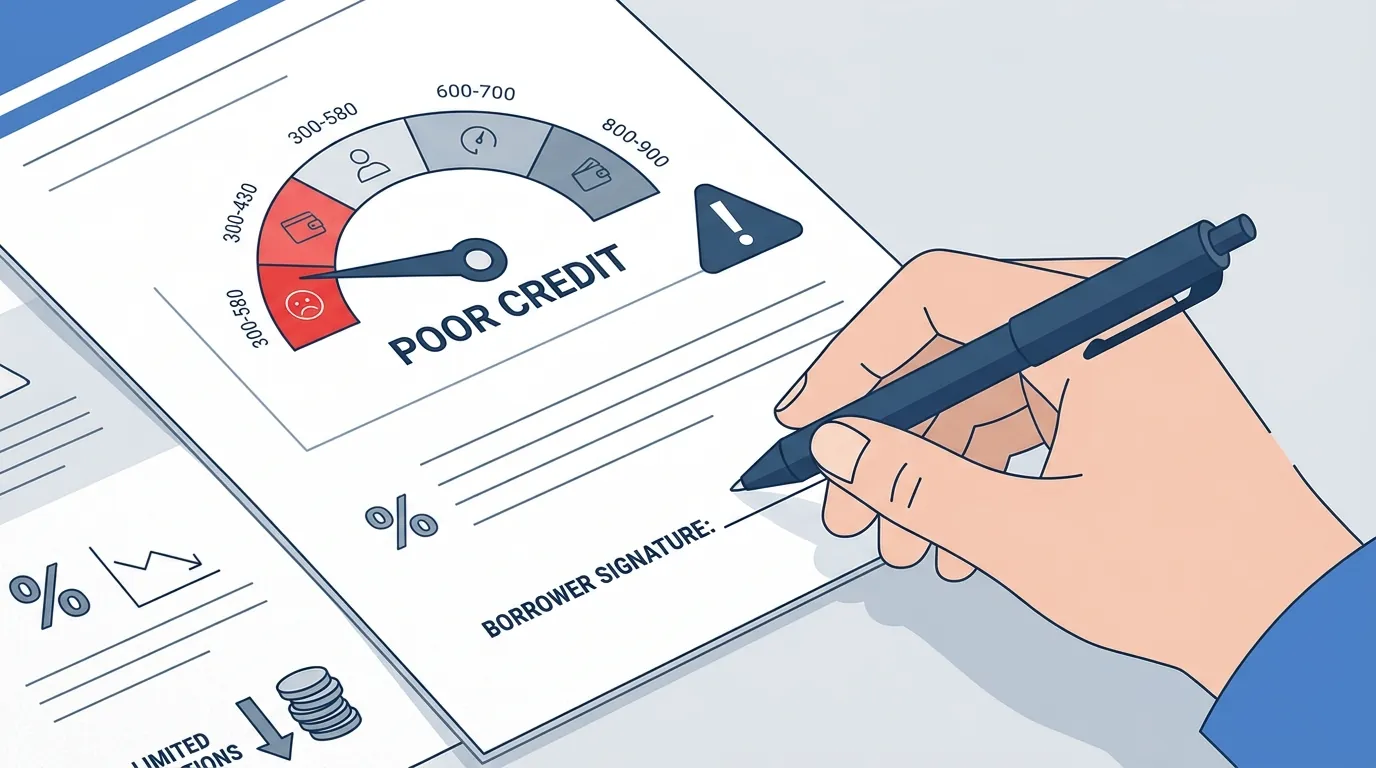
The interest rate offered by a lender depends on several factors. Credit history and credit scores are important, but they are not the only considerations.
Lenders may also evaluate:
- Income and existing debts
- Loan amount
- Down payment
- Loan term
- Whether the vehicle is new or used
- Vehicle characteristics and age
- The lender's underwriting requirements
A borrower with stronger credit may qualify for a lower rate, while a borrower with weaker credit may receive a higher rate or different loan terms.
Rates can also vary significantly between lenders. Banks, credit unions, finance companies, and dealerships may offer different financing arrangements for the same borrower and vehicle.
This makes rate shopping particularly important before signing a contract.
Interest Rate vs. APR
The interest rate and APR are related but not identical.
The interest rate represents the cost charged on the principal. APR is a broader measure that incorporates the interest rate and certain fees associated with obtaining the credit.
When comparing auto loans, borrowers should compare APR with APR rather than comparing an interest rate from one offer with an APR from another.
For example, one lender could advertise a lower nominal interest rate but charge fees that make its overall borrowing cost less competitive. Looking at the APR can provide a more useful basis for comparison.
Borrowers should still review the full disclosure rather than relying exclusively on APR, particularly when comparing loans with different structures or additional charges.
Why Loan Terms Matter
The loan term is the amount of time the borrower has to repay the financing. Common terms include 36, 48, 60, 72, and sometimes 84 months.
A longer term generally reduces the required monthly payment because the balance is spread across more payments. However, it can increase the total interest paid over the life of the loan.
Consider a hypothetical $25,000 loan with the same interest rate under two different terms. The longer loan would produce a smaller monthly payment, but the borrower would make payments for additional years and pay interest for longer.
This creates an important distinction:
A lower monthly payment does not necessarily mean a lower-cost auto loan.
Borrowers should look at both the monthly payment and the total amount paid over the life of the financing.
Longer terms can also create additional exposure to negative equity. Because vehicles generally depreciate, a borrower may owe more on the loan than the vehicle is worth, particularly during the earlier years of a long financing period.
Understanding the Monthly Payment
The monthly payment is usually the number borrowers notice first, but it is only one part of the financing equation.
The payment is affected by:
- Amount financed
- APR
- Loan term
- Down payment
- Trade-in credit
- Taxes and fees included in financing
- Optional products added to the contract
A dealer may reduce the monthly payment by extending the loan term rather than reducing the vehicle's actual price.
For example, changing a loan from 48 months to 72 months can make the monthly obligation appear considerably more manageable without reducing the amount being financed.
Before accepting a payment quote, ask for the vehicle's selling price, amount financed, APR, term, finance charge, and total of payments.
Getting Preapproved Before Shopping
Preapproval can be useful because it establishes financing terms before the buyer enters the dealership's finance office.
A borrower can seek preapproval from a bank, credit union, or other lender. Depending on the lender, the process may involve providing information about income, employment, debts, desired loan amount, and the vehicle being purchased.
A preapproval may show:
- Approved or maximum loan amount
- APR
- Loan term
- Estimated monthly payment
- Conditions that must be satisfied before final funding
The exact terms depend on the lender and the application.
Preapproval does not necessarily mean a borrower must use that lender. Instead, it can serve as a benchmark against which dealership financing can be compared.
Prequalification vs. Preapproval
Prequalification and preapproval are sometimes used interchangeably in advertising, but lenders can use these terms differently.
A prequalification may be based on information supplied by the borrower and may provide an estimated financing range. A preapproval generally represents a more formal evaluation, although the lender can still impose conditions before finalizing the loan.
Consumers should ask the lender exactly what the offer means.
Questions to ask include:
- Is this a firm approval or an estimate?
- What APR am I being offered?
- How long is the approval valid?
- Is there a maximum vehicle age or mileage?
- Does the lender require a particular dealer?
- Are there conditions that must be satisfied before funding?
- Will the lender perform a hard credit inquiry?
Understanding these details prevents a borrower from treating an estimated rate as a guaranteed financing offer.
Shopping Around for Auto Loan Rates
A borrower does not have to rely exclusively on the dealership for financing.
Potential sources include:
Banks: Existing banking relationships can make applications convenient, although borrowers should still compare the actual offer with alternatives.
Credit unions: Credit unions frequently offer auto financing and may have different underwriting criteria from banks.
Online lenders: Online applications can make it easier to request financing without visiting a branch.
Dealership financing: Dealers may submit applications to multiple lenders and present financing options during the vehicle purchase process.
Comparing several offers can reveal meaningful differences in APR, term, fees, and monthly payment.
When borrowers shop for rates, credit inquiries may affect credit reports. However, multiple auto-loan inquiries made within a concentrated shopping period are generally treated differently by credit-scoring models than unrelated applications spread over a long period. Consumers should check current scoring guidance and try to complete rate shopping within the applicable window.
Dealer Financing and Rate Negotiation
Dealer-arranged financing can be convenient because the dealer handles much of the application process.
However, the financing rate offered through a dealership may include compensation for the dealer. That means the rate presented to the customer may differ from the rate the lender initially made available to the dealership.
A preapproval can therefore provide a useful comparison point.
Suppose a bank offers financing at one APR and the dealership presents another. The borrower can compare the two offers based on the same loan amount and term.
The comparison should include more than the monthly payment. A dealer could offer a lower payment by extending the repayment period, while the preapproved loan may have a shorter term and higher monthly payment but lower overall financing costs.
Calculate the Down Payment
A larger down payment reduces the amount borrowed.
For example, if a vehicle costs $30,000 before taxes and fees, putting $6,000 down means less needs to be financed than if the buyer puts $2,000 down.
A larger down payment can reduce:
- Amount financed
- Interest paid over time
- Monthly payment
- Risk of owing more than the vehicle is worth
However, borrowers should avoid draining their emergency savings simply to increase the down payment. The appropriate amount depends on the buyer's broader financial situation.
Consider Trade-In Equity
A trade-in can affect the amount that needs to be financed.
If the existing vehicle is worth more than the amount owed on its loan, the difference may provide positive equity that can be applied toward the next purchase.
Negative equity creates a different situation.
If a vehicle is worth $15,000 but the borrower owes $19,000, there is a $4,000 gap. Rolling that amount into a new auto loan increases the new amount financed and can make the next vehicle more expensive to finance.
Borrowers should obtain the trade-in value and outstanding loan payoff separately so they understand exactly how much equity is available.
Watch for Add-Ons
Dealership finance offices may offer products such as GAP coverage, extended service contracts, credit insurance, or other vehicle-related products.
Some may provide useful protection in particular circumstances, but they can increase the amount financed and therefore increase the cost of borrowing when financed as part of the loan.
Ask for the price of every optional product separately.
A buyer should know whether an item is required, optional, refundable, cancellable, or subject to specific exclusions before agreeing to purchase it.
The monthly payment can conceal the cost of add-ons because a relatively small increase in the payment can translate into a much larger amount over several years.
Review the Loan Contract Before Signing
Before finalizing an auto loan, borrowers should review the disclosures and confirm that the paperwork matches the negotiated agreement.
Important figures include:
- APR
- Finance charge
- Amount financed
- Total of payments
- Total sale price
- Number of payments
- Monthly payment
- Late-payment provisions
- Prepayment terms
Federal Truth in Lending requirements provide consumers with standardized information about important credit costs and terms.
If a salesperson or finance manager says that financing is still being arranged, borrowers should understand whether the contract is actually final. A buyer should not assume that approval is complete simply because they have been allowed to take possession of the vehicle.
Check for Prepayment Penalties
Some borrowers intend to pay off their auto loan early if their financial circumstances improve.
Before signing, check whether the contract contains a prepayment penalty and how it works.
A loan without a prepayment penalty can provide more flexibility if the borrower later wants to make additional principal payments or pay the balance in full.
However, borrowers should verify the actual contract rather than assuming early repayment is penalty-free.
Build the Full Vehicle Budget
An auto loan payment is only one part of owning a vehicle.
The broader monthly budget may include:
- Auto insurance
- Fuel or charging
- Maintenance
- Repairs
- Registration
- Parking
- Tires
- Taxes and fees
- Loan payment
A vehicle with a lower purchase price can still create significant ownership expenses depending on its age, condition, insurance costs, fuel efficiency, and maintenance requirements.
Before applying for financing, calculate the full transportation budget rather than determining affordability from the loan payment alone.
Questions to Ask Before Accepting an Auto Loan
Before signing, a borrower should be able to answer several basic questions:
- What is the vehicle's negotiated price?
- What is the out-the-door price?
- How much am I financing?
- What is the APR?
- What is the interest rate?
- How long is the loan?
- What is the total finance charge?
- What will I pay in total?
- Are any optional products included?
- Is there a prepayment penalty?
- What happens if I make a late payment?
- Is the financing fully approved?
- Does the contract match the offer I was given?
If these figures are unclear, the borrower can ask for the documents to be explained before signing.
Final Considerations
Auto financing is easier to evaluate when the vehicle purchase and the loan are treated as separate decisions.
First, determine what vehicle and purchase price fit the budget. Then compare financing offers based on APR, amount financed, term, monthly payment, and total cost.
Preapproval can give borrowers an important reference point before entering a dealership, while comparing bank, credit union, online, and dealer financing can reveal differences that may otherwise be hidden behind monthly payment figures.
The goal is not simply to obtain a payment that fits the current month. A properly evaluated auto loan should also make sense over the entire repayment period, including the interest paid, potential depreciation, insurance and maintenance costs, and the borrower's ability to keep making payments if circumstances change.
References
- Consumer Financial Protection Bureau — Where can I get information on auto loan rates?
- Consumer Financial Protection Bureau — How does a lender decide what interest rate to offer me on an auto loan?
- Consumer Financial Protection Bureau — How do I compare auto loan offers?
- Consumer Financial Protection Bureau — What things can I negotiate when shopping for a car or auto loan?
- Consumer Financial Protection Bureau — What is included in the monthly auto loan payment?
- Consumer Financial Protection Bureau — What should I know before I finalize a car or auto loan?
- Consumer Financial Protection Bureau — What is the difference between a loan interest rate and the APR?
- Federal Trade Commission — Financing or Leasing a Car
- Federal Trade Commission — Car Dealer Ads and Promotions: Know Before You Go