
For many businesses, growth requires spending money before the resulting revenue arrives. A company may need to purchase inventory, hire employees, replace equipment, expand a location, launch a marketing campaign, or cover an unexpected cash-flow gap.
Business loans and business lines of credit can provide financing for these situations, but they are structured differently. A term loan typically delivers a defined amount of capital that is repaid over a set period. A business line of credit provides access to a predetermined borrowing limit, allowing the company to draw funds as needed and repay them according to the account terms.
Understanding the distinction matters because financing that works for a long-term investment may be poorly suited to short-term working capital. The cost of borrowing, repayment schedule, collateral requirements, fees, and lender qualifications can all affect the financial outcome.
Business Loans and Lines of Credit Serve Different Purposes
A business loan generally provides a lump sum.
Suppose a company needs $100,000 to purchase equipment or renovate a commercial location. A term loan can provide the capital upfront, followed by scheduled principal and interest payments.
A business line of credit works differently. Instead of borrowing the entire approved amount immediately, the company receives access to a credit limit.
For example, a company may have a $100,000 line but initially draw only $25,000. If the agreement permits additional draws, the business can access more capital later as needs arise.
This makes the two products fundamentally different:
- Business loan: structured financing for a defined amount and purpose.
- Business line of credit: flexible access to capital for recurring or unpredictable needs.
The appropriate structure depends on the timing and nature of the company's expenses.
How Business Term Loans Work
A business term loan usually begins with a defined principal balance.
The lender evaluates the company's financial position and determines whether to approve the application, how much to lend, the interest rate, repayment period, collateral requirements, and other conditions.
Repayment may occur monthly, although the exact schedule varies.
The monthly payment typically includes both principal and interest. As principal declines, the outstanding balance decreases according to the amortization schedule.
Some business loans have fixed interest rates, while others may use variable rates.
A fixed rate can make forecasting easier because the interest rate remains unchanged under the terms of the agreement. A variable-rate loan can move with its underlying benchmark, potentially changing borrowing costs over time.
What a Business Line of Credit Does
A business line of credit is designed around flexibility.
Instead of receiving a lump sum and immediately beginning repayment on the entire amount, the company generally draws funds when necessary.
A line of credit can be useful for expenses such as:
- Inventory purchases
- Seasonal operating expenses
- Payroll timing gaps
- Marketing campaigns
- Supplier payments
- Short-term project expenses
- Emergency business costs
- Accounts receivable timing differences
The company typically pays interest on the amount borrowed rather than the unused portion, although some lenders may charge additional fees for maintaining or accessing the line.
This structure can reduce unnecessary borrowing when cash needs fluctuate.
However, the flexibility can also encourage repeated borrowing if the company does not have a clear repayment strategy.
Working Capital Is a Common Reason for Borrowing
Cash flow can become difficult even when a business is profitable.
Consider a company that sells products to commercial customers. It may need to pay suppliers today while customers have 30-, 60-, or 90-day payment terms.
The company could have substantial revenue on its books while still lacking enough cash to cover immediate obligations.
Short-term financing can help bridge that timing difference.
A business line of credit may be particularly useful when the size and timing of the gap changes from month to month.
For predictable, long-term investments, however, a term loan may provide a more appropriate structure.
Financing Growth Requires More Than a Revenue Forecast
Borrowing can accelerate expansion, but the expected return on an investment does not eliminate repayment obligations.
Suppose a business borrows $200,000 to open a second location.
The company must make its loan payments whether the new location reaches projected sales or takes longer than expected to become profitable.
Before borrowing for expansion, management should model several scenarios rather than relying exclusively on the expected outcome.
A useful analysis can include:
- Expected additional revenue
- Gross margin
- Additional payroll
- Rent and utilities
- Marketing expenses
- Insurance
- Taxes
- Debt payments
- Working-capital requirements
- Delays in reaching projected sales
The objective is to determine whether the business can continue servicing the debt if growth occurs more slowly than anticipated.
Interest Rates Are Only One Part of the Cost
Comparing business financing solely by its advertised interest rate can produce an incomplete picture.
A loan or credit line may include:
- Origination fees
- Application fees
- Annual fees
- Maintenance charges
- Draw fees
- Documentation fees
- Late-payment charges
- Prepayment provisions
- Collateral-related expenses
Some lenders may advertise a low interest rate while charging substantial fees elsewhere.
Businesses should calculate the expected total financing cost based on the amount borrowed, repayment period, fees, and anticipated use of the facility.
For lines of credit, the analysis should also consider how frequently the business expects to draw and repay funds.
Secured vs. Unsecured Business Financing
Some business financing is secured by collateral.
Collateral can include equipment, real estate, inventory, accounts receivable, or other business assets.
Because the lender has a claim against specified assets if the borrower defaults, secured financing may have different pricing and qualification requirements from unsecured financing.
Unsecured financing does not rely on a specific pledged asset in the same way, but lenders may compensate for the additional risk through higher rates, lower borrowing limits, stronger qualification requirements, or personal guarantees.
The exact structure depends on the lender and product.
Personal Guarantees Can Matter
Small-business lenders may require an owner to personally guarantee repayment.
A personal guarantee can make the owner personally responsible for the debt if the business fails to repay it.
This creates an important distinction between the legal identity of the business and the financial exposure of its owner.
Before signing financing documents, business owners should determine:
- Whether a personal guarantee is required
- Which obligations are guaranteed
- Whether the guarantee has limits
- What happens after default
- Whether the guarantee survives the closure or sale of the business
The financing may be used for the company, but a personal guarantee can extend the consequences beyond the company itself.
Business Credit Can Influence Financing Options
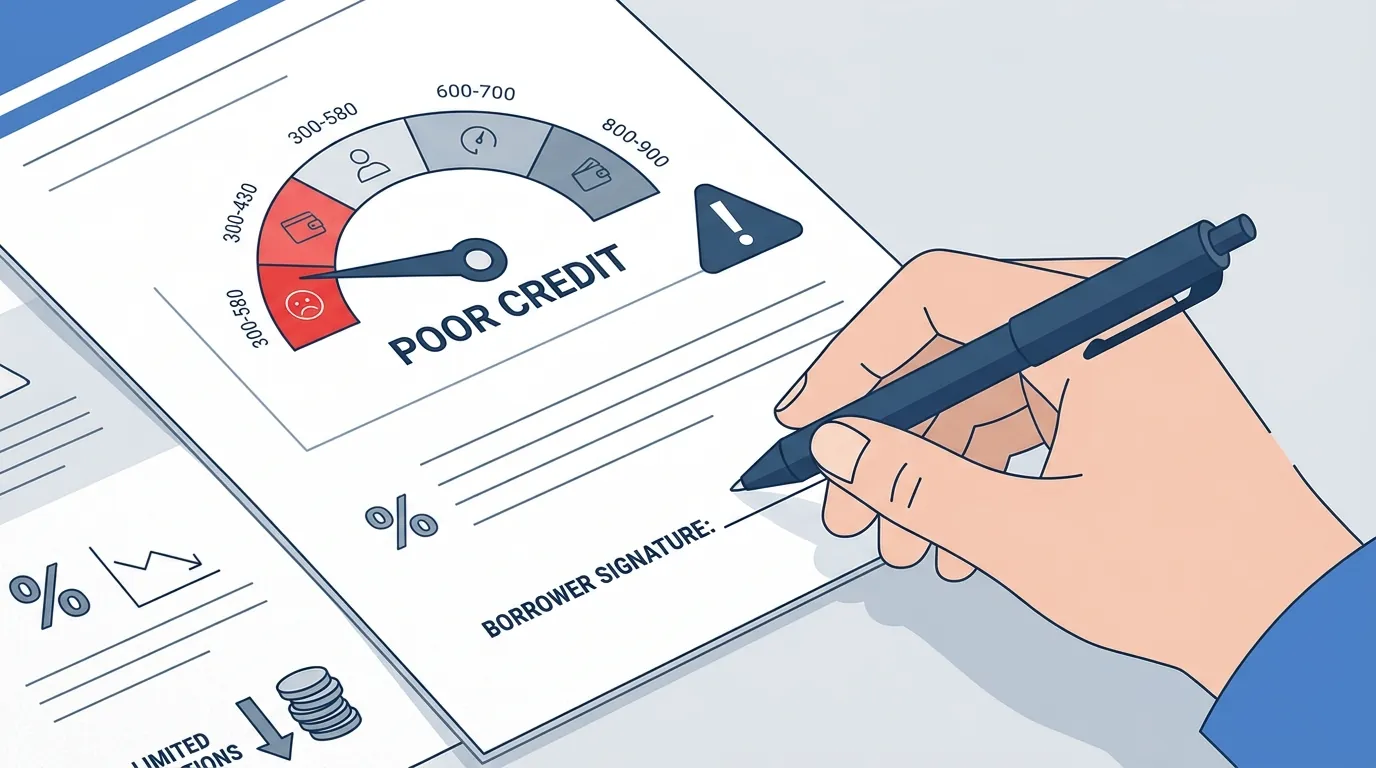
Lenders may consider both business and personal credit information, particularly for newer or smaller companies.
A business with an established credit history, consistent financial statements, predictable cash flow, and a documented repayment record may have more financing options than a company with limited financial history.
Business owners should maintain accurate records and monitor their company's financial profile.
Important documentation can include:
- Business tax returns
- Profit-and-loss statements
- Balance sheets
- Bank statements
- Accounts receivable reports
- Accounts payable information
- Business formation documents
- Ownership information
- Existing debt schedules
The specific documents requested vary by lender and financing product.
Revenue Does Not Equal Borrowing Capacity
A business generating $1 million in annual revenue is not necessarily able to support the same debt as another company with identical revenue.
Profit margins, operating expenses, cash flow, existing debt, customer concentration, and payment timing all matter.
A company with $1 million in revenue and thin margins may have less debt capacity than a company with lower revenue but stronger free cash flow.
For this reason, business owners should examine debt service in relation to actual cash generation rather than using revenue alone.
Choosing a Loan for Equipment or Expansion
Term loans are generally easier to match with long-lived investments.
If a company purchases a machine expected to remain productive for several years, financing the purchase through a loan with an appropriate repayment period can align the cost of the asset with the period over which it generates revenue.
This is sometimes described as matching the financing term to the useful life of the asset.
Borrowing for long-term equipment with a very short repayment period can place unnecessary pressure on monthly cash flow.
Conversely, financing short-lived expenses over an excessively long period can result in the company continuing to repay debt after the original expense has already disappeared.
When a Line of Credit May Fit Better
A line of credit can be useful when the business cannot predict exactly when cash will be needed.
A seasonal retailer, for example, may need additional inventory before its busiest sales period. Once inventory is sold and customer payments arrive, the company may repay the balance.
The revolving structure can therefore align financing with a recurring operating cycle.
However, the business should not assume that a line will always remain available under identical terms. Credit limits, renewal requirements, interest rates, and lender policies can change.
Maintaining adequate cash reserves can therefore remain important even when a company has an unused credit facility.
SBA-Backed Financing
Some small businesses may qualify for financing supported by the U.S. Small Business Administration.
SBA programs can include different financing structures for working capital, real estate, equipment, and other business needs.
The SBA generally does not function as the ordinary lender in these transactions. Instead, participating lenders provide the financing, while the SBA guarantees a portion of eligible loans under applicable program rules.
Program eligibility, maximum amounts, repayment periods, fees, collateral requirements, and other conditions vary by program.
Businesses considering SBA financing should review current program requirements and lender-specific terms rather than assuming that every SBA-backed loan has identical conditions.
Business Loan vs. Line of Credit
| Feature | Business Loan | Business Line of Credit |
|---|---|---|
| Funding | Lump sum | Draw as needed |
| Repayment | Scheduled installments | Based on outstanding balance and terms |
| Primary use | Defined investments | Working capital and flexible expenses |
| Interest | May be fixed or variable | Often variable |
| Reusable | Generally no | Usually during available draw period |
| Budgeting | More predictable | Can fluctuate |
| Ideal timing | Known financing need | Recurring or uncertain cash needs |
| Fees | Origination and other loan costs may apply | Draw, annual, maintenance, or other fees may apply |
| Collateral | May be required | May be required |
The actual features depend on the lender and financing agreement.
How Much Should a Business Borrow?
The maximum amount a lender is willing to provide should not automatically become the company's borrowing target.
A more useful question is how much debt the business can comfortably service while maintaining enough liquidity for ordinary operations.
Management can calculate projected monthly debt payments and compare them with conservative cash-flow estimates.
It is also useful to test scenarios involving:
- Lower-than-expected sales
- Higher supplier costs
- Delayed customer payments
- Higher interest rates
- Unexpected equipment repairs
- Additional hiring
- Seasonal revenue declines
If the business can service the debt only under an optimistic scenario, the financing structure may create unnecessary pressure.
Comparing Lenders
Businesses should request enough information to make an apples-to-apples comparison.
Important questions include:
What is the annual percentage rate or effective borrowing cost?
Is the interest rate fixed or variable?
What fees apply at closing or when funds are drawn?
Is collateral required?
Is a personal guarantee required?
How frequently are payments due?
Can the loan be prepaid without a penalty?
How long does approval and funding take?
For a line of credit, how long is the draw period?
Can the lender reduce or cancel the available credit?
The answers can materially change the economics of the financing.
Using Debt Without Losing Financial Flexibility
Business financing can support growth, but debt also creates fixed obligations that remain after the original financing decision has been made.
A company should therefore consider financing as part of its broader capital structure rather than as a standalone source of cash.
A term loan can provide predictable capital for a defined investment. A line of credit can provide flexibility for working-capital fluctuations. In some cases, a business may use both, with long-term assets financed separately from short-term operating needs.
The key is matching the financing structure to the business's actual cash-flow cycle.
Before borrowing, owners should understand the interest rate, fees, repayment schedule, collateral, personal guarantees, and consequences of default. They should also model repayment under less favorable operating conditions.
Used deliberately, business debt can provide capital for inventory, equipment, expansion, and other productive activities without requiring the company to fund every investment entirely from existing cash. But the financing remains an obligation, making affordability and cash-flow resilience central to the decision.
References
- U.S. Small Business Administration — Business Loans
- U.S. Small Business Administration — 7(a) Loan Program
- U.S. Small Business Administration — 504 Loan Program
- Federal Reserve — Small Business Credit Survey
- Consumer Financial Protection Bureau — Small Business Lending