Managing several debts at the same time can make repayment difficult to organize. A borrower might have multiple credit card balances, a personal loan, medical bills, or other eligible obligations, each with its own payment date, interest rate, and balance.
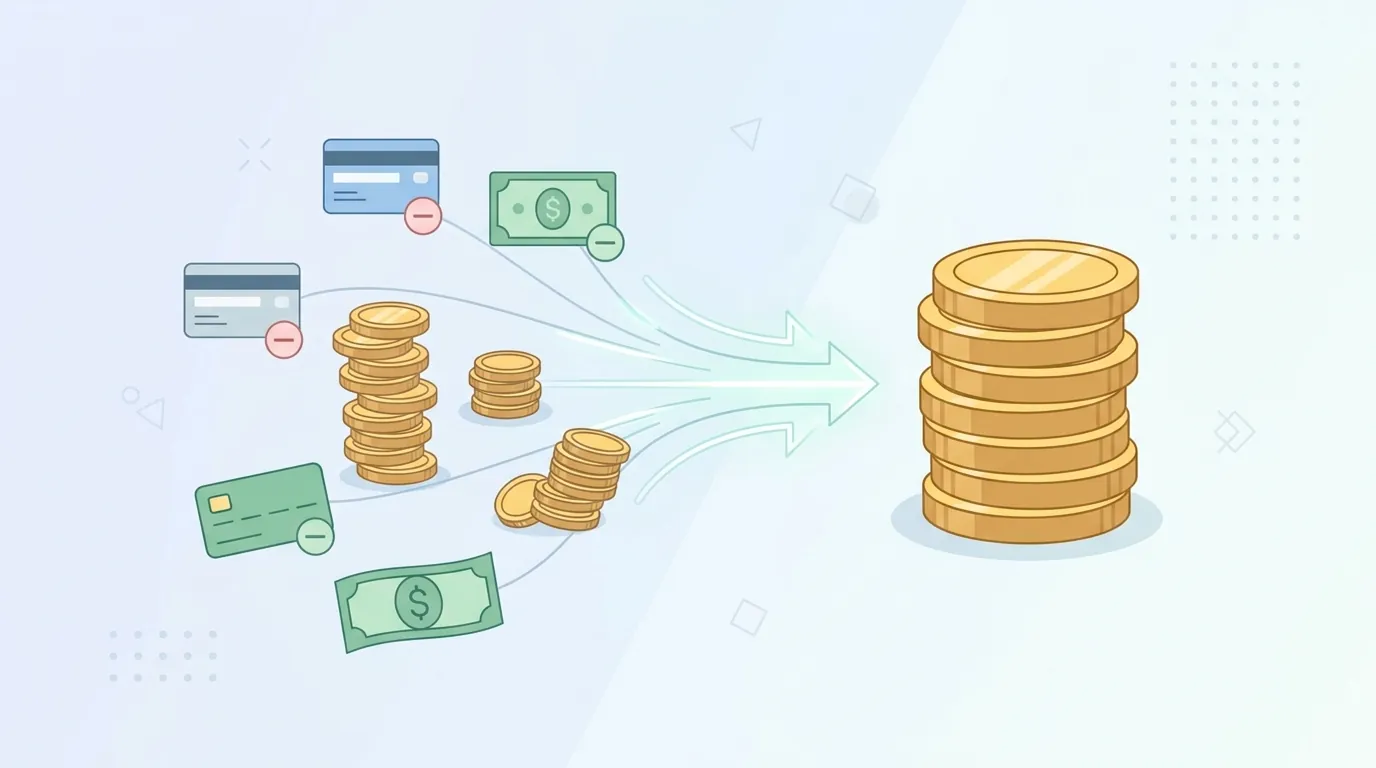
A debt consolidation loan combines some of those debts into a new loan, allowing the borrower to use the proceeds to pay off existing balances and then make payments on the new account.
The goal is generally to simplify repayment or reduce borrowing costs. But consolidation does not automatically make debt cheaper. A lower monthly payment can result from extending the repayment period, while fees, a higher interest rate, or continued credit-card spending can undermine the intended savings.
Understanding the loan structure, total cost, and behavior required after consolidation is therefore more important than simply obtaining a single monthly payment.
What Is a Debt Consolidation Loan?
A debt consolidation loan is generally a new installment loan used to pay off multiple existing debts.
For example, a borrower might have:
- $6,000 on one credit card
- $4,000 on another credit card
- $3,000 on a personal loan
Instead of making three separate debt payments, the borrower could potentially obtain a $13,000 consolidation loan and use the proceeds to pay those accounts.
The borrower would then make payments on the new loan according to its interest rate and repayment schedule.
The original accounts may be closed, paid off, or left open depending on the circumstances and the borrower's decisions.
Consolidation therefore changes the structure of the debt. It does not eliminate the underlying obligation.
Why Borrowers Consider Consolidation
There are several reasons someone might consider consolidating debt.
Simplifying Multiple Payments
Managing several accounts can increase the chance of missing a due date.
A single installment payment can make repayment easier to track.
Reducing Interest Costs
If the new loan has a lower interest rate than the debts being replaced, the borrower may reduce interest expenses.
This is particularly relevant when consolidating high-interest revolving debt.
Establishing a Fixed Repayment Schedule
Credit card balances do not have a predetermined payoff date if only minimum payments are made.
An installment consolidation loan generally has a defined term, such as three or five years.
That creates a clearer path toward paying the balance down to zero.
Changing the Monthly Payment
A consolidation loan may reduce the required monthly payment if it carries a lower rate or extends the repayment period.
But a lower payment does not necessarily mean lower total cost.
A Lower Payment Can Cost More
Consider a hypothetical $15,000 debt.
A borrower could potentially pay it off over three years at one interest rate or extend repayment to five years at a lower rate.
The five-year loan may produce a smaller monthly payment.
However, the borrower makes payments for an additional two years.
The total interest paid could therefore be higher despite the lower monthly obligation.
This is why borrowers should compare total repayment cost, not just monthly payments.
A useful comparison includes:
- Current balances
- Current interest rates
- Current monthly payments
- New loan amount
- New APR
- Origination fees
- New monthly payment
- Repayment period
- Total interest
- Total amount repaid
APR Matters More Than the Advertised Rate Alone
The annual percentage rate can provide a more useful comparison because it incorporates the interest rate and certain finance charges.
A consolidation loan advertised at a lower nominal interest rate may not provide meaningful savings if substantial fees are added.
Borrowers should also verify whether the advertised rate is available to their credit profile.
Lenders generally price personal loans based on factors such as credit history, income, existing debt, loan amount, and repayment term.
The rate displayed in an advertisement may therefore differ from the rate ultimately offered.
Secured vs. Unsecured Consolidation Loans
Many debt consolidation loans are unsecured.
An unsecured personal loan does not require the borrower to pledge a particular asset as collateral.
Other forms of consolidation can be secured.
A homeowner, for example, could potentially use a home equity loan or HELOC to pay other debts.
The difference is significant.
With unsecured borrowing, the lender does not generally have a direct security interest in a specific asset in the same way as a secured loan.
With secured borrowing, failure to repay can put the collateral at risk.
Using home equity to consolidate credit-card debt may reduce the interest rate, but it also changes the risk attached to the debt because the home secures the borrowing.
Credit Card Balance Transfers Are Another Option
A debt consolidation loan is not the only way to combine or restructure credit-card debt.
A balance transfer credit card may allow eligible borrowers to transfer existing balances to another card, sometimes with a promotional introductory APR.
However, balance transfers generally involve fees, promotional periods expire, and the standard APR after the promotional period can be substantially higher.
A borrower should calculate whether the balance can realistically be repaid before the promotional rate expires.
The comparison should include the transfer fee and the post-promotional interest rate, not simply the introductory offer.
Debt Consolidation vs. Debt Management
Debt consolidation and debt management plans are different.
A debt consolidation loan creates new debt that is used to pay existing obligations.
A debt management plan generally involves working with a credit counseling organization to establish a structured repayment arrangement for eligible unsecured debts.
The counseling organization may work with creditors on payment terms or interest rates, depending on the program.
The consumer generally makes payments through the counseling organization, which then distributes funds to creditors according to the plan.
A debt management plan does not necessarily involve taking out a new loan.
Debt Settlement Is Different Again
Debt settlement is another strategy that should not be confused with consolidation.
Debt settlement companies may seek to negotiate with creditors to settle debts for less than the full amount owed.
This can involve significant risks.
Consumers may be instructed to stop making payments while funds accumulate for settlement negotiations. That can result in additional interest, late fees, collection activity, credit damage, and potential legal consequences.
Forgiven debt can also have tax implications in some circumstances.
A debt consolidation loan, by contrast, generally involves paying the existing debts in full with the proceeds of new financing.
The two strategies have very different structures and risks.
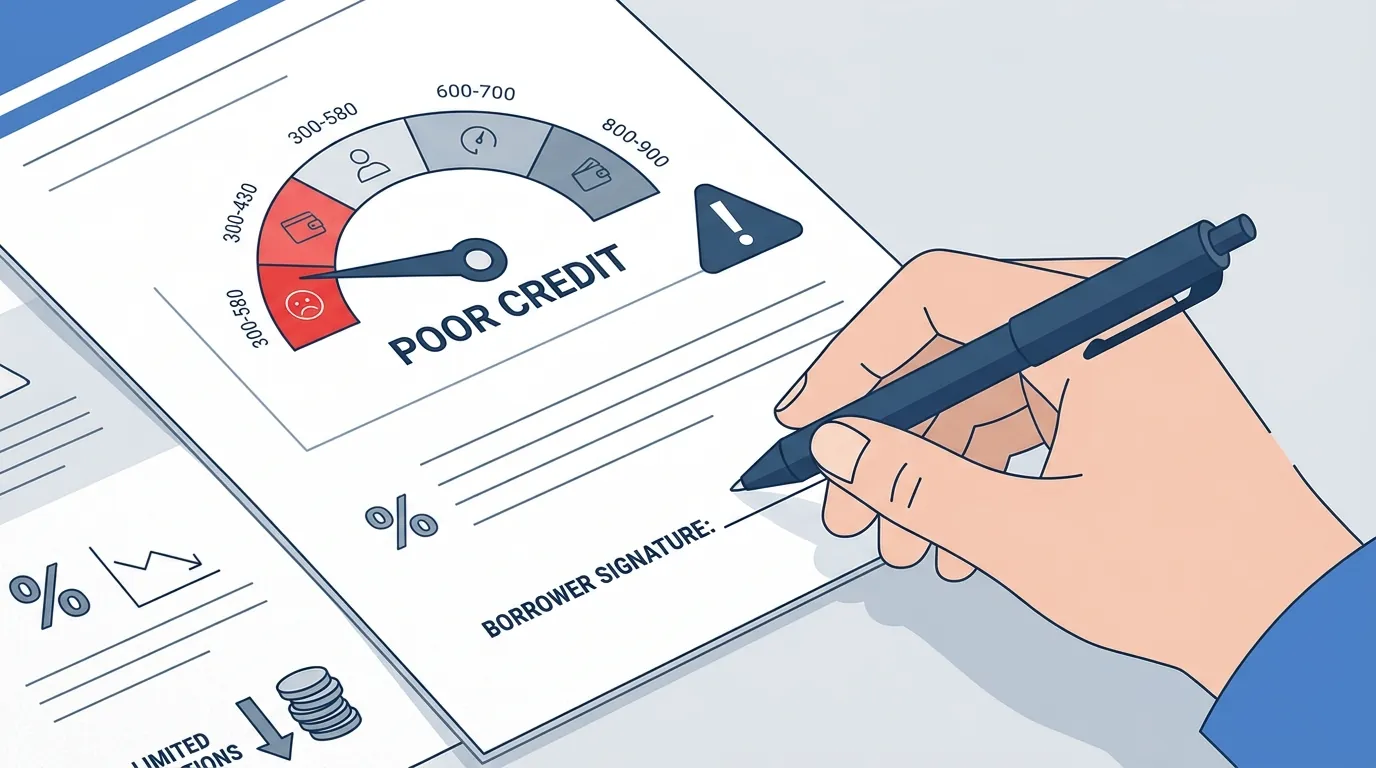
How Credit Scores Affect Consolidation Loans
Credit history can influence whether a borrower qualifies and the interest rate offered.
A borrower with strong credit may qualify for more favorable loan terms than someone with a limited or damaged credit history.
Applying for a loan can also result in a hard credit inquiry, depending on the lender and application process.
After consolidation, payment history remains important.
Replacing several accounts with one loan does not remove the need to make payments on time.
Borrowers should also understand what happens to the credit-card accounts that were paid off.
Closing accounts can affect available credit and the age of accounts, while leaving them open can create an opportunity to accumulate new balances.
The Risk of Reaccumulating Debt
One of the biggest problems with debt consolidation is what happens after the old balances are paid.
Suppose a borrower consolidates $15,000 in credit-card debt but continues using the cards without changing spending patterns.
The borrower could eventually have:
- The new consolidation loan
- New credit-card balances
- Additional interest charges
The result can be more debt rather than less.
Consolidation works as a restructuring strategy only when the borrower's overall debt trajectory changes.
That may require reducing expenses, increasing income, establishing a spending plan, or creating an emergency fund so unexpected expenses do not immediately go back onto credit cards.
How Much Should You Consolidate?
Not every debt necessarily needs to be included.
A borrower might have one low-rate loan and several high-interest credit cards.
Replacing the low-rate loan with a higher-rate consolidation loan would not necessarily make financial sense.
Before consolidating, borrowers can divide their obligations into categories:
High-interest debt
Debt carrying relatively expensive interest charges.
Low-interest debt
Existing financing that may already have favorable terms.
Fixed-term debt
Loans with a defined payoff schedule.
Revolving debt
Accounts such as credit cards where the balance can continue changing.
The purpose is to determine whether the new loan actually improves the overall structure.
Fees Can Reduce Potential Savings
A consolidation loan may include an origination fee.
For example, if a borrower needs $20,000 to pay existing balances and the lender charges a 5% origination fee, the financing cost could be $1,000.
Depending on the loan structure, the fee may be deducted from the proceeds or added to the amount financed.
If the borrower receives less than the amount needed to pay all existing debts, additional cash may be required.
Other possible costs can include:
- Late-payment fees
- Prepayment provisions
- Application fees
- Documentation charges
- Optional insurance or protection products
The loan agreement should be reviewed before accepting the financing.
Debt-to-Income Ratio Still Matters
Lenders may consider a borrower's debt-to-income ratio (DTI) when evaluating a consolidation loan.
DTI compares recurring monthly debt obligations with gross monthly income.
For example, someone earning $6,000 per month with $2,100 in qualifying monthly debt payments has a 35% DTI under a simple calculation.
Consolidation can sometimes change the monthly payment structure, but lenders may evaluate existing debts before the consolidation occurs.
Borrowers should not assume that taking out a consolidation loan automatically improves their ability to qualify for other credit.
When Consolidation May Not Solve the Problem
Consolidation may be less useful when the underlying debt is the result of an ongoing cash-flow deficit.
If monthly expenses consistently exceed income, moving the balances into another loan does not address the underlying shortfall.
Similarly, consolidation may not make sense when:
- The new interest rate is higher
- Fees consume most of the potential savings
- The repayment term is substantially longer
- The borrower is already struggling to make payments
- The borrower expects to continue using credit cards heavily
- The debt is already close to being paid off
- The new payment is unaffordable
The calculation should therefore focus on the borrower's complete financial situation.
Comparing a Consolidation Loan With Existing Debt
Before accepting an offer, create a side-by-side comparison.
| Factor | Existing Debt | Consolidation Loan |
|---|---|---|
| Total balance | Combined current balances | New loan amount |
| Interest rate | Rates may vary by account | New APR |
| Monthly payments | Multiple payments | Usually one payment |
| Repayment period | Varies | Defined loan term |
| Fees | Existing account fees | Origination and other fees |
| Secured? | Depends on debt | Usually unsecured for personal loans |
| Total remaining cost | Calculate | Calculate |
| Credit impact | Existing accounts | New application and account |
The objective is not simply to reduce the number of payments.
The new arrangement should ideally provide a measurable improvement in cost, predictability, or repayment structure without creating a larger long-term burden.
What to Check Before Applying
Borrowers can prepare by gathering:
- Current account balances
- Interest rates
- Minimum payments
- Remaining loan terms
- Credit reports
- Monthly income
- Recurring expenses
- Existing debt obligations
They can then estimate the amount required to pay the targeted accounts in full.
When comparing lenders, ask:
What APR would I receive?
Is the rate fixed?
What is the origination fee?
How much will I actually receive after fees?
What is the monthly payment?
How long is the repayment period?
What is the total amount I will repay?
Can I make additional payments without a penalty?
Are there any optional products included in the loan?
These questions make it easier to compare offers based on their full financial impact.
What Happens After Consolidation?
The period after consolidation is just as important as the application.
Once existing balances are paid, the borrower should monitor the accounts involved and confirm that the balances have been properly satisfied.
If credit cards remain open, the borrower can establish clear rules for their use.
Some people may choose to use one card for recurring expenses and pay the balance in full each month. Others may prefer to reduce the number of active accounts.
The appropriate approach depends on the individual's circumstances.
The critical point is avoiding a situation in which the borrower replaces old debt with a consolidation loan and then recreates the same balances.
A Practical Example
Imagine a borrower has $20,000 spread across three credit cards.
The weighted average interest rate is relatively high, and the borrower is making several monthly payments.
A lender offers a five-year personal loan with a lower APR and an origination fee.
The borrower should calculate:
- The current monthly interest cost.
- The total amount required to pay the cards.
- The consolidation loan's origination fee.
- The new monthly payment.
- The total interest over five years.
- The total amount repaid.
- Whether the borrower can stop adding new credit-card balances.
If the new loan produces lower overall borrowing costs while maintaining an affordable payment, consolidation may improve the debt structure.
If the lower payment exists primarily because the debt is being stretched over a much longer period, the financial benefit may be smaller than it initially appears.
Building a Debt Repayment Strategy
Debt consolidation is a financing tool, not a debt-erasure program.
Its value depends on the terms of the new loan and what happens afterward.
A borrower should compare the APR, fees, repayment period, total interest, and total amount repaid. Secured alternatives should receive additional scrutiny because they can place assets such as a home at risk.
It can also be useful to compare consolidation with alternatives such as a balance transfer, debt management plan, refinancing, or a more aggressive direct repayment strategy.
The right structure depends on the type of debt, the borrower's credit profile, income, cash flow, and ability to change the circumstances that created the debt.
When the numbers support it, a consolidation loan can turn several expensive or difficult-to-manage obligations into a more structured repayment plan. But the strongest analysis goes beyond the convenience of one monthly payment and examines whether the new arrangement actually reduces the cost and risk of becoming debt-free.