
Installment loans are one of the most common forms of consumer borrowing. Unlike revolving credit, where a borrower can repeatedly draw against an available credit line, an installment loan generally provides a specific amount upfront and requires repayment through scheduled installments over a defined period.
Personal loans, auto loans, mortgages, and some education loans can use an installment structure. The exact terms vary by product, but the basic concept is consistent: the borrower receives financing today and agrees to repay principal, interest, and applicable charges according to a predetermined schedule.
The monthly payment is often the number borrowers notice first. But payment size alone does not reveal the full cost of financing. Interest rate, APR, loan term, fees, amount financed, and repayment schedule all influence how much the borrower ultimately pays.
How Installment Loans Work
A personal installment loan is generally a closed-end loan. The lender provides the borrowed funds at the beginning, and the borrower repays the debt through fixed or scheduled payments over a specific period. The CFPB notes that personal installment loans can range from several hundred dollars to several thousand dollars or more, with repayment periods ranging from several months to several years.
A typical loan has several core components:
- Principal or amount borrowed
- Interest rate
- Annual percentage rate (APR)
- Loan term
- Number of payments
- Scheduled payment amount
- Fees and finance charges
- Total amount repaid
For example, a borrower might receive $15,000 and agree to repay it over 48 months. The payment schedule determines how much of each installment goes toward interest and how much reduces the outstanding principal.
As the principal declines, the interest portion of a standard amortizing payment generally declines as well.
Fixed Payments Provide Predictability
One of the main characteristics of many installment loans is a predictable payment schedule.
With a fixed-rate loan, the interest rate remains unchanged for the agreed period. This can make monthly budgeting easier because the scheduled principal-and-interest payment does not fluctuate with market rates.
The CFPB explains that fixed-rate financing keeps the interest rate unchanged over the life of the loan and allows borrowers to understand their expected monthly payments and total financing cost.
However, "fixed payment" does not necessarily mean every cost associated with a loan will remain identical in every situation. Certain loans can include taxes, insurance, optional products, or other charges outside the principal-and-interest payment.
Borrowers should therefore examine the complete payment obligation in the loan documents.
Loan Terms Determine More Than the Monthly Payment
The loan term is the length of time over which the borrower is scheduled to repay the debt.
A longer term generally spreads the principal over more payments. That can reduce the required monthly payment, but it can also increase the amount of interest paid over the life of the loan.
The CFPB specifically cautions consumers not to evaluate loans solely by monthly payment. Its guidance on auto loans notes that extending the term can reduce the monthly payment while increasing the total interest paid.
Consider an illustrative example.
A $20,000 loan at a fixed 10% interest rate could have a materially different monthly payment and total interest cost depending on whether it is repaid over three years, five years, or a longer period.
The longer repayment period may improve short-term cash flow while increasing the total financing expense.
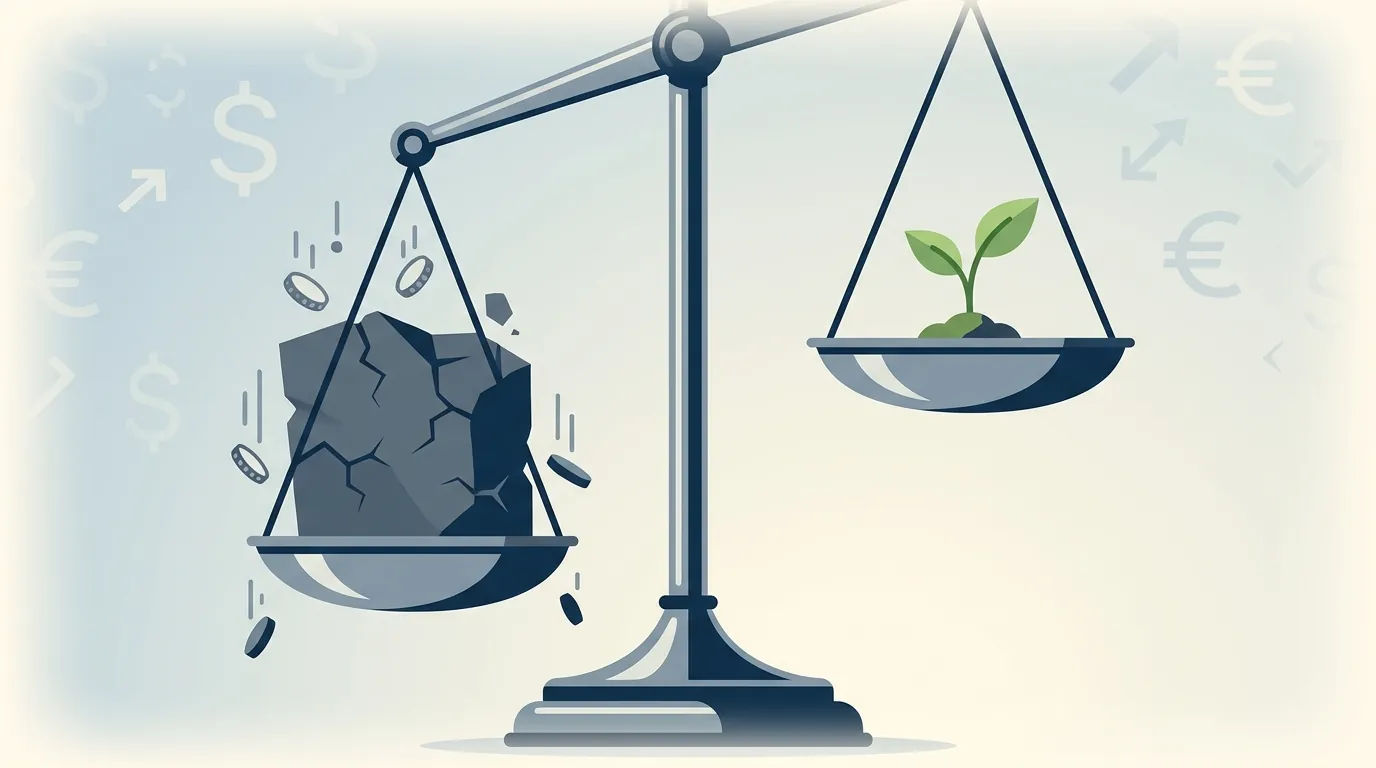
That is why term selection is ultimately a trade-off between monthly affordability and total borrowing cost.
Interest Rate Versus APR
The interest rate tells you the cost of borrowing the principal.
The annual percentage rate, or APR, provides a broader measure because it incorporates the interest rate plus certain fees associated with obtaining the loan.
The CFPB explains that APR is designed to provide a standardized way to compare the cost of different credit products.
This distinction matters when two loans have similar interest rates but different fees.
For example, suppose one lender offers a loan at 10% with no origination fee while another offers 9.5% but charges a substantial origination fee. Comparing only the stated interest rates could make the second offer appear cheaper.
Comparing APR and the full repayment terms provides more information.
Borrowers should still examine the individual fee structure because APR does not necessarily capture every expense that could arise during the life of a loan.
Fees Increase the Cost of Borrowing
Interest is not necessarily the only cost associated with an installment loan.
The CFPB identifies several fees that can appear with personal installment loans, including:
- Origination fees
- Documentation fees
- Optional credit insurance
- Optional disability insurance
- Non-filing insurance in certain secured loans
- Late fees
The specific charges depend on the lender and product.
An origination fee deserves particular attention because it can affect how much money the borrower actually receives.
For instance, a lender could approve a $10,000 loan but deduct an origination charge before distributing the proceeds. The borrower may therefore receive less cash while owing according to the loan's contractual principal and repayment structure.
The loan disclosure should explain how the fee is calculated and whether it is deducted from the proceeds or financed as part of the loan.
Total Cost Is More Important Than the Monthly Payment
A monthly payment answers only one question:
How much must I pay during each billing period?
The total cost answers a different question:
How much will this financing ultimately cost me if I make the scheduled payments?
The CFPB's required lending disclosures can include the amount financed, finance charge, annual percentage rate, and total of payments, depending on the credit product and applicable disclosure requirements.
These figures allow borrowers to compare offers more meaningfully.
Suppose one loan has a $400 monthly payment and another has a $350 monthly payment. The second loan is not automatically cheaper.
If the first loan lasts three years and the second lasts five years, the lower monthly payment could result in substantially more total interest.
The number of payments must therefore be considered alongside the payment amount.
Amortization Explains Where Each Payment Goes
Installment loans are commonly amortized.
Amortization means the scheduled payments are structured to gradually reduce the outstanding principal while also covering interest.
Early in the loan, a larger portion of the payment can go toward interest because the outstanding principal is higher.
As the balance declines, the interest component generally becomes smaller and more of the scheduled payment goes toward principal.
This is why borrowers can make regular payments without seeing the principal fall by the full amount of every payment.
An amortization schedule can show the allocation of each payment and the remaining balance after each installment.
Shorter Terms Usually Increase Monthly Payments
A shorter loan term generally requires the borrower to repay principal more quickly.
That usually results in a higher monthly payment.
The trade-off is that the loan may accumulate less interest because the principal remains outstanding for a shorter period.
The CFPB illustrates this relationship in its guidance on loan-term comparisons: shorter terms can produce higher payments but lower total financing costs, while longer terms can produce lower payments but higher total costs.
The appropriate term therefore depends on the borrower's cash flow and the cost difference between available options.
A borrower should avoid selecting a long term solely because the monthly payment looks more comfortable without calculating the additional interest.
Fixed-Rate and Variable-Rate Installment Loans
Not every installment loan has a fixed interest rate.
Some loans can have variable or adjustable rates.
With a fixed-rate loan, the interest rate remains unchanged according to the contract.
With a variable-rate loan, the rate can change according to the applicable terms, potentially causing the payment or interest cost to change.
The CFPB explains that fixed-rate financing provides greater payment predictability, while adjustable-rate structures can result in changing payments as the interest rate changes.
Borrowers considering variable-rate financing should understand:
- The initial rate
- The reference index
- How often the rate can change
- Rate caps
- Payment changes
- When adjustments begin
- Whether there is a minimum or maximum rate
These features can be particularly important when the repayment period is several years.
Creditworthiness Affects Loan Terms
Lenders generally evaluate several characteristics when determining whether to approve an installment loan and what terms to offer.
The CFPB identifies factors that may include:
- Credit score and credit reports
- Income
- Existing debts
- Loan amount
- Loan duration
- Applicable legal limits
- Other financial information, such as bank-account activity
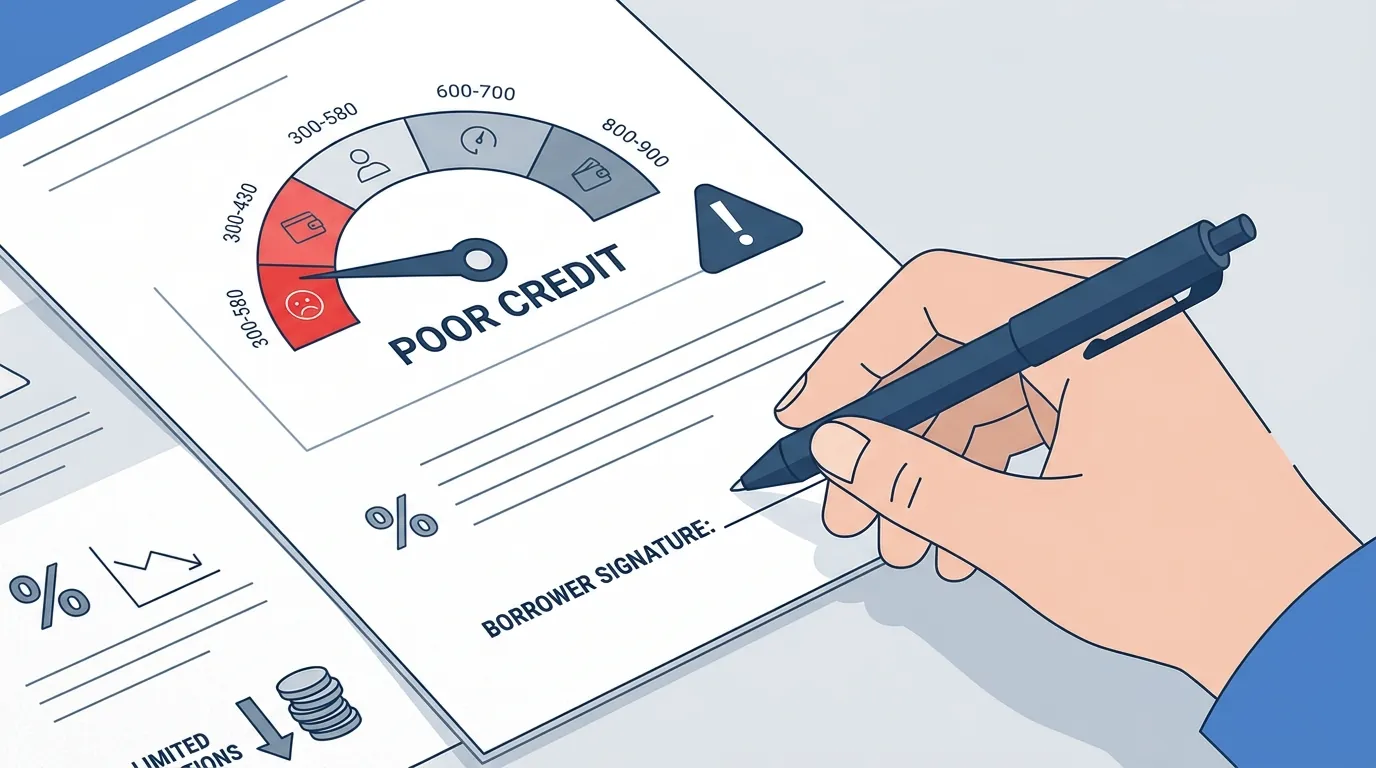
A borrower with stronger credit may receive different pricing or repayment terms from someone with a more limited credit history.
This is one reason it can be useful to compare multiple lenders rather than assuming the first available offer represents the market's available terms.
Personal Loans Versus Secured Installment Loans
Installment loans can be either secured or unsecured.
A secured loan is backed by collateral. An auto loan, for example, is generally secured by the vehicle.
An unsecured personal loan typically does not require a specific asset as collateral.
The distinction can affect eligibility, pricing, and the consequences of default.
If a secured borrower fails to meet the loan obligations, the lender may have rights against the collateral according to the agreement and applicable law.
An unsecured loan does not attach the same specific collateral, although the lender can still pursue collection and other remedies permitted by the agreement and law.
Installment Loans Can Affect Credit
An installment loan can become part of a consumer's credit history when the lender reports the account to consumer reporting companies.
The CFPB notes that personal lenders may report payments to one or more of the three major consumer reporting companies. It also warns that missed payments can negatively affect credit reports and scores.
A consistent record of on-time payments can therefore become part of a consumer's broader credit history.
At the same time, taking on a new loan increases the borrower's outstanding debt and creates another monthly obligation.
The effect on a particular credit score depends on the overall credit profile and scoring model.
Prepayment Can Change the Total Cost
Some borrowers pay an installment loan ahead of schedule.
If the loan permits early repayment without a significant penalty, paying principal faster can reduce the amount of future interest that would otherwise accrue.
However, borrowers should check the contract before making additional payments.
The CFPB notes that loan disclosures can include information about whether prepayment is permitted without a penalty.
A borrower should also determine how extra payments are applied.
An additional payment may be applied differently depending on the lender's procedures and the loan agreement. Understanding whether the payment reduces principal immediately can help the borrower estimate the effect on the repayment schedule.
Compare Loans on Several Dimensions
When evaluating installment-loan offers, consider the complete package rather than focusing on one number.
Start with the amount financed.
Then compare the APR and interest rate.
Next examine the loan term and number of payments.
After that, review the monthly payment.
Finally, calculate the total of payments and applicable fees.
The CFPB recommends looking at APR, interest rate, loan length, amount financed, and monthly payment when comparing loan offers.
This approach can expose differences that are hidden when lenders advertise only a monthly payment.
Watch for Features That Change the Cost
Borrowers should also review the loan agreement for provisions that could create additional costs.
Depending on the product, these may include:
- Late-payment fees
- Prepayment penalties
- Variable-rate adjustments
- Deferred-payment periods
- Optional insurance
- Origination charges
- Balloon payments
- Automatic-payment requirements
- Collateral requirements
The presence of a particular feature does not automatically make a loan inappropriate. The important issue is understanding what it means financially.
For example, a deferred-payment period may temporarily reduce required payments while interest continues to accrue under the applicable terms.
What Happens if You Miss Payments?
An installment loan does not disappear when a borrower cannot make a scheduled payment.
A missed payment can result in late charges and may eventually lead to collection activity or negative credit reporting.
The CFPB advises borrowers who are having difficulty making payments to contact the lender promptly and ask about available options, which can include deferment, forbearance, or a payment arrangement depending on the loan.
Waiting until an account is severely delinquent can reduce the number of options available.
Borrowers should also avoid taking out another expensive loan simply to make payments on an existing loan unless the refinancing actually improves the overall financial position.
A Simple Way to Evaluate an Installment Loan
Before signing an agreement, ask five questions:
How much money will I actually receive?
This accounts for deductions such as origination fees.
What is the APR?
Use it to compare the cost of financing across offers.
How long will I make payments?
The term determines how quickly the principal must be repaid.
How much will I pay in total?
Calculate the sum of scheduled payments and applicable charges.
Can my financial situation comfortably support the payment?
A loan can be mathematically affordable on paper while creating problems if income is unstable or other expenses are likely to rise.
The Role of Installment Loans in Personal Finance
Installment loans can be useful because they convert a large financing need into a predictable repayment schedule.
They can finance purchases, consolidate debt, cover certain unexpected expenses, or support major financial transactions.
But predictable payments do not necessarily mean inexpensive borrowing.
The total cost depends on the amount borrowed, interest rate, APR, term, fees, and repayment behavior.
A longer term can make a payment easier to manage while increasing total interest. A shorter term can reduce total financing costs while demanding more cash each month.
The most useful comparison is therefore not simply "Which loan has the lowest payment?"
It is:
"Which financing structure provides the amount I need at a total cost and repayment schedule that fits my financial situation?"
Understanding fixed payments, loan terms, APR, fees, and total repayment gives borrowers the information needed to answer that question before committing to a multi-year financial obligation.
References
- Consumer Financial Protection Bureau — What Is a Personal Installment Loan?
- Consumer Financial Protection Bureau — Do Personal Installment Loans Have Fees?
- Consumer Financial Protection Bureau — What Is the Difference Between a Loan Interest Rate and the APR?
- Consumer Financial Protection Bureau — How Do I Compare Auto Loan Offers?
- Consumer Financial Protection Bureau — What Should I Know Before I Finalize a Car or Auto Loan?
- Consumer Financial Protection Bureau — What Is a Truth in Lending Disclosure for an Auto Loan?
- Consumer Financial Protection Bureau — Understand the Different Kinds of Loans Available