Homeowners who have built substantial equity may have access to another source of financing beyond a traditional personal loan or credit card: the value accumulated in their property.
Two common ways to borrow against that equity are a home equity loan and a home equity line of credit (HELOC). Both use the home as collateral, but their structures are significantly different.
A home equity loan generally provides a lump sum with a defined repayment schedule. A HELOC provides a revolving credit line that allows the borrower to draw money as needed, usually during a specified draw period.
The distinction affects interest rates, monthly payments, access to funds, repayment, and the risks associated with borrowing against a home.
What Home Equity Represents
Home equity is broadly the difference between the market value of a home and the outstanding mortgage debt secured by it.
For example, if a home is worth $500,000 and the homeowner owes $300,000 on the mortgage, the homeowner has approximately $200,000 in equity before considering other liens and transaction costs.
Equity does not automatically mean that a homeowner can borrow the entire amount.
Lenders generally limit how much can be borrowed based on factors such as the home's value, the existing mortgage balance, the borrower's income, credit profile, and the lender's maximum combined loan-to-value requirements.
The amount available can therefore be substantially lower than the homeowner's total equity.
A Home Equity Loan Provides a Lump Sum
A home equity loan works similarly to an installment loan.
The borrower receives a specific amount upfront and repays it through scheduled payments over a defined term.
For example, a homeowner might borrow $50,000 to finance a major renovation. The lender provides the funds, and the borrower makes payments according to the loan agreement.
Home equity loans often have fixed interest rates, although product structures can vary by lender.
A fixed rate provides greater payment predictability because the interest rate does not change during the applicable loan term.
This can make a home equity loan easier to budget for when the borrower already knows the amount of money needed.
A HELOC Works More Like a Credit Line
A HELOC is a revolving credit facility secured by the home.
Instead of receiving the entire approved amount at once, the borrower generally receives a credit limit and can draw funds during a designated period.
For example, a homeowner might have a $75,000 HELOC and initially use only $20,000. Interest would generally be based on the amount actually borrowed rather than the entire unused credit limit.
The borrower may later draw additional funds, subject to the terms of the agreement.
This structure can be useful when expenses are uncertain or occur over time.
A renovation project is one example. Costs may arise in stages, making a revolving credit line potentially more flexible than borrowing the entire amount at the beginning.
Draw Periods and Repayment Periods
HELOCs commonly have two phases.
The first is the draw period, during which the borrower can access available credit according to the agreement.
The second is the repayment period, when the borrower generally can no longer make new draws and must repay the outstanding balance.
The exact structure varies by lender and product.
Payments can also change when the account transitions from the draw period into repayment.
This is an important consideration because a payment that appears manageable during the early period can increase later when the repayment structure changes.
Homeowners should understand the entire timeline before opening a HELOC rather than evaluating it only on the initial payment.
Interest Rates Are a Major Difference
One of the most important distinctions is how the interest rate is structured.
Home equity loans commonly offer fixed-rate structures, although borrowers should verify the specific product terms.
HELOCs frequently have variable interest rates.
A variable rate can rise or fall as the underlying benchmark or index changes according to the terms of the agreement.
That means a borrower with a HELOC can experience changing monthly payments even if the outstanding balance remains unchanged.
For someone who values predictable payments, a fixed-rate home equity loan can provide a different budgeting experience from a variable-rate HELOC.
For someone who values flexible access to funds, the HELOC's revolving structure may be more important.
How Much Can You Borrow?
Lenders generally consider the relationship between the home's value and the total debt secured by the property.
This is often discussed using the combined loan-to-value ratio, or CLTV.
For example, assume:
- Home value: $500,000
- Existing mortgage: $300,000
- Home equity product: $50,000
Total secured debt would be $350,000, producing a 70% combined loan-to-value ratio.
A lender may establish its own maximum CLTV based on the product, borrower's financial profile, property type, and other factors.
The calculation is important because the borrower may have $200,000 in equity but still be unable to borrow anywhere close to that amount.
Your Existing Mortgage Remains
Taking out a home equity loan or HELOC generally does not replace the primary mortgage.
Instead, the new financing becomes additional debt secured by the property.
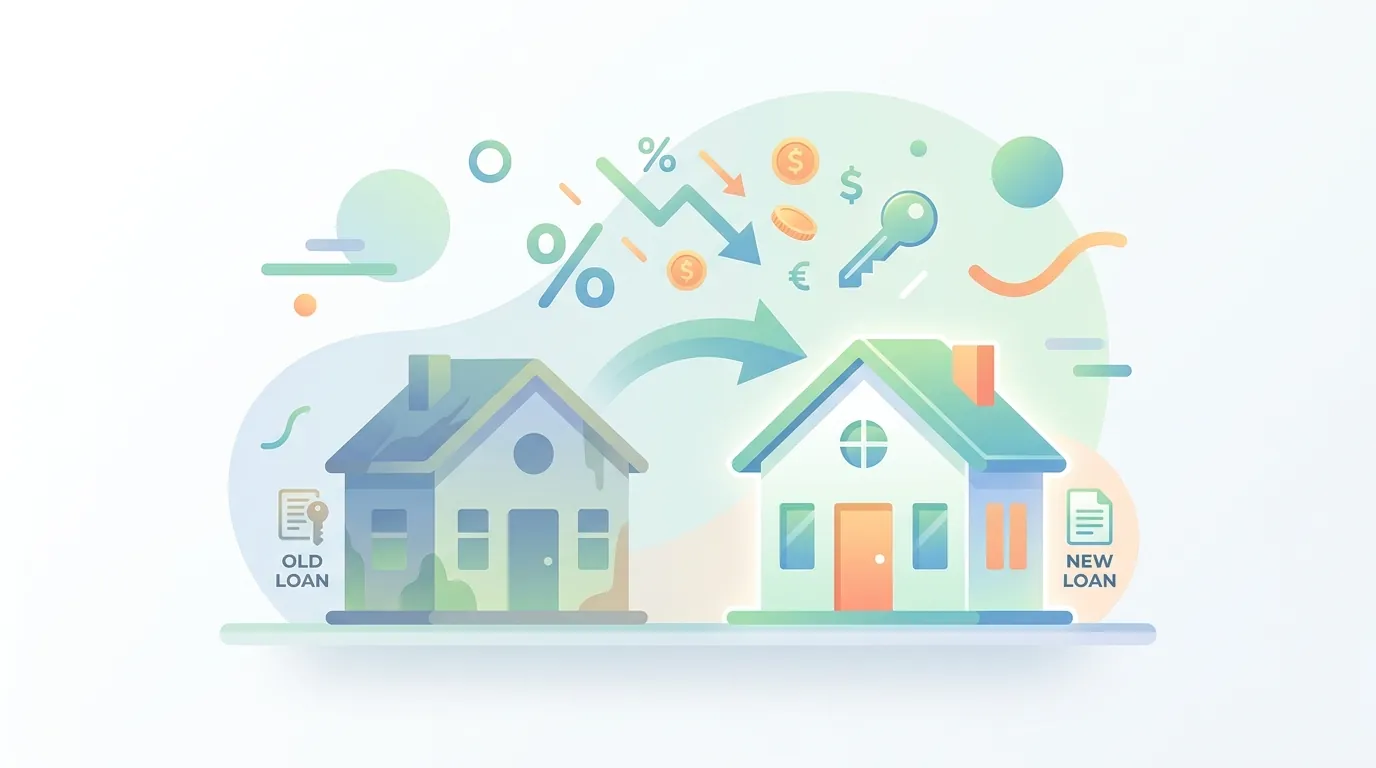
This creates a distinction from mortgage refinancing.
With a refinance, the existing mortgage is generally replaced by a new mortgage.
With a home equity loan or HELOC, the original mortgage usually remains in place while the new credit is added alongside it.
That can make a home equity product attractive when the homeowner has an existing mortgage with favorable terms and does not want to replace it.
However, it also means the homeowner now has another payment obligation.
The Home Is Collateral
The most important risk to understand is that these are secured forms of borrowing.
The home serves as collateral for the debt.
If the borrower fails to meet the loan obligations, the lender may have legal remedies that can ultimately put the property at risk.
This makes home equity borrowing fundamentally different from many unsecured personal loans.
Using home equity to finance discretionary spending therefore requires particular caution.
The fact that a homeowner has available equity does not mean borrowing against it is automatically appropriate.
Home Equity Loan vs. HELOC
| Feature | Home Equity Loan | HELOC |
|---|---|---|
| Funding structure | Lump sum | Revolving credit line |
| Access to money | Generally received upfront | Draw as needed |
| Interest rate | Often fixed | Frequently variable |
| Payment predictability | Generally higher | Can change |
| Reusable credit | Usually no | Generally yes during draw period |
| Best suited to | Known financing amount | Expenses occurring over time |
| Existing mortgage | Usually remains | Usually remains |
| Collateral | Home | Home |
| Interest cost | Based on loan balance | Based on amount drawn, subject to terms |
The actual terms can vary considerably among lenders, so borrowers should review the specific loan agreement rather than assuming every product follows the same structure.
Closing Costs and Fees
Neither type of financing should be evaluated solely by its interest rate.
Potential costs can include:
- Application fees
- Origination charges
- Appraisal fees
- Title services
- Recording fees
- Annual or maintenance fees
- Transaction fees
- Early-termination fees
- Closing costs
Some lenders advertise low-cost or no-closing-cost home equity products, but borrowers should examine whether other fees or a higher interest rate compensate for those waived charges.
The CFPB recommends reviewing the terms and costs of home equity products carefully, including the consequences of failing to repay the debt. (consumerfinance.gov)
Using a HELOC for a Large Project
HELOCs can be useful when the exact cost of a project is uncertain.
Consider a major home renovation.
The homeowner may initially need $15,000 for design and initial construction, followed by another $25,000 several months later and additional funds after that.
With a HELOC, the homeowner may be able to draw funds as expenses occur rather than borrowing the full estimated project cost on day one.
But flexibility can come with uncertainty.
If the HELOC has a variable rate, future interest costs can change. A borrower who repeatedly draws from the line can also lose track of the growing balance.
A spending limit and repayment plan can therefore be useful even when the lender provides a much larger credit line.
Using a Home Equity Loan for a Known Expense
A home equity loan can make more sense structurally when the borrower knows exactly how much financing is required.
Suppose a homeowner receives a contractor estimate of $60,000 for a renovation and has sufficient cash reserves for other household expenses.
A fixed-rate home equity loan could provide the entire amount upfront with a defined payment schedule.
The borrower knows how much debt was created and how long repayment is expected to take.
The trade-off is reduced flexibility. If the project ultimately costs $70,000, the borrower may need to apply for additional financing rather than simply drawing another $10,000 from an existing revolving line.
Tax Treatment Requires Attention
Interest on home equity debt is not automatically deductible simply because the debt is secured by a house.
IRS rules generally allow a deduction for interest on certain home equity debt when the borrowed funds are used to buy, build, or substantially improve the home securing the debt, subject to applicable limits and requirements. (irs.gov)
Using home equity proceeds for unrelated expenses can produce a different tax result.
For example, borrowing against a house to pay credit card balances does not automatically make the resulting interest deductible as mortgage interest.
Homeowners should maintain records showing how borrowed funds were used and review current IRS guidance when determining whether a deduction is available.
HELOC Payments Can Change
Variable-rate borrowing creates a specific budgeting issue.
If the rate rises, the interest charged on an outstanding HELOC balance can increase.
The effect can be particularly noticeable when the balance is large.
Some HELOC agreements may also have different payment structures during the draw and repayment periods. A borrower who has become accustomed to relatively low initial payments may face a substantially different payment later.
Before signing, homeowners should ask the lender to explain:
- The current interest rate
- The index
- The margin
- Rate-adjustment frequency
- Periodic caps
- Lifetime caps
- Minimum payment calculation
- Draw-period length
- Repayment-period length
- Any balloon-payment provisions
Understanding the maximum potential payment is more useful than looking only at today's rate.
How a Home Equity Loan Affects Refinancing
Adding a home equity loan or HELOC can also affect future mortgage refinancing.
The second lien must generally be addressed when refinancing the primary mortgage. Depending on the lender and transaction, the home equity debt may need to be paid off, subordinated, or otherwise handled as part of the refinance.
That means homeowners considering both a home equity product and a future mortgage refinance should understand how the two transactions could interact.
Alternatives to Home Equity Borrowing
Homeowners have other ways to finance major expenses.
Depending on the purpose, alternatives can include:
- Cash savings
- Personal loans
- Credit cards
- Construction or renovation financing
- Mortgage refinancing
- Government-backed improvement programs
- Contractor financing
- Securities-backed lending for eligible investors
Each option has a different combination of interest rate, collateral requirements, repayment period, fees, and tax treatment.
A home equity loan may offer a lower borrowing rate than some unsecured products because the debt is secured by the property, but that lower rate comes with the additional consequence of putting home equity at risk.
Questions to Ask Before Borrowing
Before applying for either product, a homeowner can review several questions.
How much do I actually need to borrow?
Will I need the money all at once or gradually?
Can I comfortably make the payment if interest rates rise?
What happens when the HELOC draw period ends?
How much equity will remain after borrowing?
What fees will I pay at closing and throughout the loan?
How does the new debt affect my total monthly obligations?
Could this debt affect a future mortgage refinance?
What happens if I sell the home?
Is the intended use of the funds eligible for any potential tax deduction?
These questions can reveal whether the financing structure matches the actual purpose of the borrowing.
Choosing Between a HELOC and Home Equity Loan
The central difference is relatively straightforward.
A home equity loan generally converts a portion of available equity into a lump-sum installment loan with a defined repayment schedule.
A HELOC generally provides a revolving credit line that allows the homeowner to borrow repeatedly during a specified draw period.
The decision becomes more complicated when interest rates, fees, tax considerations, repayment periods, and future plans are included.
A homeowner who knows exactly how much money is needed may value a predictable payment structure. Someone facing expenses that occur over several months may value the flexibility of a credit line.
Neither structure eliminates the underlying risk: the borrowing is secured by the home.
That is why the most important calculation is not simply how much equity is available. It is whether the additional debt serves a clear financial purpose and remains affordable under less favorable circumstances.
References
- Consumer Financial Protection Bureau — What Is a Home Equity Loan?
- Consumer Financial Protection Bureau — Home Equity Lines of Credit
- Consumer Financial Protection Bureau — What You Should Know About Home Equity Lines of Credit
- Federal Trade Commission — Home Equity Loans and Home Equity Lines of Credit
- IRS — Publication 936: Home Mortgage Interest Deduction