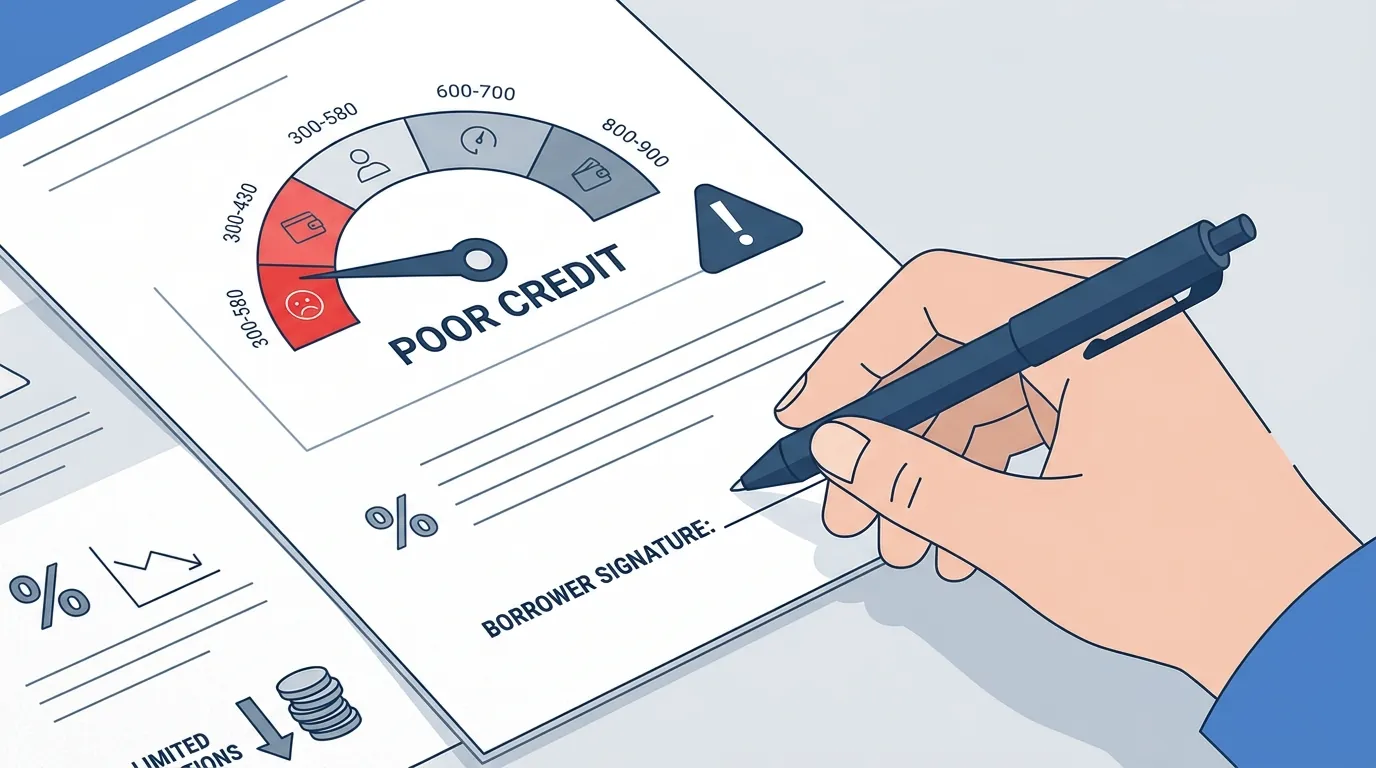

Lower-middle-market companies often reach a point where traditional senior debt is not sufficient to fund an acquisition, recapitalization, ownership transition, expansion, or major investment. At the same time, issuing additional common equity can dilute existing owners more than management or sponsors want.
Mezzanine debt and subordinated financing occupy the space between senior secured borrowing and common equity. These structures can provide additional capital without requiring the borrower to finance the entire transaction with senior bank debt or immediately sell a larger ownership stake.
The tradeoff is cost and complexity. Because mezzanine investors generally rank behind senior lenders in repayment priority, they assume greater credit risk. That risk can be reflected through higher interest rates, fees, payment structures, warrants, conversion rights, or other equity-linked features. The Office of the Comptroller of the Currency (OCC) describes mezzanine financing as a hybrid of debt and equity that is generally subordinated to senior lenders.
For lower-middle-market businesses, understanding where this capital fits within the overall capital structure is essential before considering a transaction.
Where Mezzanine Financing Fits
A company's capital structure can contain several layers of financing.
A simplified structure might look like:
- Senior secured debt
- Mezzanine or subordinated debt
- Preferred equity
- Common equity
Senior lenders generally have priority over subordinated lenders in repayment. Equity holders sit below debt holders and typically absorb losses before creditors.
Mezzanine financing therefore occupies an intermediate position.
The OCC describes mezzanine financing as capital that has less seniority than senior debt but greater standing than equity investors.
This position can allow a company to raise more capital than a senior lender would provide on its own, but the additional layer comes at a higher cost.
What Is Subordinated Debt?
Subordinated debt is debt that contractually ranks behind specified senior obligations.
If a company encounters financial distress or enters a liquidation process, senior creditors generally have priority under the applicable agreements. Subordinated creditors may recover only after senior claims are satisfied according to the governing documents.
The exact ranking depends on the intercreditor agreement, loan documents, collateral arrangements, guarantees, and applicable law.
Subordination can take several forms. A mezzanine lender might have a junior lien on collateral, or the debt may be unsecured but contractually subordinated to senior financing.
The distinction matters because subordinated does not necessarily mean unsecured. A lender can have collateral while still ranking behind another creditor.
Why Companies Use Mezzanine Capital
A company may consider mezzanine financing when it needs more capital than traditional senior lenders are willing to provide.
Common uses include:
- Acquisitions
- Management buyouts
- Ownership transitions
- Business recapitalizations
- Expansion
- Capital expenditures
- Refinancing
- Growth initiatives
- Sponsor-backed transactions
- Dividend recapitalizations, where permitted
The OCC notes that leveraged finance can support acquisitions, recapitalizations, refinancings, equity buyouts, and business or product-line expansion.
For an established lower-middle-market company with predictable cash flow, mezzanine capital can potentially increase available transaction financing without requiring the owners to finance the entire funding gap with new equity.
A Typical Capital Structure
Consider a hypothetical acquisition requiring $30 million.
A simplified financing structure could be:
| Capital Source | Amount | Position |
|---|---|---|
| Senior term loan | $15 million | Senior |
| Mezzanine debt | $7 million | Subordinated |
| Sponsor equity | $8 million | Equity |
| Total | $30 million |
Without the mezzanine layer, the sponsor might need to contribute significantly more equity.
Adding subordinated debt can reduce the amount of equity required, but it also creates another contractual payment obligation.
The economic question is therefore not simply whether mezzanine financing increases available capital. It is whether the company's expected cash flow can support the additional financing while still leaving an adequate cushion for weaker operating periods.
How Mezzanine Debt Is Priced
Mezzanine financing generally carries a higher cost than senior debt because the lender accepts greater risk.
The return can consist of several components:
- Cash interest
- PIK interest
- Origination or closing fees
- Exit fees
- Warrants
- Equity conversion rights
- Other contractual economics
Cash interest requires periodic payments.
PIK, or payment-in-kind, interest is added to the outstanding balance rather than paid entirely in cash at the time it accrues.
For example, a $5 million mezzanine loan with a PIK component could accumulate additional principal over time if the PIK interest is capitalized.
That can preserve cash flow during a growth period, but the debt balance increases.
The OCC's historical descriptions of mezzanine structures illustrate that these investments can combine subordinated debt with equity upside such as warrants.
Cash Interest vs. PIK Interest
The distinction between cash-pay and PIK interest is particularly important.
Suppose a company borrows $10 million.
Under a hypothetical structure:
- 8% cash interest
- 4% PIK interest
The company would pay $800,000 of annual cash interest initially, while another $400,000 would be added to the outstanding balance, assuming the PIK component compounds according to the agreement.
This structure can preserve cash for operations or expansion, but the debt does not remain static.
PIK provisions should therefore be evaluated using projected debt balances rather than only the initial principal amount.
Warrants and Equity Participation
Some mezzanine transactions include warrants or other equity-linked rights.
A warrant can give the financing provider the right to purchase equity at specified terms.
This creates potential upside for the lender if the company's value increases.
For the business owner, however, equity-linked provisions can create dilution or an additional economic cost when the investment is eventually realized.
The economic cost of a mezzanine transaction therefore cannot always be measured by the stated interest rate alone.
A company should evaluate:
Cash interest + PIK interest + fees + equity participation + repayment obligations
when calculating the effective cost of capital.
Mezzanine Debt vs. Senior Debt
Senior debt generally has priority over mezzanine debt.
A senior lender may have:
- First-priority security interests
- More restrictive financial covenants
- Lower pricing
- Greater repayment priority
Mezzanine financing may provide:
- Higher leverage
- Greater structural flexibility
- Subordinated repayment priority
- Fewer traditional collateral requirements in some structures
- Higher pricing
- Equity-linked economics
The OCC notes that leveraged transactions commonly place senior debt ahead of mezzanine financing within the capital structure.
A company should therefore understand the requirements imposed by both financing layers.
Mezzanine Debt vs. Equity
Equity does not generally require scheduled principal repayment in the same way debt does.
That can make equity attractive when a company's cash flow is uncertain.
But raising equity can reduce existing owners' percentage ownership and economic participation.
Mezzanine financing can provide additional capital while preserving more ownership for existing shareholders.
The tradeoff is that debt creates contractual repayment obligations.
A company that chooses mezzanine financing instead of additional equity is effectively trading some potential ownership dilution for greater financial leverage and fixed or scheduled financing obligations.
Underwriting a Lower-Middle-Market Company
Mezzanine lenders generally need a detailed understanding of the company's ability to service the combined capital structure.
Relevant factors can include:
- Historical revenue
- EBITDA
- Free cash flow
- Customer concentration
- Industry conditions
- Management quality
- Competitive position
- Existing leverage
- Working-capital requirements
- Capital expenditure needs
- Acquisition pipeline
- Senior debt terms
- Exit strategy
Cash flow is particularly important because the company's operations generally provide the primary source of repayment.
The OCC notes that commercial lenders should analyze current and expected business cash flows across a reasonable range of future conditions.
For a leveraged company, the analysis becomes even more important because additional debt reduces the amount of financial flexibility available when earnings decline.
Debt-Service Capacity
A lender may examine several leverage and coverage measurements.
Common measures include:
Debt-to-EBITDA
This compares total debt with earnings before interest, taxes, depreciation, and amortization.
Interest coverage
This examines how comfortably operating earnings can cover interest obligations.
Fixed-charge coverage
This can incorporate interest and other recurring fixed financial obligations.
The precise definitions vary between financing agreements.
For example, a company with $50 million of debt and $10 million of EBITDA has a simplified debt-to-EBITDA ratio of:
5.0×
If EBITDA falls to $7 million while debt remains unchanged, leverage increases to approximately:
7.1×
The example demonstrates why declining earnings can quickly increase financial pressure even without taking on additional borrowing.
Financial Covenants
Mezzanine financing can include financial and operating covenants.
Depending on the transaction, covenants may address:
- Maximum leverage
- Minimum interest coverage
- Minimum liquidity
- Additional indebtedness
- Asset sales
- Acquisitions
- Dividends
- Capital expenditures
- Related-party transactions
- Ownership changes
Covenants can give lenders protections if the company's financial condition deteriorates.
For the borrower, they can restrict strategic flexibility.
A company should therefore understand not only the interest rate but also the circumstances under which a covenant breach could occur and what remedies the lender may have.
Intercreditor Agreements
When senior and mezzanine lenders participate in the same transaction, the relationship between them is typically governed by an intercreditor agreement.
This document can establish:
- Payment priority
- Collateral rights
- Standstill periods
- Enforcement rights
- Cure rights
- Voting rights
- Amendment restrictions
- Bankruptcy procedures
- Payment blockage provisions
These provisions can become particularly important during financial distress.
For example, a mezzanine lender may be restricted from enforcing remedies immediately after a default because the senior lender has priority and a contractual standstill period.
The specific terms vary substantially between transactions.
Refinancing and Exit Risk
Mezzanine debt often depends on an eventual repayment or refinancing event.
Potential repayment sources can include:
- Operating cash flow
- Sale of the company
- Refinancing with senior debt
- Sale of assets
- Sponsor equity contribution
- Recapitalization
This creates refinancing risk.
A company may be performing adequately while still facing a problem if the mezzanine maturity arrives before suitable refinancing becomes available.
Interest rates, company performance, leverage levels, lender appetite, and valuation conditions can all affect refinancing options.
An exit strategy should therefore be considered before the financing is finalized rather than when maturity is approaching.
Mezzanine Financing for Acquisitions
Acquisition financing is one of the areas where mezzanine debt can play an important role.
Consider a hypothetical company acquisition valued at $40 million.
The buyer could potentially finance the transaction with:
- $20 million senior debt
- $10 million mezzanine financing
- $10 million sponsor equity
The mezzanine layer increases total debt financing while reducing the equity contribution.
If the acquired company produces stable cash flow and grows over time, the additional leverage may allow the sponsor to retain a larger ownership position.
But if earnings fall materially, the same leverage can increase pressure on the business.
The financing therefore needs to be tested under multiple operating scenarios rather than only the base-case projection.
Stress Testing the Capital Structure
A financial model should examine what happens if assumptions deteriorate.
For example:
| Scenario | EBITDA | Debt | Debt / EBITDA |
|---|---|---|---|
| Base case | $10M | $50M | 5.0× |
| 10% decline | $9M | $50M | 5.6× |
| 20% decline | $8M | $50M | 6.3× |
| 30% decline | $7M | $50M | 7.1× |
This does not establish whether the financing is appropriate. It simply illustrates how leverage can change rapidly when earnings decline.
A stronger underwriting process can also test higher interest rates, customer losses, margin compression, increased working-capital requirements, delayed acquisitions, and refinancing assumptions.
The OCC's leveraged-lending materials identify management, business, price, and interest-rate risks as important considerations in highly leveraged transactions.
When Mezzanine Financing Can Make Sense
Mezzanine financing may be considered when:
- Senior debt capacity is insufficient
- The company has established recurring cash flow
- Additional equity would create undesirable dilution
- The transaction requires more leverage
- Management or sponsors have a defined exit strategy
- The business can withstand the additional debt service
- The capital is being deployed toward a measurable business objective
It may be less appropriate when the company's cash flow is highly unpredictable, leverage is already elevated, or the financing depends on optimistic growth assumptions.
The distinction is important because mezzanine capital is generally not simply a substitute for ordinary working-capital financing.
It is a specialized layer of the capital structure.
Key Terms to Review
Before signing a mezzanine financing agreement, management and advisers should examine:
- Cash interest rate
- PIK interest rate
- Original issue discount
- Origination and closing fees
- Exit fees
- Warrants or equity rights
- Maturity date
- Amortization requirements
- Mandatory prepayments
- Financial covenants
- Additional debt restrictions
- Dividend restrictions
- Change-of-control provisions
- Default provisions
- Intercreditor agreement
- Prepayment or call provisions
- Refinancing requirements
- Personal or corporate guarantees, where applicable
The stated coupon is only one component of the economic arrangement.
Mezzanine vs. Other Financing Options
| Financing | Repayment Priority | Typical Cost Profile | Equity Dilution | Cash-Flow Requirement |
|---|---|---|---|---|
| Senior debt | Highest | Lower than subordinated debt | Usually none | Regular debt service |
| Mezzanine debt | Below senior debt | Higher | Potentially through warrants/equity rights | Regular and/or PIK obligations |
| Preferred equity | Generally below debt | Equity return expectations | Yes | Usually more flexible than debt |
| Common equity | Lowest | Equity return expectations | Yes | No scheduled debt repayment |
| Asset-based lending | Depends on structure | Asset and risk dependent | Usually none | Debt service plus collateral requirements |
Actual pricing and structure vary substantially by transaction, company, lender, collateral, leverage, and market conditions.
Questions Management Should Ask
Before accepting mezzanine financing, management can ask:
- How much cash interest will the company pay annually?
- How much PIK interest can accumulate?
- What is the fully diluted economic cost of warrants?
- What is the maturity date?
- What is the expected refinancing path?
- Which covenants are tested?
- How much headroom exists under each covenant?
- What happens after a covenant breach?
- Can additional debt be raised?
- Can the company make acquisitions?
- Are dividends restricted?
- What rights does the mezzanine lender have after a default?
- What does the intercreditor agreement permit?
- What happens if EBITDA declines?
- What is the lender's expected exit?
These questions help management understand how the financing behaves not only under normal operating conditions but also under stress.
Structuring Capital for Long-Term Flexibility
Mezzanine debt can provide an important source of capital for established lower-middle-market companies that have outgrown the financing capacity of traditional senior lenders but do not want to fund an entire transaction with new equity.
Its defining characteristic is the position it occupies in the capital structure: more senior than equity but junior to senior debt. That position can support additional leverage, but it also increases the financing cost and can create additional contractual restrictions.
For management teams, sponsors, and owners, the critical analysis is therefore not simply whether mezzanine financing can close a funding gap. It is whether the company's projected cash flow can support the complete capital structure through both strong and weaker operating periods.
A well-structured transaction should account for interest expense, PIK accumulation, covenants, refinancing requirements, equity-linked economics, and the lender's rights in a downside scenario.
The most useful measure of a financing structure is ultimately how it behaves over the entire investment period—not merely how much capital it provides on the closing date.
References
- Office of the Comptroller of the Currency — Leveraged Lending OCC: Leveraged Lending
- Office of the Comptroller of the Currency — Commercial Loans OCC: Commercial Loans
- Office of the Comptroller of the Currency — Small Business Lending OCC: Small Business Lending
- Office of the Comptroller of the Currency — Leveraged Finance OCC: Leveraged Finance
- Office of the Comptroller of the Currency — Subordinated Debt OCC: Subordinated Debt Guidance